The Scent of Cleanliness: From Eau de Cologne to White Musks
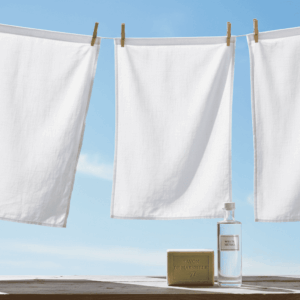
I invite you to dry your white linen sheets in the open air, carried by the wind, or to recall the vaporous atmosphere of a laundry room. Or why not go back in time to watch the Provençal washerwomen at work, take a delicious, invigorating shower, and then slip into your immaculate shirt? The notion of cleanliness in a perfume can be expressed in various ways.
1. Citrus Cleanliness (The Invigorating Shower)
Citrus cleanliness is achieved through citrus fruits: bergamot, lemon, mandarin, orange, lime. These citrus fruits recall that delicious sensation of splashing water on the face or body, the desire to be toned, reinvigorated—a great burst of freshness.
Eau de Cologne and Marseille Soap
Eaux de Cologne (cf. Eau de Cologne) orchestrated with these citrus fruits (cf. The Hesperidia or Citrus facet) provide this sensation of cleanliness and freshness. They recall the moment after a shower and are applied generously. Citrus notes are often dressed with petitgrain (orange tree leaf), aromatic notes (cf. The Aromatic facet), and sometimes white musks.
The shower also brings soap to mind, which is the reference for the “clean note” in France, especially Marseille soap (composed of soda and olive oil). Soaps were also often scented with classic Eaux de Cologne.
2. Aromatic Cleanliness (Lavender)
Washerwomen used to put lavender essence in the rinsing water when doing their laundry. Moreover, the etymology of the word lavender is significant, as lavender comes from the word lavare which means to wash. The Romans perfumed their baths with this plant.
Lavender is disinfecting, relaxing, and repels moths. We also remember the small sprigs of lavender between two piles of sheets at grandmother’s house. Thyme, rosemary, and mint, in light touches, can suggest both cleanliness and freshness. In all these ingredients, we find a common molecule, Camphrol, which gives the sensation of taking a deep breath of fresh air, of opening the nostrils.
3. White Musks (The Laundry and Cocoon Effect)
Since the end of the Second World War, the popularization of washing machines has led to a decline in the use of Marseille soap. With modern detergents, we see the advent of synthetic molecules, such as white musks (cf. The Musky facet), discovered as early as the end of the 19th century.
These are heavy and tenacious molecules that cling easily to laundry: Celestolide, Galaxolide, Habanolide, Helvetolide. They provide this cocooning and clean sensation.
New Freshness and Baby Skin
Other white musks smell like baby skin; what could be more pure and innocent than this wonderful scent? A certain “new freshness” clean molecule provides this sensation: Dihydromyrcenol (cf. The New Freshness facet). It possesses a very invigorating smell, with a scent of clean linen or laundry detergent. Highly appreciated by men, this molecule has been widely used in masculine perfumes, becoming more universal today.
4. Aldehydes (The Scent of a Hot Iron)
It was at the beginning of the 20th century that aliphatic aldehydes, synthetic molecules, were discovered (in 1835), eventually becoming indispensable in perfumery laboratories. It was Chanel’s N°5 perfume that brought them out of the shadows.
In chemistry, an aldehyde is a particular group of atoms: C1, C2, C3. It was in 1903 that Monsieur Darzens discovered a way to stabilize certain aldehydes, notably aldehyde C12MNA, with a cold smell, a scent of a hot iron, very characteristic, and with a slightly citrusy and metallic scent, recalling the cleanliness of dry cleaners.
5. Other Evocations of Cleanliness
- Sea Air: Iodized air, marine, mineral, or salty notes can evoke cleanliness for some. Molecules such as Calone or Helional allow fragrances to translate the scents of the beach swept by sea spray (cf. The Marine facet).
- Flowers: Orange blossom and neroli, obtained by distillation (cf. The Distillation process), recall cleanliness and purity, especially in France (perfumes for babies). Abstract floral notes like lilial (a molecule now banned) or florol can also evoke cleanliness.
A Subjective and Cultural Notion
Cleanliness is also a somewhat subjective notion; everyone has their own truth in this domain. These notes evoking cleanliness change according to each culture:
- United States: Lemon is favored.
- Spain: Eau de Cologne.
- France: Fresh flowers and musks (Mon Savon and Marseille Soap references).
- Brazil: Anise and lavender notes.
- Middle East: Oud.
- China: Fresh fruits like apple and pear.
- Universal: The scent of Nivea cream (Lily of the Valley).
List of Perfumes Illustrating Cleanliness
- Cologne by Mugler
- Chat Perché by Annick Goutal
- Superdose by Juliette Has a Gun
- Cologne by Chanel
- Noa by Cacharel
- Neiges by Lise Watier
- Clean by Clean
- White Musk by The Body Shop
- Cool Water by Davidoff
- 212 by Caroline Herrera
- Les Eaux de Politesse by Serge Lutens
- Un Dimanche à la Campagne by Guerlain
- Eau de Lit by Guerlain
- Eau de Lavande by Diptyque
- Voulez vous coucher avec Moi by Kilian Paris
- Eau Blanche by Brécourt
- Lazy Sunday Morning by Maison Martin Margiela
- White Linen by Estée Lauder
- Eau de Gentiane Blanche by Hermès