Perfumery Professions: A Complete Guide to Careers and Training
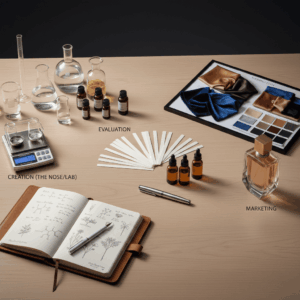
Having worked for more than twenty years in this field, I have rubbed shoulders with various people and therefore different professions; here is my advice if you decide to look for a job in the world of perfumery.
The world of perfume is apart, quite confidential, but this world is nevertheless exciting and offers many job opportunities. These professions are all open to both women and men.
1. Perfume Sales Advisor
This profession involves presenting and advising customers on a selection of perfumes.
To succeed in this branch, the first thing required is to be passionate and curious, to have a good sense of smell, even if it is a sense that can be educated and improved when exercised regularly.
The other indispensable quality is knowing how to listen to customers, to get them to talk about their aspirations, and above all not to impose one’s own tastes. It is a profession that requires being generous, having a sense of contact, of welcoming, being smiling and well-groomed.
You must be persuasive and have sales acumen. The quality of empathy is truly necessary, namely the quality of putting oneself in the customer’s shoes.
The plus is, of course, to know the fragrances you will have to present well, but also a knowledge of perfumery classics, as well as competitors’ perfumes or emerging trends.
When a client wears a perfume and wishes to change, it is important to recognize it and know the correspondences, in order to be able to propose a fragrance that will seduce them, in the same olfactory family.
One must always be on the lookout for new perfumes or cosmetic products like makeup released on this market, which is very competitive and constantly rich in novelties.
Where to practice? Possibility to practice this profession at major retailers like Sephora, Marionnaud, Nocibé, or even Department Stores, but also in more confidential so-called niche perfumeries (cf. Niche Perfumery).
Increasingly, mastery of one, or even two foreign languages is required.
- Classic Training: Vocational Baccalaureate in Aesthetics-Cosmetics-Perfumery; CAP, Professional Brevet, or BTS in aesthetics, cosmetics, or perfumery. Nevertheless, some people can succeed in this job solely thanks to their perseverance, learning, and above all through their passion for perfume.
- Possibility of evolution: boutique manager or director, trainer, sales representative for a perfume brand.
2. Brand Ambassador (Animateur)
This profession of brand ambassador requires the same qualities and requirements as the advisor profession. A perfumery animator’s mission is to help people discover or rediscover a product in order to develop its sales.
Training:
- BTS in Aesthetic Cosmetic Perfumery Professions.
- Title “Animator/Trainer of beauty professions” level III, registered with the RNCP (National Directory of Professional Certifications) accessible in initial training or VAE (Validation of Acquired Experience).
- Title “Animator/Trainer of beauty and fashion professions” level II, registered with the RNCP accessible in continuing education, professionalization contract, and VAE.
Level III or II diplomas can facilitate career developments.
3. Sales Representative in the Perfume Industry
Technical sales representatives are people who represent a brand; they travel and go from perfumery to perfumery or from chain to chain like Sephora or Marionnaud style to promote the brand, make commercial deals with the retailer, possibly do a little training on the products and novelties of said brand, and check merchandising (presentation on shelves, placement on displays).
This profession can also bear the name of sector manager because they are generally responsible for a region or a zone in Travel Retail for airports, for example.
The qualities required here are again passion, a sense of negotiation and sales, a certain charisma, and knowledge of the world of perfumery and perfumes. A foreign language is a plus but is not essential if you work only in France.
4. Raw Materials Sales Representative (Natural or Synthetic)
The same qualities are required as previously, but very technical training is necessary. Having followed a perfumery curriculum like ISIPCA in Versailles, for example.
Raw materials sales representatives must present their catalog of raw materials to major perfume brands, often directly to the perfumers of these brands or to buyers working in raw materials companies (IFF, Givaudan, Firmenich, etc.).
5. Raw Materials Buyer
These buyers will purchase raw materials from the aforementioned sales representatives. They have the same curriculum as the sales representatives, but these people work either in a perfume brand or in large creation companies (IFF, Givaudan, Firmenich, etc.).
6. Producer and Sourcer of Raw Materials
A fairly rare profession which consists of traveling the world and meeting different local producers of natural raw materials and proposing them directly to major brands or raw materials companies.
7. Perfume Trainer
As an expert of the brand, their role is to transmit the values of the House while being the guarantor of its image. They must present novelties and propose sales techniques to teams in contact with customers.
They must also develop educational tools to successfully conduct training sessions. This job requires great geographic mobility as they will be required to travel everywhere in France and/or abroad.
Passion is again the greatest of the required qualities but also curiosity, generosity. Excellent mastery of the products to be presented and those of the competition is necessary. Of course, a sense of pedagogy is essential, and this quality is not given to everyone. Mastery of foreign languages is really a plus.
Possibility of evolution: Training Director France, International Training Director.
8. Perfume Evaluator
This is a person who accompanies the perfumer in the creation process; they are an olfactory expert. The evaluator is the intermediary between the client, i.e., the brand, and the perfumer who works in a composition company. The evaluator guides the perfumer olfactorily according to the client’s request. Very few evaluators work solely for a single brand.
They are a technical coach for the perfumer, who will help them develop different olfactory avenues olfactorily, but they will also have to have a lot of tact and psychology with this perfumer, in order to advise, support, and reassure them.
It is also they who will make a selection, perhaps create a library with all the perfume concentrates, or all the creations already proposed to different clients. Certain rejected interesting olfactory avenues are recycled or worked on again. Knowledge of market perfumes is essential. The evaluator must be able to manage several projects in parallel.
Qualities: Having, of course, a good sense of smell and a creative spirit. This person must have a flexible personality adaptable to all situations.
Training: ISIPCA School in Versailles or École Supérieure du Parfum, in Paris or Grasse, or a shorter training at 5ème Sens; English is essential.
Possible evolution: Head of Evaluation.
9. Lab Technician (Laborantin)
This is the one who will weigh the formulas written by the perfumers. They must be rigorous, organized, and very discreet.
10. Perfume Marketing
In brands or raw materials companies, there is always a marketing department, which develops presentation files for perfumes proposed to clients, olfactory pyramids, olfactory descriptions, market studies, and competition studies.
11. Fragrance Composition Sales Representative
This is the person who negotiates with the brand, notably the price of the perfume concentrate; they will also follow up on what the brand needs, such as toxicological files or the perfume presentation file with the olfactory pyramids.
12. Perfumer (The Nose)
All these professions have a common base in terms of training; the most sought-after profession, but the most difficult to obtain because places are very rare, is that of perfumer for fine perfumery.
They can work in large international creation companies like IFF, Givaudan, Symrise, Firmenich, or in smaller, highly reflected companies like TechnicoFlor, Mane, etc.
Being an in-house perfumer in a prestigious brand is an even more difficult position to obtain; few brands have their own creation laboratory, only Chanel, Guerlain, Dior, Vuitton, Hermès, and Patou have one.
They must have studied at ISIPCA or the École Supérieure du Parfum or in internal schools like at Givaudan, for example.
These perfumers must have a very developed creative sense, a lot of patience, experience, have charisma, communication skills, because they will have to know how to showcase themselves, know how to sell themselves if they have to meet end clients, or make presentations to the press or sales forces.
13. Technical Perfumer or Senior Technician
Same training and same profile as previously, but working more in the shadows, they must be more technical than creative. They will be more able to do reformulations or work to develop perfumes for cosmetics, laundry detergents, and softeners. Skills in formulation, sensory analysis, quality control.
14. Flavorist (Aromaticien)
Same as previously but these perfumers will be more specialized in food flavors.
Generalities on Perfumer Professions
To work in perfumery professions and in particular in these creative professions, the apprenticeship is very long. It takes a lot of perseverance and determination, having a developed aesthetic sense, and being passionate. You must know that many are called and few are chosen.
A perfumer must have great strength of character; indeed, they must be able to accept failures because perfumers are often put in competition with other perfumers working for other companies. Having knowledge as a chemist is a plus but not essential training. Few creative perfumers are chemists.
Those who are publicized in brands or in creation companies are lucky enough to have a very comfortable salary.
Generally, perfume creation jobs are offered in the Paris region, and among French regions, the PACA region stands out with Grasse and its region acting as the main production center for raw materials and manufacturing for the perfume industry.
But as soon as perfumers are successful, they can have opportunities to work abroad, mainly in Switzerland, the United States, and Asia. The major cities where large creation houses are based are Geneva, New York, and Paris.
Conclusion
In all these professions, the essential qualities are passion and curiosity. This world is actually a small world, where everyone knows everyone more or less. It possesses a very pleasant and very stimulating environment because it is constantly evolving and rich in novelties.
PS: The list of perfumery professions is not exhaustive.