Spices in Perfumery: Fresh and Warm Notes

Spices are part of the natural raw materials used in perfumery. There are two categories: fresh spices and warm spices. Fresh spices act mainly as top notes in a perfume, and warm spices will develop mainly as heart notes and base notes.
Fresh Spices
Among fresh spices, we find, among others:
- Cardamom
- Coriander
- Pink pepper
- Timut pepper
- Ginger
- Juniper berries
Cardamom
Herbaceous plant native to southern India, cardamom belongs to the same botanical family as ginger and turmeric. It grows wild in humid woods and mountains. It is also found in Sri Lanka, Thailand, Tanzania, or Central America. There are varieties of green and black cardamom.
This “grand lady” can measure up to 5 meters in height and displays beautiful green leaves. The small capsules that contain the famous fragrant seeds are found within its small white flowers.
It is by distilling these capsules that the cardamom essential oil used in perfumery is obtained. It is a very expensive spice because its production requires a very substantial amount of labor.
The health benefits of cardamom
Cardamom seeds have proven their effectiveness in Ayurvedic medicine (traditional Indian medicine) and serve as a powerful tonic that can improve digestion, and calm nausea and kidney pain.
Seeds and cardamom essence also serve to flavor coffee (mainly in Arab countries): it is then supposed to neutralize the effects of caffeine. They allow flavoring tea (like the delicious Masala Chai), mulled wine, and are used in Scandinavian pastries. The Romans already used cardamom in cooking.
Perfumes based on cardamom:
- Voyage Hermès
- Déclaration Cartier
Coriander
Herbaceous umbelliferous plant 20 to 80 cm high and native to the Middle East, coriander (Coriandrum Sativum by its scientific name) is today cultivated in Europe and Russia. This herb with fine foliage, small flowers, and large round fruits is mainly found in meadows and fields.
Part of the carrot family, it is also called “Chinese parsley” or “Arab parsley”. All parts of this plant are edible, both leaves, seeds, and roots, even if their taste differs. The leaves have a slightly aniseed smell; and the seeds and roots have an orange peel taste.
The history of coriander
Traces of coriander have been found in the tombs of pharaohs. In the Middle Ages, it was also used to ward off demons by throwing a handful of the spice into the fire. Charlemagne cherished it for its bactericidal functions, and aphrodisiac virtues were subsequently attributed to it.
During the Second World War, raw products being rationed, “sugar drops” were invented, coriander seeds coated with white or pink sugar, which were thrown to the crowd like confetti during the few moments of festivities, such as carnivals.
Coriander is one of the main components of curry, and it flavors gin, chartreuse, and chili. The smell of coriander is close to that of citrus fruits: it is very rising, fresh, lemony, and a bit camphorated. There are olfactory variations depending on the part treated (leaves or seeds). Its main constituent is linalool, common with the scent of rosewood.
Perfumes composed of coriander scents are, for example:
- Héritage Guerlain
- Gentleman Only Jean Couturier
- Intense Jean Couturier
- Coriandre Jean Couturier
Pink Pepper or Pink Berries
Pink pepper (from its botanical name Schinus Molle) comes from South America, and was introduced to Mauritius in the 19th century. It is a false pepper, and it is widely used in perfumery in top notes.
It gives, in fact, lift and freshness, while bringing a peppery tonality. It is obtained by distillation or supercritical CO2 extraction. In perfumery, this spice is used in many perfumes, and its scent wonderfully accompanies citrus notes.
Timut Pepper
A new pepper from Nepal has recently enriched the perfumer’s organ: Timur pepper or Timut pepper. With its very interesting grapefruit accents, it is a “false pepper”, cousin of Sichuan pepper.
Ginger
This spice has been highly appreciated for hundreds of years. It was discovered by Marco Polo in China. Ginger makes up the rhizome of a large tropical plant. It is sometimes considered a powerful aphrodisiac.
It is a rising, fresh, hesperidic, rosy, and spicy note. It can sometimes give a soapy note to the perfume. There are different qualities depending on the extraction processes: either by classic distillation, or by molecular distillation or CO2.
Ginger is highly appreciated by perfumers and is notably used in these perfumes:
- Déclaration Cartier
- Five O’clock Serge Lutens
- Allure Homme Sport Edition Blanche Chanel
- Eau de Gingembre Roger Gallet
- L’Eau Diptyque
- Fou d’Absinthe L’Artisan Parfumeur
- Safran Troublant L’Artisan Parfumeur
- Dzing L’Artisan Parfumeur
- Ginger Picante Guerlain
- Baptême du Feu Serge Lutens
Juniper Berries
From their botanical name Juniperus communis and the Cupressaceae botanical family, juniper berries are the fruits of the juniper tree, a shrub native to Mediterranean Europe, although it is very widespread in Eastern Europe. It grows spontaneously on poor and dry soils, forming bushes with prickly needles, whose fruits are used in perfumery, once distilled.
They also serve in cooking to flavor sauerkraut or in the manufacturing process of Gin (in which other spices join, such as pepper, cinnamon, coriander, but also angelica root, iris powder, or citrus peel, or licorice…).
The history of juniper: In some regions of Europe, it was common to plant a juniper tree near homes, because it was attributed a protective role (it was said to have the power to ward off diseases as well as evil spirits, snakes, and witches).
Olfactory Description: From the olfactory family of the terpene conifer, juniper possesses small blackish berries that hold pine scents with a spicy and peppery flavor. These scents also recall the smell of Gin, while being woody, aromatic, and slightly resinous. Juniper berries bring a spicy, fine, and racy flavor to perfumes.
This spice has inspired many perfumes, such as Gin Lord Of Barbès.
Warm Spices
Here are the main warm spices used in perfumery:
- Nutmeg and mace (its husk)
- Cinnamon bark
- Peppers
- Saffron
- Pimento berries
Nutmeg
The fruit of the nutmeg tree is round, pale yellow, marked with red or green streaks. When this fruit reaches maturity, it implodes, giving way to an ovoid and brown nut, dense and oily.
This nut is protected by a membrane called Mace. In medicine, cosmetics, perfumery, or cooking, it is possible to use both nutmeg and its mace, because it is in this membrane that the most aroma is found (released by Eugenol via its essential oil).
History of nutmeg: Pliny the Elder spoke of a tree from which two spices could be drawn, nutmeg and mace (which is somehow the “umbilical cord” of the nutmeg). Nutmeg flavored wines and beers in the 12th century. For a long time, its cultivation remained the monopoly of the Dutch, within the Molucca Islands.
According to a saying, stealing a nutmeg meant dying before having planted it. During colonization, around 1800, France seized Dutch treasures, and nutmeg was thus sent to tropical British colonies, where, thanks to Pierre Poivre, people learned to cultivate this spice. Nutmeg is very often linked to love and beauty.
Cultivation and harvest: From the Myristicaceae family, nutmeg comes from the nutmeg tree, a tropical tree that can reach 7 meters high, easily found in Indonesia, Malaysia, Sri Lanka, the Molucca Islands, or the West Indies. Seven years are necessary to obtain a harvest, and it takes 5 kg of nutmeg to obtain 1 kg of mace.
The harvest of these fruits is done three times a year (they are directly knocked down and it is not necessary to wait for them to fall naturally).
Properties: This spice has great virtues for digestion, epilepsy, or as an antiseptic. It is part of the famous “Four spices” used in cooking to add flavor to a dish. It also possesses hallucinogenic power and is sometimes used as a drug, because it is easily accessible and inexpensive.
In the Renaissance, Fernel was convinced that nutmeg powerfully stimulated the body and mind. Thus, until the 18th century, 24 preparations based on nutmeg were listed in the Codex 1758 by apothecaries.
Eugenol, methyl-eugenol, and Iso-eugenol are molecules found in cloves and nutmeg. All these molecules are limited, or even banned by IFRA (International Fragrance Association) laws. They are found naturally in Ylang Ylang and Rose essence.
Olfactory description: Its spicy, dry, warm, and deep note can evoke a leather note, a medicinal camphor side, a clove facet as well as an earthy note.
Nutmeg is found in some perfumes such as:
- Pour L’Homme Cacharel
- Vétiver Guerlain
- Opium pour Homme YSL
- Tubéreuse Criminelle Serge Lutens
Cinnamon
From the Lauraceae family, the Ceylon cinnamon tree is a tree of 10 to 15 meters in height. Its bark is harvested in the rainy season to produce the spice. Cinnamon is essentially cultivated in Sri Lanka, the Seychelles, and Madagascar. The Sri Lankan cinnamon tree is the most appreciated variety due to its soft and sweet character.
History: Cinnamon is the oldest of spices. Already used 5,000 BC in China, it was considered even more precious than gold. References to cinnamon are found in the Bible.
Processing: Cinnamon essence is obtained by steam distillation of the bark, which allows obtaining a clear, dark red liquid. It is also possible to make essential oil from the leaves, obtaining a spicy smell that recalls that of eugenol.
Olfactory Description: Cinnamon is spicy and balsamic. It is a very woody note, slightly sweet and vanilla-like. It is warm, balmy, powerful, and close to clove. Lively and sensual, this spice is also powdery, peppery, and at the same time round in its evolution. Its pungent smell evokes spicy tea and cookies prepared during Christmas festivities.
Use: Cinnamon is also used in the reconstitution of floral facets such as rose, hyacinth, lily of the valley, or carnation and lily. It can also serve to reinforce certain notes (such as balsamic notes) in fougère or oriental perfumes. It can be used in heart notes (it often links with base notes).
Properties: The antioxidants present in cinnamon have anti-inflammatory properties that can prevent or alleviate osteoarthritis as well as cardiovascular diseases. This spice is rich in cinnamic aldehyde, which acts as a powerful antibacterial, antiviral, antifungal, and broad-spectrum antiparasitic. Moreover, cinnamon helps stimulate the immune system.
Among perfumes composed of cinnamon, we can cite:
- Opium Yves Saint Laurent
- Égoïste Chanel
- Rousse Serge Lutens
- Black Orchid Tom Ford
- Noël au Balcon Etat Libre d’Orange
- Dolce Vita Dior
- L’Eau Lente Diptyque
Pepper
Black, white, and green pepper do not come from different varieties, but correspond to distinct degrees of maturation. These peppercorns all come from the same shrub: Piper Nigrum. Pepper consumption is such that it is now equivalent to the consumption of all other spices combined. The pepper note is widely used in perfumery.
It is notably found in:
- Poivre Noir Caron
- Parfum Sacré Caron
Saffron
Coming from the pistil of a crocus variety, it is the most expensive spice in the world. Nicknamed “red gold”, its use is very limited in perfumery, or even banned, because it contains safrole, an allergenic component. A substitute, called safranal, is now used. It gives a leathery, spicy, and very powerful note, and is found notably in Oud-based perfumes, and in Middle Eastern perfumeries.
Here are some examples of perfumes containing safranal:
- Safran Troublant L’Artisan Parfumeur
- Saffron Jo Malone
- Black Saffron Byredo
Pimento Berries
This raw material comes from the West Indies, and mainly from Jamaica. The leaves are treated by distillation, to give “leaf pimento”. The treated berries allow obtaining a product called “berry pimento”. They possess a spicy, warm, complex perfume which is situated between nutmeg, clove, and cinnamon.
These perfumes have been made with pimento berries:
- Mitsouko Guerlain
- Piment Brûlant L’Artisan Parfumeur
Other Spices
There are some more confidential spices used in perfumery:
- Caraway, which requires deep mastery from the perfumer.
- Cumin, a spice that was appreciated by Edmond Roudnitska, who used it in Femme by Rochas.
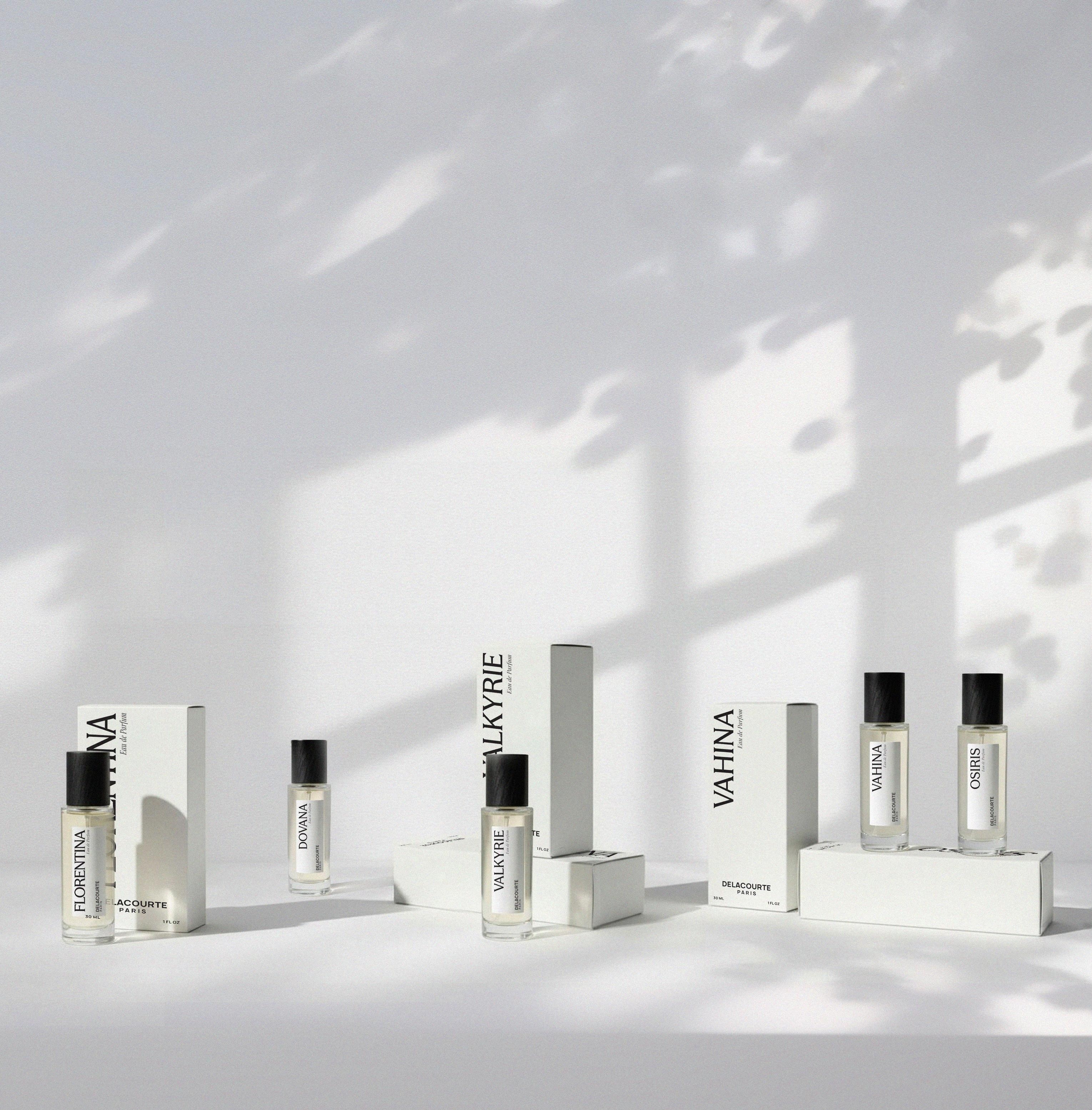
- Clove, whose scent allowed, with rose, to create the “carnation” note present in Coco by Chanel, Opium by YSL, Aromatics Elixir by Clinique, Miss by Dior, Tam Dao by Diptyque, Florentina by Delacourte Paris.
Here are some perfumes containing a mixture of spices:
- Noir Épices Frédéric Malle
- Paprika Brasil Hermès
- Épices Marines Hermès
- Voyage Hermès
- Bois d’Arménie Guerlain