Eau de Cologne: History, Virtues, and Guide to Fresh Fragrances
Eau de Cologne, originally used for hygiene and toiletries, is a product that brings freshness and cleanliness. Transmitted through the ages, Eau de Cologne tones, restores energy and vitality, and makes toiletries a moment of pleasure and well-being. This low-concentration product is used generously all over the body.
History of Eaux de Cologne
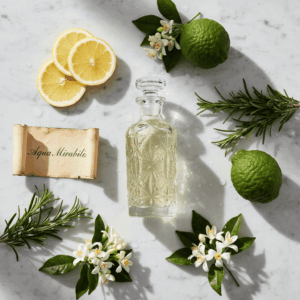
It was in the 18th century that the first Eau de Cologne appeared. Jean-Paul Feminis marketed scented waters for the first time, which were then called “aqua admirabilis coloniae” or “Admirable Eau de Cologne”.
Upon his death, he entrusted his secret to his nephew, Gian Maria Farina. Since then, the original Eau de Cologne is still produced by the eighth generation of descendants of Gian Maria Farina, in Cologne.
This dazzling success encouraged other firms to start manufacturing this fragrance. Thus, N° 4711 by Muelhens, another famous Eau de Cologne still marketed today, was born in 1792.
The Virtues of Eau de Cologne
At the time, Eau de Cologne was composed of a mixture of various citrus fruits dissolved in spirit of wine (a high-degree alcohol). The hygiene conditions of the time were far from excellent; consequently, this kind of product was considered a miraculous water, or a panacea (in the same way as the Queen of Hungary’s Water).
Its beneficial character was such that with each bottle sold, a small notice was included indicating, in detail, the uses and effects of this “miraculous water”. Thus, it was said, older people could swallow 50 to 60 drops of Eau de Cologne mixed with spirit of wine to slow down, notably, a too rapid heart rate.
It was also advised to breathe this fragrance for a few minutes to cure headaches.
In 1727, the Faculty of Medicine of Cologne went so far as to recognize medicinal properties in the “Admirable Water” manufactured by Feminis.
Eau de Cologne at the Imperial Court (Napoleon and Eugénie)
Napoleon Bonaparte, a great user of this Eau de Cologne, slipped a bottle into his boots before leaving for the countryside. It is said that he consumed on average 43 liters per month, both for himself and to perfume his apartments and his horse.
Later, he was led to publish an ordinance by which he demanded the disclosure of formulas for all medicines to be ingested. To protect the secret of the formula, Eau de Cologne was then prescribed for external use only and became the product we know today.
Empress Eugénie suffered from horrible migraines and asked Pierre-François-Pascal Guerlain to create an Eau de Cologne for her with a lot of freshness, but very calming. He did it with mastery, using a high dose of petitgrain, which is orange blossom essential oil (cf. Flowers) with calming properties. The Empress had exclusive use of it before giving Pierre-François-Pascal Guerlain the authorization to market it.
The product was a great success and the perfumer received, from Napoleon III, the title of Official Supplier to the Imperial Court. This superb bottle decorated with bees (the 69 bees symbolizing the Empire) is sold today all over the world. For Pierre-François-Pascal Guerlain, this was the beginning of fame, which lasted for five generations of perfumers.
Composition and Structure of Eau de Cologne
The traditional structure of Eau de Cologne consists of tonic top notes: bergamot, lemon, orange, neroli, petitgrain, mandarin, grapefruit, sometimes with a few aromatics, such as verbena and orange blossom.
- Classic Eau de Cologne: Composed of 99% natural products. It contains 2 to 6% concentrate in 60° alcohol. Its citrus notes are entirely volatile, providing intense freshness but low tenacity.
- Modern Eau de Cologne: It keeps the traditional structure (citrus, petitgrain) but benefits from synthetic molecules for better tenacity and diffusion. It also has more base notes (spices, woods, musks).
Eau Fraîche: The Tenacious Evolution
From the second half of the 20th century, Eaux Fraîches (Fresh Waters) appeared, drawing their inspiration from Eaux de Cologne. They possess slightly chypre base notes (with mosses or patchouli), woody (such as vetiver or cedar), as well as floral notes, and an addition of the famous “Hedione” from Firmenich.
The latter contributed to making fresh notes last with Eau Sauvage by Dior, then Eau de Guerlain, Eau de Rochas etc. These Eaux Fraîches become, thanks to their more faceted construction, much more tenacious and diffusive.
Modern and Trendy Eaux de Cologne
We are currently witnessing the arrival of ultra-modern, transparent, refreshing Eaux de Cologne, endowed with a musky sillage. Among them is CK One by Calvin Klein. With its air of Eau de Cologne, it adds a tonic accord, a very specific tea note borrowed from the Eau de Toilette of the fragrance “Thé de Bulgari”.
Other Waters are to be cited in the same style, such as the superb Eau de Cologne by Thierry Mugler, Dior Eaux de Cologne, or “Cologne d’Allure Homme Sport”, Eau de Cologne du Parfumeur or Cuvée Secrète by Guerlain. There are also very fresh fragrances like in the “Aqua Allegoria” line.
Comparison with Other Concentrations
Perfumery also includes numerous other fragrances besides Eau de Cologne, whose degree of alcohol concentration varies, such as:
- Perfume Extract: Possesses volume and presence. A few drops are enough. It is applied directly to the skin, for a day-long hold. Extracts generally contain 20% to 40% concentrate, in 98% vol. alcohol.
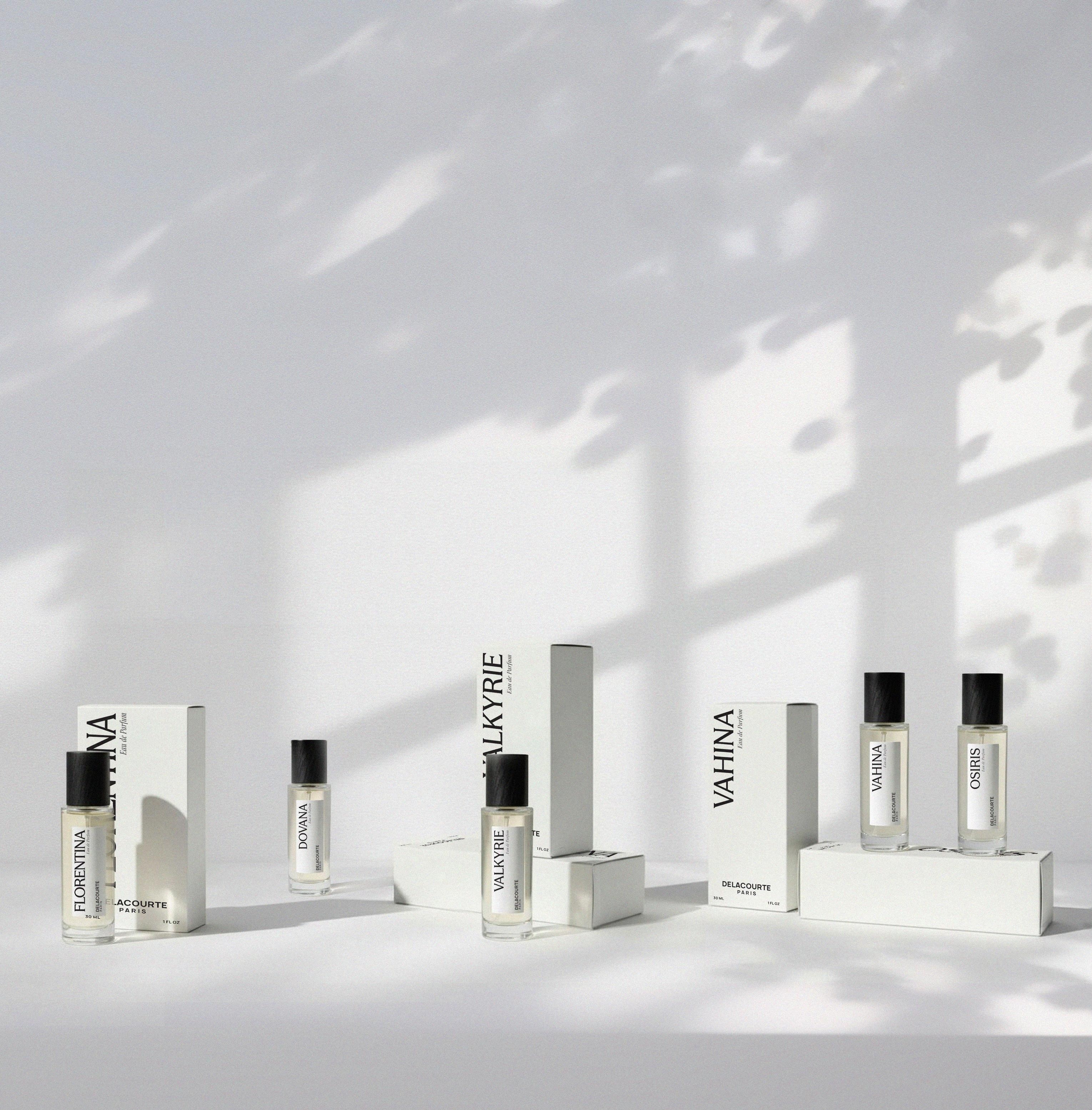
- Eau de Parfum: Also called “Esprit de Parfum”, it is an excellent sillage/tenacity compromise. It includes 7% to 30% concentrate, in 90% vol. alcohol. Delacourte Paris fragrances are in Eau de Parfum (15% to 20%).
- Eau de Toilette: Fresher and richer in fast-diffusing top notes, it has 6% to 20% concentrate, in 80% vol. alcohol.