Leather in Perfumery: From Glove Perfumers to Notes of Character
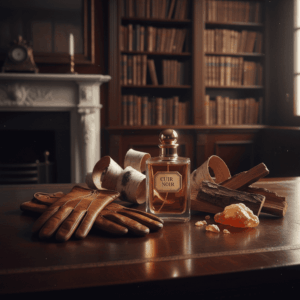
In perfumery, the leather family is a bit apart. It is an olfactory family highly appreciated by connoisseurs and lovers of “character” perfumes. There are relatively few perfumes classified in this family. Indeed, these notes are quite “polarizing” and difficult to tame; nevertheless, many perfumes in this family are found in so-called niche perfumery.
Historical Origins
Historically, leather and perfume were already associated. In 2000 BC, in Asia, leathers were treated and scented with Kumquat tree bark. Spanish skins were scented with various precious scents such as rose water, amber, camphor, cedar essence, and musks.
In the 17th century, Italian leather was scented with a sweet almond smell. There are several theories regarding the origin of the word frangipane; however, everyone agrees at least that it comes from the Italian surname Frangipani. Was he a pastry chef, botanist, marquis, marshal of the armies, or monk? That we do not know. But the most prized extracts were: violet, iris, musk, amber, and civet.
Grasse and Leather
Tanners settled in Grasse in the 12th century for their leather and skin trade. They made trade agreements with Genoa and Pisa where they exported their leathers.
Grasse’s reputation for its quality leathers grew, but there was a shadow over the picture: the leathers did not smell good, which greatly displeased the nobility. In the 16th and 17th centuries, gloves, essential accessories, were scented with various scents: ambrette, musks. Or under Francis I: civet, ambergris, rosemary.
Where does the idea of scenting leathers and in particular gloves come from? It was reportedly Molinard who offered a pair of scented gloves to Catherine de Medici, with orange blossom; she was conquered, and notably, it is for this reason that she was nicknamed “La Nerola”.
The Golden Age of Glove Perfumers
The product then spread to the Court and throughout high society. In 1614, the King introduced the title of “Master Glove Perfumers” and the city of Grasse acquired a reputation as a tanner-perfumer on a worldwide scale. This was the great era of the “Glove Perfumers” guild. Under Henry III, gloves were even worn to sleep.
The trade of Glove Perfumer is artisanal and requires significant know-how. Indeed, it takes 4 years of apprenticeship and 3 years of journeymanship to reach mastery. But around 1759, taxes on leather and competition from Nice caused the leather industry in Grasse to decline, and perfume succeeded leather. The community of glove perfumers was dissolved in 1791.
In the 19th century, Grasse became the Capital of Perfume; the artisanal production of the beginnings gave way to a real industry and the surrounding countryside was covered with flowers.
The Evolution of Leather Perfumes
All perfume houses have had a perfume bearing the name: Cuir de Russie (Russian Leather) (Guerlain 1890, Chanel 1927, LT Piver 1939, Creed 1953). It draws its inspiration from the boots worn by the dancers of the Ballets Russes which were waterproofed with birch tar.
In 1919, Tabac Blond by Caron was created, which is leathery due to its tobacco notes. Then came Knize Ten by Knize (1925), a chypre leather that is a nod to L’Heure Bleue by Guerlain.
Leathery perfumes became less and less popular and declined from the 80s onwards at the same time as animal notes. It was during this period that people turned to other notes such as marine, clean notes.
However, we will note some exceptions from major Houses still daring to offer true leathers: Bel Ami by Hermès in 1986 or Cuir Mauresque by Serge Lutens and others. Cuir Beluga by Guerlain being more of a vanilla white suede (see article already published) than a leather perfume!
But oh surprise, you will soon have at the Maison Guerlain, in the exclusive collection, a true masculine leather which I think will delight my readers.
Jean-François Laporte was the founder of L’Artisan Parfumeur, and the creator of Mûre et Musc. He then founded the brand Maître Parfumeur et Gantier in 1988. And one can still find scented gloves in his shop.
Other Examples of Perfumes with a Leather Facet
Feminine
- 1931 Scandal by Lanvin
- 1944 Bandit by Piguet
- 1959 Cabochard by Grès
- 1963 Diorling by Dior
- 1985 La Nuit by Paco Rabanne
- 1986 Parfum de Peau by Montana
- 1999 Dzing! by L’Artisan Parfumeur
- 2004 Daim Blond by Serge Lutens
- 2007 Kelly Calèche by Hermès
- 2007 Cuir by Lancôme
Masculine and Unisex
- 1781 Royal English Leather by Creed
- 1955 Doblis by Hermès
- 1959 Tabac Original
- 1964 Aramis by Estée Lauder
- 1976 Yatagan by Caron
- 1978 Polo by Ralph Lauren
- 1978 L’Eau du Navigateur by L’Artisan Parfumeur
- 1978 Van Cleef & Arpels pour Homme
- 1980 Macassar by Rochas
- 1980 Jules by Dior
- 1980 One Man Show by Bogart
- 1981 Quorum by Puig
- 1981 Antaeus by Chanel
- 1981 Kouros by YSL
- 1985 Derby by Guerlain
- 1989 Parfum d’Homme by Montana
- 1998 Rocabar by Hermès
- 1998 Bulgari Black by Bulgari
- 1999 Tabarome Millésime by Creed
- 2002 Cuiron by Helmut Lang
- 2003 Duel by Annick Goutal
- 2003 Cuir Ambre by Prada
- 2003 Feuilles de Tabac by Miller Harris
- 2004 Daim Blond by Serge Lutens
- 2004 Aigner Black for Men
- 2005 Cuir Améthyste by Armani Privé
- 2005 Cuir d’Oranger by Miller Harris
- 2005 Fumerie Turque by Serge Lutens
- 2006 Rien by Etat Libre d’Orange
- 2006 Cuir Pleine Fleur by James Heeley
- 2006 Je Suis un Homme by Etat Libre d’Orange
- 2006 Cuir Ottoman by Parfum d’Empire
- 2006 Dzongkha by L’Artisan Parfumeur
- 2007 Ambre Fétiche by Annick Goutal
- 2007 Tuscan Leather by Tom Ford
- 2007 Charogne by Etat Libre d’Orange
- 2007 Japon Noir by Tom Ford
- 2007 Luxe Patchouli by Comme Des Garçons
- 2008 Serge Noire by Serge Lutens
My Favorites
In this significant list of leathers, I have a few “favorites”: Royal English Leather and Knize Ten, Prada Men for their proximity to L’Heure Bleue, and also Black Bulgari which I find very sexy!
At Guerlain in our classics, there is a very present leather facet in Djedi (1925) and also in Parfum des Champs Elysées (1904) and generally all the very old Guerlains. We also find it in the fabulous Vol de Nuit and also the “Mona Lisa” of perfumery: Shalimar which would not exist without its leathery facet, the same for Habit Rouge.
Note that in Habit Rouge Eau de Parfum an Agarwood note was added which gives it a truly different inflection; I invite you to compare the eau de toilette with the eau de parfum, they are worlds apart! Personally, I find Habit Rouge Eau de Parfum terribly sexy!
What Raw Materials Are Used to Make a Leathery Perfume?
The leather note can have different facets (smoky, tobacco, burnt wood, tar).
- Birch Tar Essence is obtained by slow distillation of the wood. Birch tar is used to tan hides in Russia and for certain pharmaceutical preparations. Some of its derivatives are also used as flavors for chewing gums, toothpastes, or drinks.
- Birch is native to Russia and Northern Europe. It grows there in the wild. It is also called white birch. The oil obtained after distillation is dephenolized and washed in an alkaline medium to be used in perfumery (now for birch wood we use a composition, because birch wood is now banned as it is toxic).
- Cade Essence is also a leathery raw material obtained by distillation of the wood and roots of the Cade tree or Prickly Juniper. This tree is common in the Mediterranean coastal region (from Morocco to Iran), where it is one of the characteristic plants of the garrigues and maquis. Cade essence has anti-dandruff properties.
Other Raw Materials for Leather Facets:
- Styrax (resin) and pyrogenic styrax.
- Cistus Labdanum (resin) and all its derivatives.
- Agarwood or agar essence is the main constituent of oud wood (a very rare tree found in India or Southeast Asia). Its essence is used to work on leather notes and is obtained by distilling the resin produced by agarwood. This resin appears on very old trees in reaction to parasites. Oud essence is not used in perfumery because it is very rare and very expensive.
- Pyrogenic Incense.
- Immortelle also has a leather facet.
- Cassie.
- Violet: beta-ionone.
- Suederal which is a synthetic raw material that smells strongly of a shoe store. Giving soft suede-type leathery aspects used in Cuir Beluga by Guerlain.
- IBQ (Isobutyl Quinoline) which is dry leathery with a green “asparagus” facet.
- Animal raw materials can also bring a leather facet such as compositions giving a castoreum effect, like Danan.
Paul Valéry was not mistaken when he said “what is deepest in man is the skin”.