Mandarin in Perfumery: A Sunny and Joyful Citrus
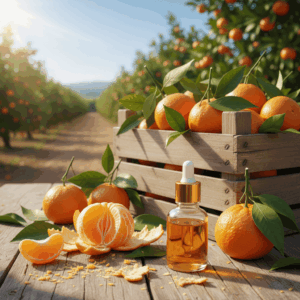
Mandarin in perfumery is a very sunny citrus note (cf. Citrus Facet). This citrus fruit possesses more character than bergamot; it is also bitterer and greener than bergamot.
This note is also different because its scent is impregnated with the skin of the citrus fruit; it brings a big smile to the perfume. It possesses a very slight characteristic medicinal nuance; it is a citrus fruit that truly signs a composition.
History and Origin
The name mandarin originates from China; the fruit was formerly offered as a gift to Mandarins during festivals. Mandarin is considered during the Chinese New Year as a symbol of abundance; often used in decoration, it is often offered as a gift to family or friends.
There are different varieties of mandarin; the primary essence is called green, but there is also the yellow mandarin quality and the red mandarin quality. This citrus fruit, native to China, was introduced to Europe much later than the orange tree, in the 19th century.
Botany: Mandarin, Tangerine, or Clementine?
Botanical name of mandarin: Citrus Reticulata
Botanical family: Rutaceae
It comes from a cross between Citrus madurensis and Citrus reticulata. Almost all countries of the Mediterranean basin such as Spain and Italy cultivate mandarin, but also those of South America such as Brazil or Argentina.
The name tangerine given in the USA is said to come from the city of Tangier, in Morocco, where cultivation is intensive. Tangerine is a citrus fruit whose fruit is very close to that of the mandarin. Its peel is darker and peels more easily.
The clementine, often confused with the mandarin, is actually a cross between the sweet orange and the mandarin, which produced the clementine tree. It is also different because it has no seeds. It grows on a tree of 3 to 4 meters, quite fragile and which can freeze easily if it gets too cold. Mandarin trees are cultivated in tropical and subtropical regions.
Extraction and Olfactory Profile
Like almost all citrus fruits, mandarin essence is obtained by cold expression (cf. Expression). The skin is crushed by machines that harvest the precious nectar it contains.
It is a highly faceted citrus fruit with a lot of depth: fresh, soft, lively, sparkling, tangy, aldehydic, a bit sweet, joyful, and solar (cf. Solar Facet).
Main chemical constituents
D-limonene, linalool, gamma-terpinene, pinenes (alpha and beta).
Use in Perfumery
Mandarin essence is often associated with Eaux de Cologne (cf. Eaux de Cologne) and Fresh Fragrances (cf. Fresh Fragrances).
It brings freshness to the top notes (cf. Top notes); it is a citrus note that has great staying power, as it can still be smelled in the heart notes (cf. Heart notes). It combines with all olfactory families and particularly well with oriental fragrances (cf. Oriental Facet).
Perfumes Containing Mandarin
Mandarin is a very present note in the perfume L’Instant De Guerlain, developed by Maurice Roucel and created in collaboration with Sylvaine Delacourte. This feminine perfume with exotic white flowers is composed of jasmine, tuberose, and magnolia, with a sensual and oriental base consisting of vanilla notes created with benzoin resin.
It possesses a woody note of sandalwood also very present. In short, it is a sunny Guerlinade.
Mandarin blends particularly well with white flowers, especially orange blossom.
- Aqua Allegoria Mandarine-Basilic, Chant d’arômes, and Cuir Beluga (top notes) by Guerlain
- Mandarine tout simplement by L’Artisan Parfumeur
- Mandarine Mandarin by Serge Lutens
- Mandarine Glaciale by Atelier Cologne
- Green Lover by Lolita Lempicka
- Infusion de Mandarine by Prada
- Mandarine Ambrée by Hermès
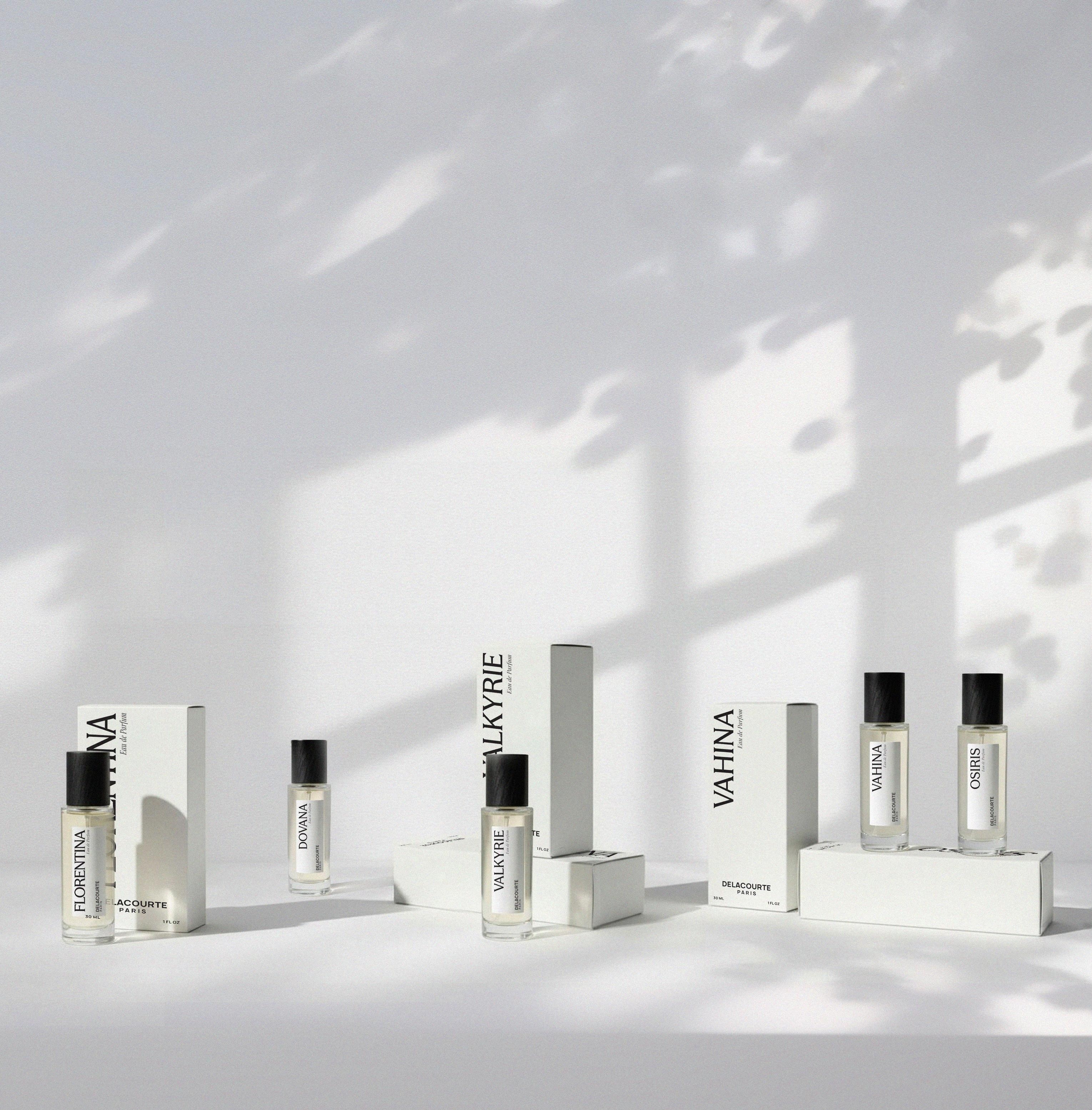
- Osiris by Delacourte Paris