Ambrette Seed: The Precious Vegetable Musk with Pear Notes
Ambrette is truly a high-end product that few brands and perfumers use. It is a vegetable musk, of great finesse, with very elegant scents.
Abelmoschus Moschatus or Hibiscus Abelmoschus
Ambrette is native to India and the tropical forests of Asia; it is found in Ecuador north of Guayaquil, in Indonesia, Peru, and India. There are about 60 tons of seeds produced each year.
This plant, which belongs to the hibiscus family, allows obtaining the precious ambrette seeds. This plant is an annual; its cultivation requires enormous care, such as clearing weeds that could easily suffocate the plant, so continuous weeding is necessary.
A Protected Cultivation
The plant must also be protected by men armed with blank guns, against predators such as parakeets that love these seeds, and this throughout the harvest period which lasts from late May to late August. Ambrette is also very often attacked by parasites, which is why the storage of these seeds is done at altitude, around 3000 meters, to protect them from parasites.
The Origin of Ambrette Seeds
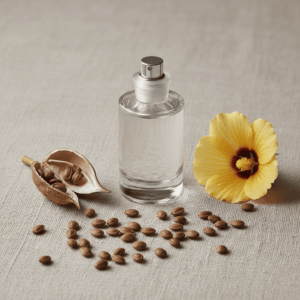
They are obtained from a plant that is the cousin of the hibiscus, with a size reaching up to 3.5 m with a large sulfur-yellow flower, with a brown throat. Once bloomed, the Hibiscus flowers fade and give way to a pod containing the seeds.
This plant is renowned for its seeds. The fruits are large capsules, first green then becoming brown; these contain numerous seeds resembling mini snails, which are then dried. The pods ripen gradually on the same stem, and the plantations not always having the same state of progress, the harvest period spreads from late May to August.
Ambrette is so called because its seeds exhale a very pleasant smell between amber and musk. The seeds are surrounded by a seed coat containing an oil, a sort of yellow resin that gives the seed its particular smell, even more sensitive when crushed.
History and Legend of Ambrette Seed
Ambrette seeds were used for relaxing and stimulating virtues, but also for their antiseptic and aphrodisiac power. Ambrette was also used to perfume and powder hair. They freshen breath and one can also make an emulsion with milk to relieve itching.
Seeds are sometimes added to coffee. It is also an ingredient in certain traditional herbal liqueurs, such as Bénédictine and also in William pear liqueur.
Harvest and Production of Ambrette Seed
Harvesting is done by hand; moreover, the yield is very low, which explains its very expensive price.
Distillation and Extraction
Processing is done by distillation; it gives an essential oil improperly called ambrette butter due to its pasty consistency. The essence is insoluble and difficult to use.
It is therefore necessary to proceed to a second production step, consisting of eliminating palmitic acid. This gives the final product called: ambrette absolute. The Floral Concept company introduced me to a superb quality of it.
CO2 extraction (supercritical) seems interesting, because this method is more suitable for extracting heavy molecules, the yield is therefore much better and of very good quality.
Ambrette seeds can be sent to Grasse to be processed there, ensuring they are protected from humidity, as they can mold easily.
Scent of Ambrette: A Fruity Vegetable Musk
It is in fact a vegetable musk with the natural presence of ambrettolide (very musky, powdery molecule), not to be confused with Musk Ambrette, a toxic nitrated musk, now banned in perfumery.
It is also an amber, soft, musky, slightly animalic smell, possessing a fruity facet between pear note (reminiscent of the famous Williams pear or also plum brandy). One can also detect a slight floral facet like that of iris.
It is a product of exceptional power and tenacity. It brings a sensual and velvety dimension to perfume compositions. In short, ambrette is a precious ingredient, which brings a refined and sophisticated touch to fragrances.
It is a base note, but it is so vibrant that its scents can be smelled right from the top notes. Ambrette seed can be combined with all olfactory families: hesperidic, floral, oriental, as well as other musky notes.
Perfumes Containing Ambrette
I discovered the wonderful musky perfume of ambrette seed during the development of Champs Elysées by Guerlain.
One can also smell this scent of ambrette seed in:
- Muscs Koublaï Khän and Clair de Musc by Serge Lutens
- Bois Farine by L’Artisan Parfumeur
- Voyage by Hermès
- Égoïste and N°19 by Chanel
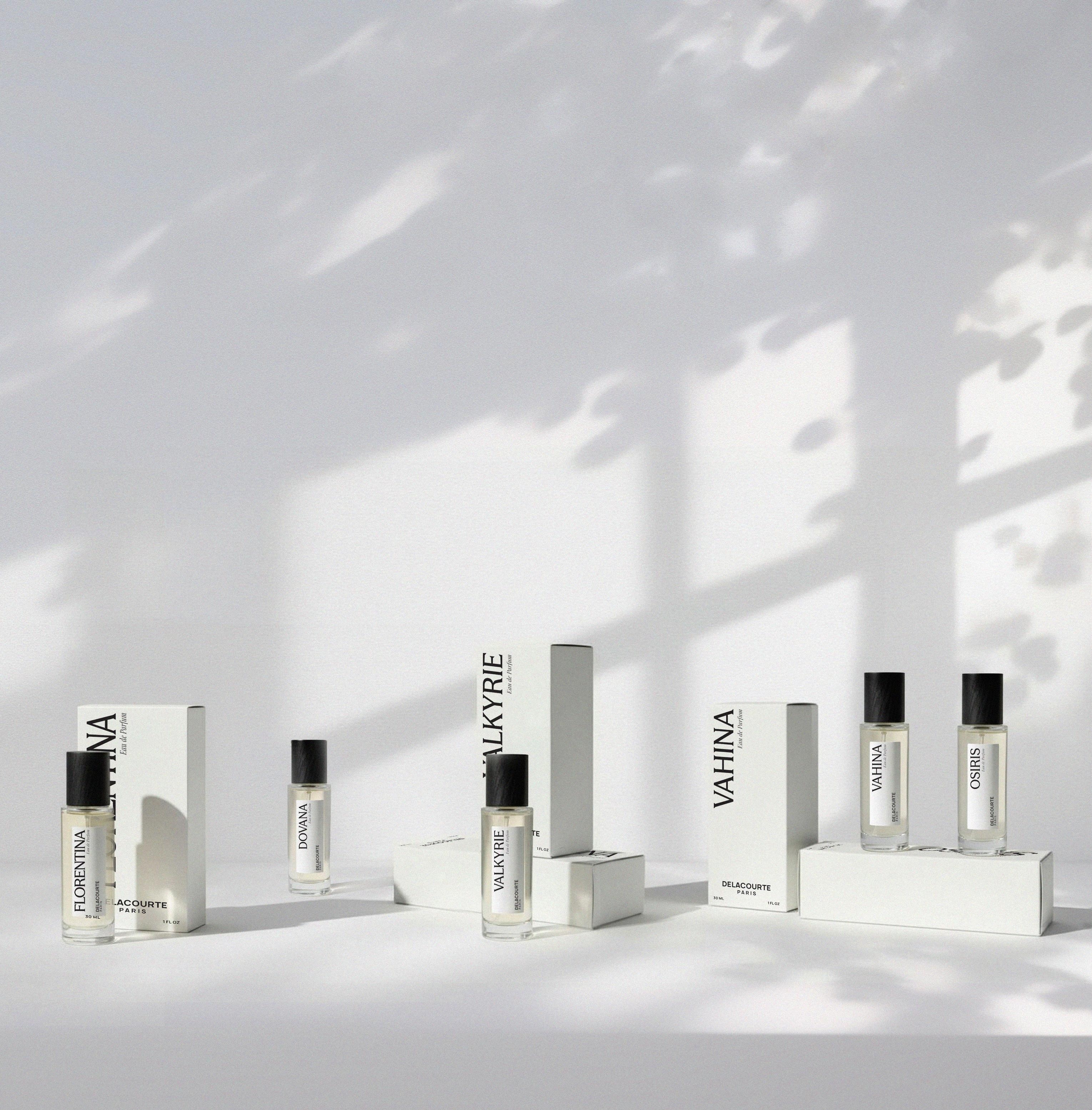
- Dovana by Delacourte Paris
It is rich in farnesol: a note that approaches lily of the valley. Its cost is approximately 9000 euros per liter.