Woods in Perfumery: Sandalwood, Oud, Vetiver, and Woody Notes
Woods are part of the vegetable raw materials used in the composition of perfumes, in the same way as fruits and flowers. In perfumery, many woods can be used in fragrances, including:
- Sandalwood
- Cedar
- Patchouli
- Vetiver
- Cypress
- Oud wood
- Guaiac wood
- Birch wood
Sandalwood: The Milky Wood
Sandalwood is the only soft, milky, and creamy wood. Today, its export is banned and protected by the Indian government, so it no longer comes from India, but from Southeast Asia.
There are several botanical species of sandalwood, such as Santalum Spicatum, found in Australia, which looks like a cedar; or Santalum austrocaledonicum, which comes from New Caledonia.
Natural sandalwood offers a very “muted” and not very powerful note, but of great tenacity. This note is very difficult to work with because it does not perform well on its own in a composition. It is therefore often sublimated by other synthetic sandalwood notes. These synthetic molecules “boost” true sandalwood but must be handled with caution, as they are quite far from the smell of natural sandalwood.
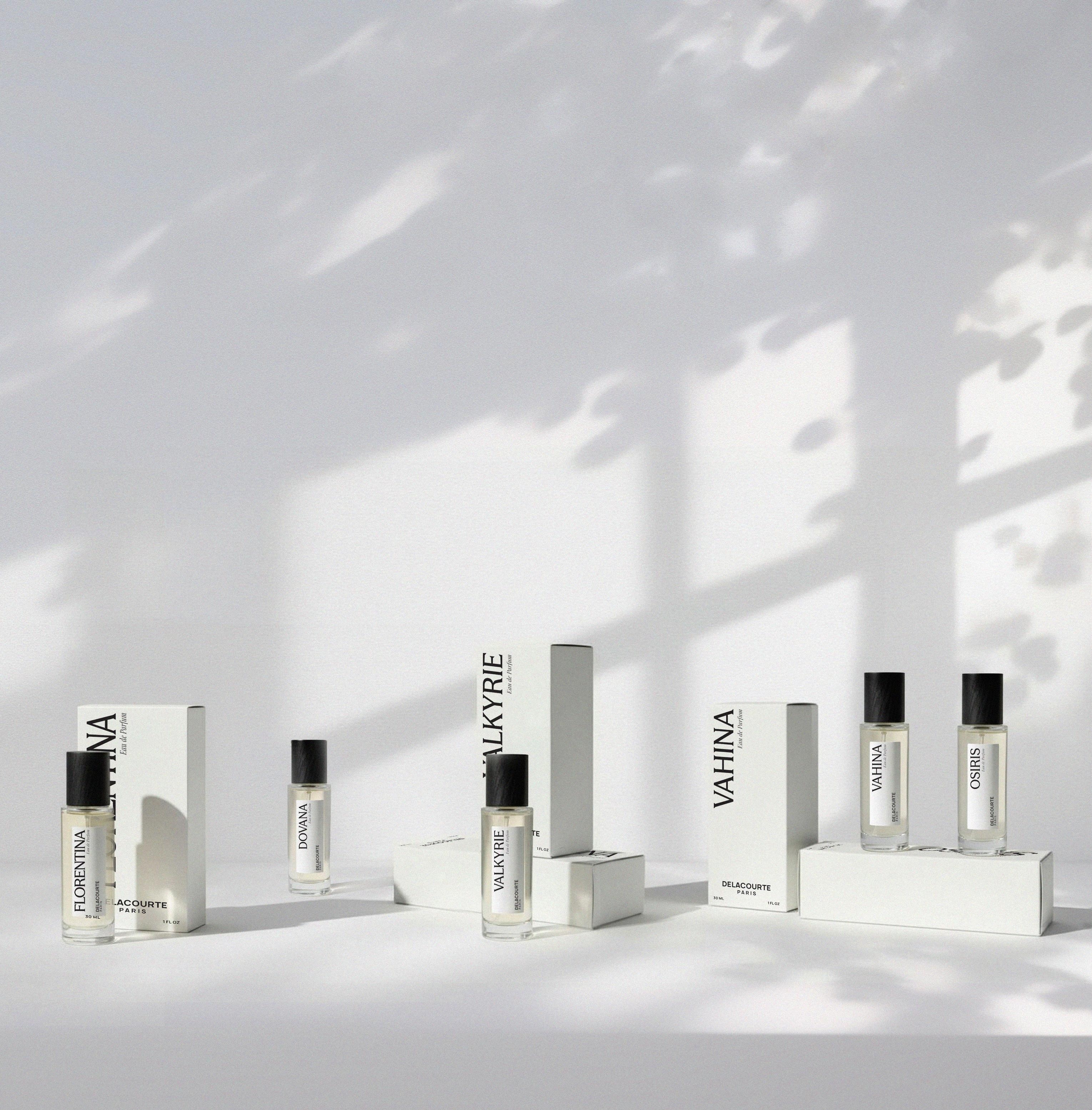
Sandalwood is present in Valkyrie by Delacourte Paris.
The Fig Tree Accord
The fig tree accord, today a classic in perfumery, is composed of different woods, including sandalwood and cedar, as well as coconut, and stemone, a green note, along with the following synthetic sandalwood notes: Sandalore, Sandella, Polysantol, and Ebanol.
Cedar: The Pencil Lead Note
The scent of cedar recalls that of a pencil lead, a sawmill, and wood chips. This wood blends wonderfully with vetiver and citrus fruits, notably grapefruit. Furthermore, many cedar molecules have been isolated from this wood and can be very interesting to use in a fragrance. This is, for example, the case with Cedrol.
Cedar is present in the fragrance Osiris by Delacourte Paris.
Patchouli: The Woody Leaf
Patchouli offers great sensuality to perfumes. The dried leaves of the shrub produce a dark, earthy, camphoraceous, and almost medicinal woody note.
The scent of patchouli was discovered in the West thanks to cashmere shawls imported from the Orient, wrapped in dried patchouli leaves, which then served to protect against insects.
For some years now, there has been what is called a “patchouli heart”. The patchouli scent is stripped of somewhat dusty notes, which allows obtaining a very pure, slender, and majestic note.
Vetiver: The Earthy Root
Guerlain is among the first perfumers to have paid tribute to vetiver, with Vétiver by Guerlain (1959), which marries the fresh woody note of vetiver with citrus, tonka bean, nutmeg, and a tobacco scent, to create a unique accord that distinguishes the fragrance from other vetiver perfumes on the market.
The root of this wood produces an earthy, damp, and smoky note, which gives a real vibration to the perfume, from top notes to base notes. Vetiver from India or Reunion Island, also called “Bourbon”, is the best for perfumery. Java vetiver is drier and much harsher, therefore much less interesting in a fragrance.
Did you know that vetiveryl acetate, a molecule isolated from vetiver, is more expensive than the natural product? This nervous woody scent recalls the smell of fresh hazelnut with more or less smoky accents.
Vetiver is very present in Florentina by Delacourte Paris.
The Pine or Cypress Note
The pine, or cypress note, is a sylvestrian note little used in perfumery. There is pine essence, whose scent is fresh, rising, bitter, and a bit balsamic, as well as excellent notes like Fir Balsam, which is extracted from pine needles and provides a slightly gourmand note with a raspberry facet.
There are synthetic molecules extracted from cypress: Borneol and Isobornyl Acetate, which allow obtaining a smell of pines heated by the sun.
Oud Wood
Many perfumes are now composed of oud wood, also called “agarwood”, “oudh”, “agar wood”, “aloeswood”, “jinko” or even “gaharu”. It is actually a very fragrant dark resin secreted in the heart of trees called “Aquilaria”, when they are infected by phialophora, a fungus.
Since this raw material is very precious and expensive, few brands use it in its natural form. It will most often be a reconstitution of the scent. Currently, oud wood is truly the trendy note in perfumery, and the list of perfumes containing it is very long.
Guaiac Wood
It is a wood with smoky and somewhat leathery notes. If overdosed in a perfume, the scent can give a slightly “smoked ham” note.
Birch Wood (Leather Note)
Contrary to what its name suggests, it is not a woody note, but a dark leather note. Now banned by legislation, there are however very good reproductions of this wood, and beautiful synthetic molecules in the register of soft and light leather, like Sederal, which allows reconstituting leather notes (cf. Leather facet).
Synthetic Woody Notes
Besides these natural woods, there are also very beautiful synthetic woody notes, such as:
Vetiveryl Acetate
This molecule, more expensive than natural vetiver, offers a nervous and rising note, extremely fresh and pure.
Synthetic Sandalwood Notes
There are many sandalwood molecules, such as Polysantol, Sandalore, and Sandella, which cannot replace natural sandalwood, but which nevertheless bring a lot of presence and diffusion in a fragrance.
Amber and Modern Woods
Among other synthetic woody notes, we also find:
- Evernyl: a moss note often present in chypre perfumes (cf. Chypre olfactory family).
- The famous Cashmeran: a soft, almost oriental woody note, with scents of pine forest heated by the sun.
- Ambroxan: a woody, musky, and animalic note evoking ambergris.
- Cedramber and Vertofix: notes close to cedar.
- Iso E Super: a velvety wood, almost musky, which works well in all olfactory families. Trésor by Lancôme contains it in overdose.
- Karanal, Ambrocenide, Z11, Limbanol: amber woods giving incredible power and sillage to the fragrance. These hyper-powerful molecules are especially present in masculine perfumes.
Synthetic woody notes have therefore enormously increased the possibilities of creation in perfumery, and can also embellish, in a fragrance, noble woody notes like vetiver, sandalwood, patchouli, or cedar.