Honey and Beeswax: Gourmand and Animal Notes in Perfumery
“Nothing resembles a soul as much as a bee, it goes from flower to flower like a soul, from star to star and it brings back honey as the soul brings back light.”
Victor Hugo, Ninety-Three.
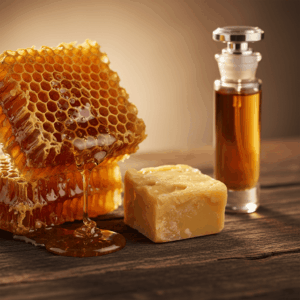
Beeswax is part of the natural raw materials used in perfumery. Honey essential oil does not exist, but perfumers are able to orchestrate the honeyed notes of beeswax with many other olfactory facets or families, and can also compose with an infinite variety of honeyed notes.
History of Honey
Beeswax is secreted by honeybees, which use this material to build the combs of their hive, and store honey and pollen in them. The term “honey” comes from the Latin ‘mel’, and the product, which has existed forever, is endowed with strong symbolism.
Assimilated to the nectar of the gods, it was used in religious rituals and during embalming. In some cultures, honey is considered an elixir of long life, and numerous medicinal and cosmetic properties are attributed to it.
Description of Beeswax in Perfumery
Beeswax evokes a taste of honey, and possesses a note that makes the mouth water, and which brings a sensation of softness and roundness: here is the result of the incredible work of bees.
The honey note is very interesting in perfumes, and can even be regressive for some people (that is to say, they evoke childhood). It is a nurturing, sunny, and mellow note, which brings a lot of tenacity and naturalness to a perfume.
Moreover, the honey note has multiple facets, with scents of grass, hay, tobacco, as well as gourmand, fruity, or leather facets. It blends particularly well with orange blossom, which already contains, in its absolute, a honeyed facet.
Beeswax Absolute
Regarding beeswax absolute, it has a smell of encaustic wax, slightly honeyed, herbaceous, with nuances of tobacco and hay, and with accents of anise, spices, fruits, and leather, depending on the other natural scents that surround it.
The beeswax note is quite difficult to work with. Indeed, it can tend to be too animalic, or to recall an encaustic product: it must therefore be handled sparingly, but has the advantage of giving a lot of naturalness to a floral fragrance.
Some perfumers prefer to create bases containing several honeyed raw materials, rather than using beeswax alone in a composition. This raw material is rather used in heart notes and base notes. However, if the honeyed facet is significant, it can traverse the entire fragrance, from the opening to its conclusion.
Good to know: beeswax is not a vegan product.
Honeyed Notes: Natural or Synthetic?
Honeyed notes, such as beeswax, can be natural, or synthetic.
Natural Honeyed Notes
In perfumery, natural honeyed notes are found in the following products:
- Beeswax Absolute: its scent is quite butyric, very honeyed, and close to broom (shrub with yellow flowers).
- Hay Absolute: from the IFF company.
- Blond Tobacco Notes: can also give honeyed scents.
- Certain flowers can give honeyed notes, like Broom (Genêt) Absolute, with its complex and quite dark note of wax and cassie.
- Honeysuckle or mock orange, cassie, mimosa, immortelle, privet, and pittosporum are other flowers with honeyed facets.
Synthetic Honeyed Notes
Here are the main bases, or synthetic honeyed notes used in perfumery:
- Honey from Robertet: base.
- White Honey: base from Symrise.
- Turkish Tobacco Absolute: Honey, animal, leather base.
- White Honey (De Laire Base): honeyed, encaustic smell.
- Provence Honey (base from Firmenich): tobacco, anise, honeyed, curry, immortelle, coumarin, hay note.
- Phenylacetic Acid: honeyed, fruity, a bit dirty, close to blackcurrant.
- Cinnamic Alcohol.
- Phenylacetic Aldehyde: very vegetal note, wet, cold, rosy, and honeyed.
- Phenyl acetate and phenyl ethyl phenyl acetate.
- Nectarol: quite singular note.
- Isobutyl Phenylacetate: Pear, Hedione, rosy.
- Hydratropic Aldehyde: not very powerful, reminiscent of a cereal bar, apricot-like.
- Acetophenone: white glue note, a bit medicinal.
Honeyed Notes and Olfactory Families
Honeyed notes have the particularity of being able to dress many perfumes and bring notably a warm, sweet, and animal touch to all the following olfactory families of perfumes:
- Chypres: Gentleman by Givenchy; Rose Barbare and Chypre Fatal by Guerlain.
- Woods: Féminité du Bois by Serge Lutens; Rose Ikebana by Hermès.
- Orientals: Rahat Loukoum; Ambre Narguilé; L’Innommable by Serge Lutens; Comme des Garçons; Fumerie Turque; Miel de Bois; Gucci by Gucci; Angel Muse by Mugler.
- Semi-Orientals: such as L’Instant by Guerlain.
- Florals: Néroli Intense by Nicolai; Chat Perché by Goutal, Mélodie de l’Amour by Dusita; L’Envol by Cartier.
- Leathers: Cuir Venenum by Pierre Guillaume.
- Vanilla
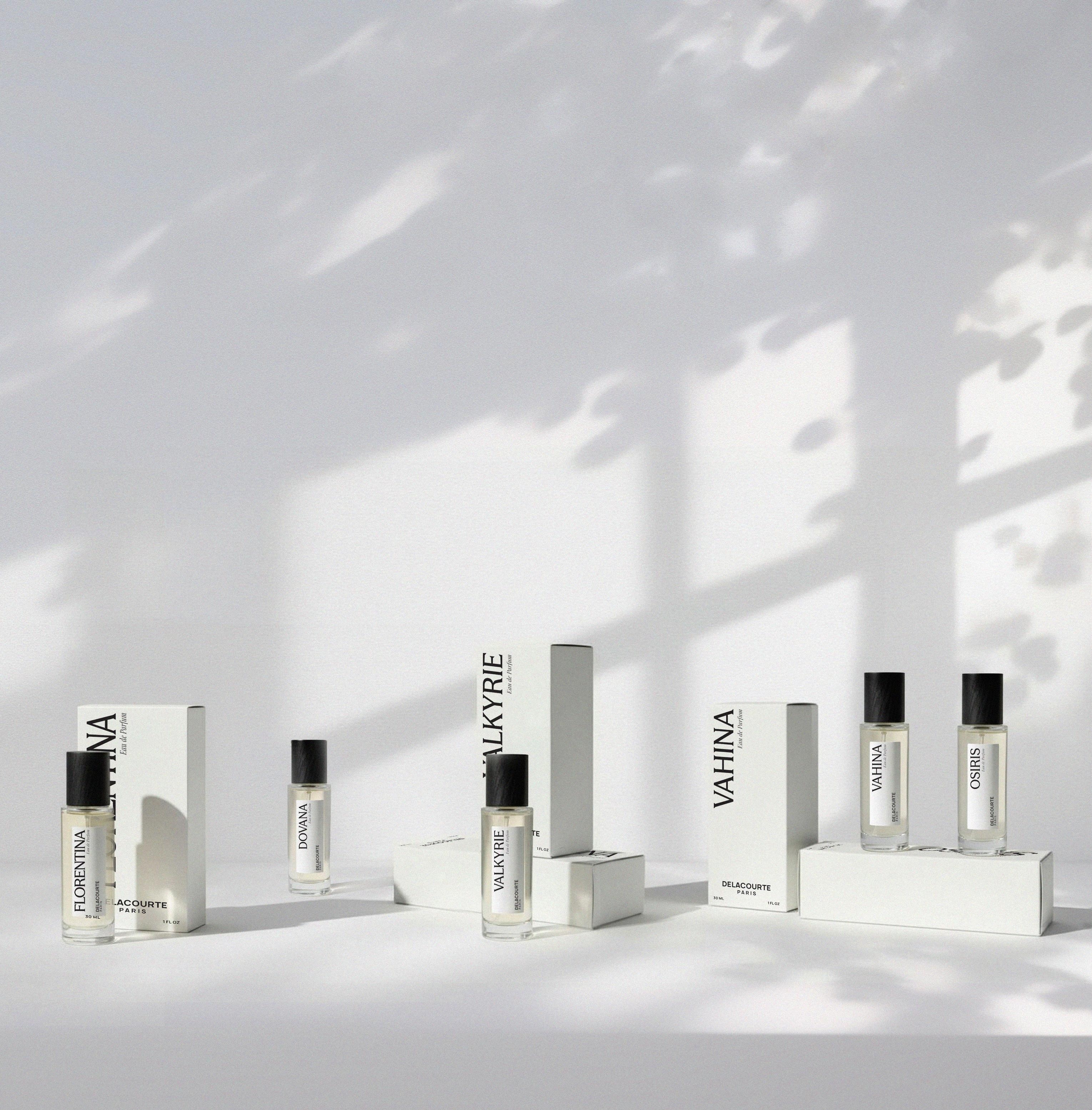
- Orange Blossom: Osiris by Delacourte Paris.
The Honeyed Note: A Beneficial Note
Products made by bees are very rich, varied, and possess numerous benefits on health and in food (with honey, royal jelly, and propolis, for example), because they are rich in calories, antioxidants, carbohydrates, and potassium, and have a prebiotic effect.
Honey is also widely used in cosmetics for its regenerating and healing powers. Finally, beeswax, as well as numerous other honeyed notes, bring delicious enveloping scents to perfumery.