
Castoreum: History, Leathery Scent and the Ban on This Animalic Note in Perfumery
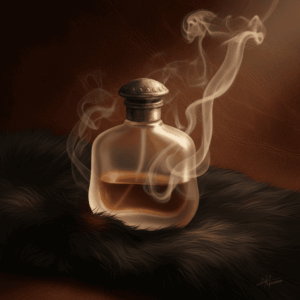
Castoreum is an oily secretion produced by the beaver, once highly prized in perfumery for its power and its leathery, smoky, animalic scent. Now banned from use, it belongs to the historic natural animalic notes, alongside:
- Civet
- Animal musk
- Ambergris (the sole exception still permitted)
- Hyraceum
The Historical Role of Castoreum and Animalic Notes
Discovered by Alexander the Great around 330 BC, animalic notes long fascinated perfumers. Used in very small doses, they act as powerful fixatives that anchor compositions, lending sensuality, roundness and exceptional longevity. Castoreum notably contributed an intense leathery facet to both masculine and feminine perfumes.
At the beginning of the 20th century, these notes were commonly employed in leathery accords, orientals and chypres.
What Is Castoreum?
Castoreum is a highly fragrant, oily secretion produced by the perianal glands of the beaver. This substance is used by the animal to waterproof its fur and to mark its territory.
Originating from Canada and Russia, the beaver was hunted for its fur and its glands. The scent sacs were processed using volatile solvents to produce a resinoid, an absolute or a tincture. Approximately 5 kg of secretions were required to obtain 1 kg of absolute.
In medieval times, castoreum was incorporated into “pommes de senteur” or pomanders (small perforated jewels) to mask foul odours and provide discreet fragrance. It was also used in medicine to treat epilepsy and headaches (owing to a molecule closely related to aspirin).
Ban and Olfactory Description
Ban and Legal Status
Castoreum has been banned from conventional perfumery for some twenty years. This prohibition resulted from the campaigns of organisations such as the WWF, as harvesting the substance required killing the animal. Today, hunting is regulated to manage populations, but the product is no longer used by the major ethical perfume houses. Only the use of ambergris remains authorised, as it is harvested without causing animal suffering.
Scent and Olfactory Facets
The scent of castoreum is unique: it is leathery, animalic and smoky. It evokes notes of fur, ink, plum, black olives and dried fruits.
Highly prized in woody accords, leathery compositions and orientals, castoreum was also used in certain confectionery, cigarettes and flavourings (notably vanilla) to reinforce their character.
Modern Alternatives to Castoreum (Synthetic and Plant-Based)
Although its use is now banned, the industry has developed synthetic solutions and plant-based alternatives to recreate this leathery and smoky facet:
- Synthetic castoreum: Molecules that reproduce its animalic and smoky scent (e.g. Artessence by Biolande). The result is not identical, but comes remarkably close.
- Animalic plant notes: Perfumers now use natural materials rich in animalic nuances: cumin, costus, cistus labdanum, sage, Atlas cedar, hyssop, and osmanthus flower (for its leathery facet).
- Hyraceum: A permitted substance derived from the fossilised urine deposits of African rock hyraxes.
Thanks to these innovations, modern perfumery preserves the sensuality of animalic notes whilst respecting environmental ethics.