Cedar in Perfumery: A Structuring and Elegant Woody Note

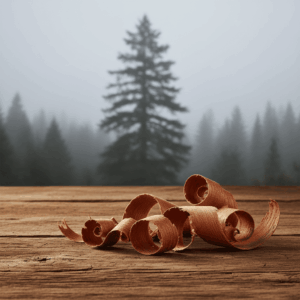
Red cedar wood chips on a wooden table, illustrating the dry woody note used in perfumery.

Cedar is an important wood in perfumery; it is considered a backbone by perfumers; it is a note that gives vibration to the fragrance. It supports the entire olfactory pyramid; it can traverse the perfume from top notes to base notes.

It is a wood increasingly used in feminine perfumes, just like vetiver, sandalwood, and patchouli (cf. Woody Facet).

Botany and Varieties

There are several botanical names for cedar used in perfumery:

  • Juniperus Virginiana / Mexicana (Virginia or Texas Cedar)
  • Cedrus Atlantica (Atlas Cedar)
  • Cryptomeria (Japanese Cedar)

Virginia cedars, red cedars, or Texas cedars are the two main species used in perfumery. They are actually quite close olfactorily speaking. Atlas cedar is truly different and more difficult to work with.

Origins and History

Atlas cedar is native to the Middle East, North Africa, and the Himalayas; it was introduced to Europe in 1839. It is a beautiful tree with majestic, very fragrant wood. Its branches are spread horizontally and in superimposed planes. Cedar comes from the Latin cedrus derived from the Greek Kedros.

The first use of cedar dates back to ancient Egypt; it was extracted for cosmetic purposes as well as for funeral ceremonies and embalming. This tree occupies a privileged place in many cultures, from Japan to Egypt via China and Greece. Cedar wood brushes with the sacred. In Lebanon, it is the emblem of the country and floats on its flag.

Cedar in Japan

In Japan, it bears the name of Hinoki wood, which is a variety of cypress native to Japan and related to conifers whose smell is very close to that of cedar. There is also Sugi cryptomeria or Japanese cedar which means fire tree because it is highly flammable.

These two varieties of wood are widely used in Japan for the construction of temples, traditional bathtubs (ofuro), and also for the recipe of their incense.

Throughout history, most civilizations have used this large tree for their constructions thanks to its rot-proof qualities and extraordinary longevity; it can live up to three thousand years. It is a wood also used for its moth-repellent properties.

Little anecdote: When your marriage reaches new heights, exactly in the 49th year, you will celebrate the cedar anniversary, the one preceding the golden anniversary.

Extraction and Molecules

Cedar essence is obtained by steam distillation (cf. Distillation) from wood chips. The wood is subsequently reduced to powder.

Chemistry has also made it possible to isolate numerous molecules from cedar. These molecules (cf. Synthetic Notes), such as cedryl acetate, cedrol, vertofix, or cedramber can sublime other notes and be interesting in a composition. Main chemical constituents: Alpha-cedrene, cedrol, beta-caryophyllene.

Olfactory Description and Use

Cedar is a dry, vibrant, fusing, racy woody note that brings structure and elegance to the perfume. It can traverse the entire fragrance from the top note to the base notes. It can be considered a backbone in a composition.

Alternatively, cedar essence can be played overdosed. It can be orchestrated with other woody notes (cf. Woody Facet) such as patchouli, vetiver, sandalwood to create a perfume with a direct, clearly woody message. Cedar blends wonderfully with vetiver and with citrus fruits, notably grapefruit.

Use in Perfumery

Cedar is often associated with masculine perfumes or woody families (cf. Masculine Woody Family). It is increasingly present in feminine perfumes; one of the first was Féminité du Bois by Serge Lutens in 1992.

It can be associated in all olfactory families: citrus, floral, oriental, chypre (cf. Chypre Family). It can even be interesting in an Eau de Cologne as a base note. Without cedar, half of the perfumes on the market could not be created.

Therapeutic Properties

It is a lymphatic and venous decongestant; it acts on cellulite. It is also antiseptic and fungicidal. There is also a natural note, cedar leaf, which has more aromatic notes (cf. Aromatic Facet).

This note is used in naturopathy for its curative virtues. It was the salvation of Captain Jacques Cartier’s crew, suffering from scurvy and trapped in the ruthless winter of Quebec, in the early 16th century.

Perfumes Containing Cedar

Here is the list of main perfumes containing cedar:

  • Féminité du Bois by Lutens
  • Bois de Violette by Lutens
  • Dolce Vita by Dior
  • Tonka Impériale by Guerlain
  • Bois Marocain by Guerlain
  • Santal Blush by Tom Ford
  • Bois Farine by L’Artisan Parfumeur
  • Rush for Men by Gucci
  • Déclaration by Cartier
  • Light Blue by Dolce&Gabbana
  • Eau des Merveilles by Hermès
  • Cèdre Sambac by Hermès
  • Poivre Samarcande by Hermès
  • Terre by Hermès
  • Sycomore by Chanel
  • Audace by Profumum Roma
  • Palissandre d’Or by Aedes de Venustas

A Material. An Emotion. A Fragrance.

Delacourte Paris reinvents perfumery's iconic raw materials to give them a new, unique, and unexpected personality.
Discover the fragrances with our
Discovery Set.

Join our Instagram community

Delacourte Paris Fragrances
Scroll to Top