Jasmine in Perfumery: The Star Flower with Sensual Notes
It is a tiny star with delicate whiteness that announces the coming of day with its intense scent.
It fades under the sun’s rays, resumes its generous perfume at night to deliver it again the following day.
The fragility of the jasmine flower contrasts with the astonishing power of its perfume which virtuously declines all olfactory octaves.
Origins of Jasmine
The two species most used in perfumery are Jasminum sambac and Jasminum grandiflorum.
- Jasminum sambac: It comes from Eastern India and the southern Himalayas; it is also found in China. It is a shrub with evergreen and bushy foliage, pruned every year by about 30cm. Its name sambac is said to come from the Sanskrit campaka meaning heady perfume.
- Jasminum grandiflorum: It comes from northern India. It is cultivated today in India, Egypt, Morocco, Italy in Calabria, and France. It is characterized by 5 long petals.
The name jasmine is probably derived from the Persian word yasmine which means fragrance.
Jasmine Harvest: A Meticulous Job
The harvest of the jasmine flower is done at dawn, very early in the morning, to prevent the sun from burning its white petals. The flowering of jasmine sambac takes place in May and June while jasmine grandiflorum blooms later and is harvested from August to November. The lifespan of a jasmine plant, sambac or grandiflorum, is 15 years.
Jasmine from Grasse
In Grasse, there is very little production of jasmine flowers left, which remains reserved almost exclusively for Chanel; it is harvested by the Mul family who owns large plantations there.
There are also other productions in Grasse, certainly quite confidential, but this allows certain perfume brands to have the possibility of putting the price of a good Grasse jasmine in their formula.
The Picking
Baskets of jasmine flowers fill slowly from 7 am until 1 pm. A worker picks 350g of flowers per hour, or 2kg per morning worked; it is tiring work because one must bend one’s back all day and the shrubs are low.
Jasmine does not exist, alas, in the form of climbing plants for perfumery. Moreover, one must be precise; dexterity is essential to detach the jasmine flower without damaging it. One must turn the hand a quarter turn, not take the flower buds, and delicately separate the mature flowers from the green foliage and the stem.
It takes 800 kg of fresh flowers to obtain 1kg of concrete, or 600g of jasmine absolute after transformation, and it takes 8,000 flowers per kg collected.
How is Jasmine Absolute Obtained?
Jasmine flowers do not support treatment by distillation; jasmine essence or essential oil does not exist.
Enfleurage (Ancient Method)
In older times, enfleurage was the means to extract the scent of jasmine. It was practiced cold, on fatty substances and each flower was then delicately placed by hand on the fat which has the power to absorb the jasmine perfume. Thus, scented pomades or oils were obtained; the same process is used for the tuberose.
Extraction by Volatile Solvents (Modern Method)
This technique, too expensive, is almost abandoned; it is replaced today by volatile solvents. This technique is called the extraction technique by volatile solvents. The solvent used is mainly hexane which is heated and then eliminated by evaporation.
A very fragrant waxy material called the concrete is thus isolated. It is by mixing the concrete with alcohol, heating it then cooling it that the concrete is purified of the plant components and waxes it contains. The absolute, which is an essential oil, is then obtained once the alcohol has evaporated.
There is an even nobler product which is the MD absolute for molecular distillation. The result gives a scent with more impact, greener, orange-hued, and less medicinal.
Characteristics of Each Jasmine Variety
In the 1950s, Grasse industrialists planted jasmine in Italy, Egypt, and then in India with the exotic jasmine flower. In general, jasmine grandiflorum is greener and transcribes well the so fragrant scent of the flower that one can smell in the evening in summer in Mediterranean countries.
Depending on the terroir, the jasmine flower has very specific characteristics, but as a general rule, it contains the following components: indole (animal note), benzyl acetate, linalool, cis-jasmone, benzyl alcohol, benzyl salicylate, cis-3-hexenol, eugenol, methyl anthranilate.
- Egyptian Jasmine: deep, sensual, sunny, fruity (paracresol).
- Indian Jasmine Sambac: fruity (banana), a bit green, honeyed notes, animalic (indole) it approaches orange blossom. 30,000 tons of jasmine are harvested in Tamil Nadu.
- Grasse Jasmine: balanced, green notes, quite animalic.
In L’Instant de Guerlain which I co-created with Maurice Roucel, there is jasmine sambac. Jasmine sambac is more of the orange blossom type, anthranilated and more honeyed, fruity, and solar.
Some brands use a “communelle” (blend) of the 3 grandiflorum qualities, those from India, Egypt, and Grasse.
There is also recently the Jasmine Grandiflorum from Calabria. The particularity of the Calabrian one is that it is more fruity with a note of stewed strawberry and its animalic cresolic side gives it a lot of power. One of the Calabrian producers decided to relaunch the cultivation of jasmine grandiflorum stopped for a long time in favor of bergamot.
Jasmine costs about 4000€ per kg of absolute. This orange aromatic treasure is preciously kept in a cold room with an armored door.
Constituents of Jasmine and the Revolutionary Molecule: Hedione
The main constituents are as follows: indole, methyl anthranilate, methyl acetate, benzoate, cis-3-hexenyl acetate and cis-3-hexenol.
About 259 components are known in jasmine absolute but one molecule contained in jasmine particularly revolutionized perfumery: hedione, coming from the Greek meaning pleasure.
Its exact name is methyl dihydrojasmonate; it is isolated in jasmine, patented in 1962 by Firmenich and identified by Dr. Edouard Demole.
Very expensive at first, it is now really affordable; it was used for the first time by Edmond Roudnitska in Eau Sauvage by Christian Dior in 1966, then all fresh waters on the market used it.
This magnificent molecule of hedione smells like a fresh flower. It is a very soft and airy scent; it is now one of the most used materials in perfumery. It is used in overdose in children’s perfumes as well as in floral perfumes and Eaux Fraîches and perfumes for children.
The scent of hedione, isolated from jasmine, brings fluidity. This note allows breathing life into floral notes, opening up heart notes more; it is at the same time light, relatively tenacious, it is a timeless note. It is even sometimes used as a solvent.
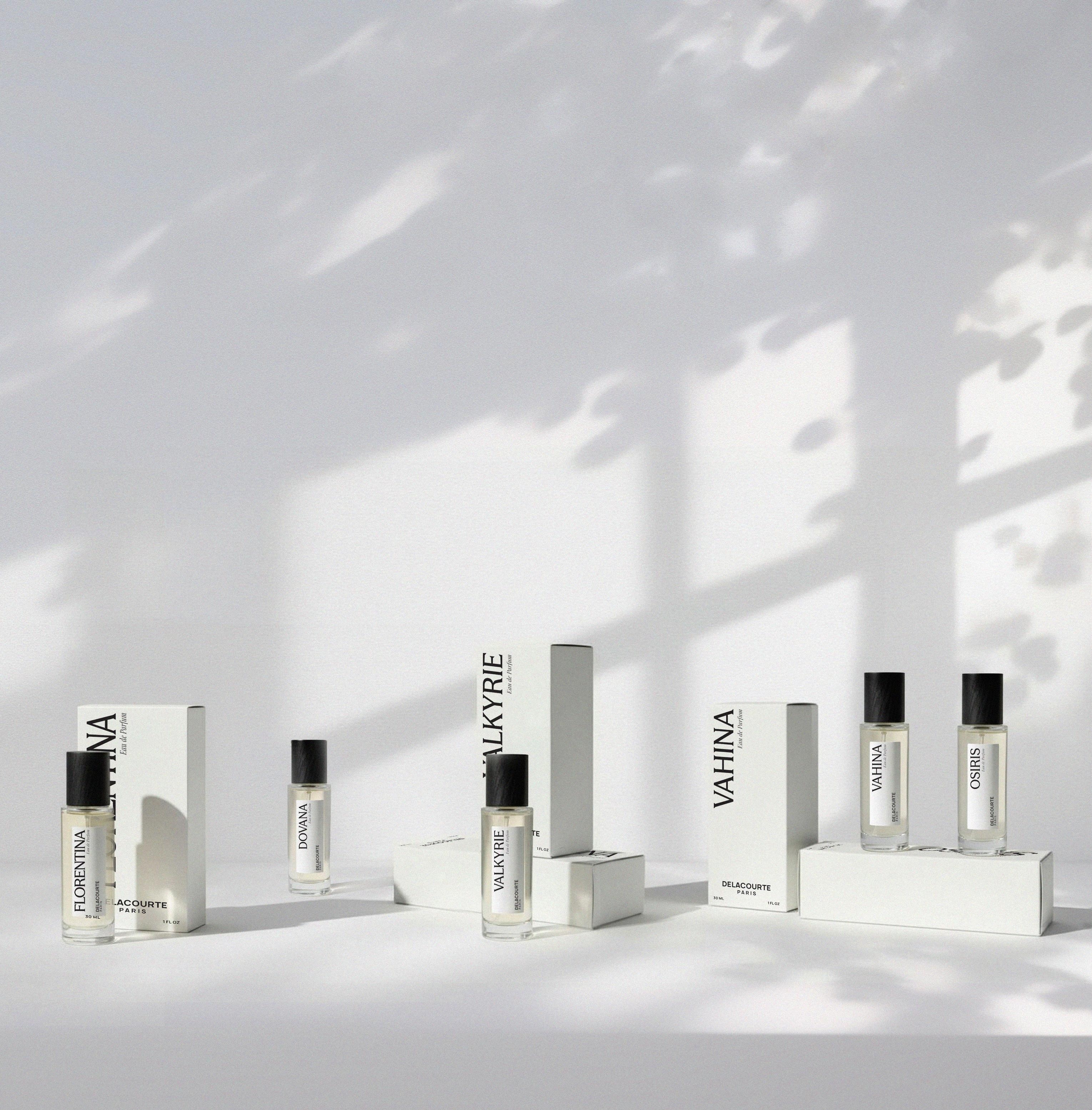
It is also a scent enhancer; the perfume of this jasmine note sublimates freshness. Thanks to this molecule, the Eau Fraîche family was created with Eau Sauvage by Dior as the leader, then others appeared like Eau de Rochas, Eau de Lancôme, Eau de Guerlain, or Dovana by Delacourte Paris.
A perfumer from Firmenich, a Swiss company that creates both molecules and fragrances, told me that thanks to hedione he had the impression that the perfume breathed from the inside. At Firmenich, the palette has widened; there is now pure Hedione HC, Paradisone, a very pure hedione and recently Splendione.
Anecdotes about Jasmine
- I like jasmine tea when you can see the flower distinctly among the tea leaves; there are also jasmine infusions.
- I like jasmine so much that I grew some on my balcony, alas not jasmine grandiflorum, but as a climbing plant, this one is quite hardy and rustic, it is star jasmine, you just have to make sure to water it well.
- The first use of jasmine sambac was the scenting of tea and the decoration of floats for religious festivals.
- In India, I was lucky enough to see the work of jasmine woven into necklaces often intended for deities.
- Women in India wear them in their hair; it seems that jasmine essence promotes hair growth.
- A true panacea, jasmine heals wounds; it is calming and aphrodisiac. Ayurveda also recognizes jasmine’s sedative properties relieving headaches.
- It is also used in cooking, in white rice that accompanies curries.
- Jasmine is very often linked, whether in India or Tunisia, to wedding ceremonies.
- It participates in alcohol-free perfumes, attars, often coupled with sandalwood essential oil, intended to purify the body before prayer.
Use of Jasmine and Emblematic Perfumes
The jasmine flower naturally has a powerful, undulating, suave perfume, and is part of the white flower family. It is a flower that scents enormously, but it can be orchestrated differently by the perfumer, either treated as a sensual, extroverted, intoxicating flower or worked as a delicate flower.
A unique olfactory diamond, jasmine offers a range of facets of astonishing amplitude, for the perfumer to cut according to their inspiration. Jasmine is part of the heart notes of the perfume, I say that it gives curves, roundness, or flesh to the perfume.
The jasmine flower is part of the heart of great perfumes. It is found in overdose in fragrances like Jardins de Bagatelle or Samsara by Guerlain.
Classically, it is often associated with rose: Liu by Guerlain, N°5 by Chanel, original Joy by Patou, 24 Faubourg by Hermès, Alien by Mugler, Organza by Givenchy.
- Arpège by Lanvin
- Diorella by Dior
- Mille by Patou
- First by Van Cleef & Arpels
- Jasminum Sambac by Chloé
- Imperial Tea by By Kilian
- Cèdre Sambac by Hermès
- Gucci Bloom by Gucci
- A la Nuit by Serge Lutens
- 3 fleurs by Parfum d’Empire
- J’adore Dior
- Jasmin des Anges Dior
- Splendida Jasmin noir Bulgari
- Shalimar Guerlain
- Souffle de Parfum Guerlain
- Le Parfum Elie Saab
- Jasmin rouge Tom Ford
- Eau des Sens Diptyque
- La chasse aux Papillons L’Artisan Parfumeur
- Jasmin 17 Le labo
It is a floral note that is easy to use in candles. When well made, a jasmine candle can give the impression of a bouquet of jasmine scenting the room. Jasmine now inspires pastry chefs like Pierre Hermé and Ladurée with the jasmine macaron; you will also find it in coffee at Nespresso with its flowery variety Onirio.
More than a plant, jasmine is above all a heady, sensual, carnal white flower scent; it is called in Grasse “The Flower” which reigns alongside roses, it is and will remain a source of inspiration for the perfumer. It is said that jasmine gives its soul to the stars and that the rose gives it to the sun.
Jasmine in Delacourte Paris Perfumes
I use jasmine a lot in the heart notes of my perfumes but they are even more present in florals like Dovana.