Mimosa in Perfumery: The Golden Flower of the Riviera
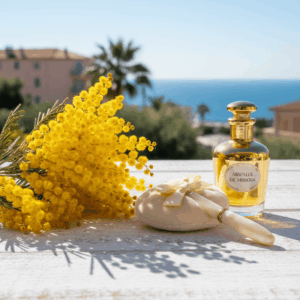
Mimosa is like a burst of laughter in the middle of winter; its flowers are one of the emblems of the south of France. Mimosa is, along with hyacinth, one of the few flowers to grow in the heart of winter.
Botany and Origins
Botanical name: Acacia Dealbata
Mimosa is associated with the acacia tree. While acacia is indeed the Latin name for mimosa, it should not be confused with the shrub named acacia from the Robinia family. The etymology of its name comes from the Latin mimus which means farce (mime), referring to the leaf which retracts as soon as it is touched.
Mimosa was introduced to France by the navigator Nicolas Baudin following an expedition to Oceania and it was first planted in the gardens of Joséphine de Beauharnais at the Château de Malmaison notably, then it succeeded in seducing perfumers. Initially coming from Australia, mimosa was introduced to Europe and notably to the Côte d’Azur in the 19th century.
Mimosa is essentially cultivated in the south of France, India, Egypt, and Morocco. There are about 1200 varieties of mimosa, including the “4 seasons” mimosa which is quite common in the south of France. It is a tree that can reach 20 meters in height.
Symbol: Since 1946, mimosa has been the emblem of Women’s Day, March 8th exactly, because mimosa, under its apparent fragility, hides great strength and energy.
Extraction and Olfactory Description
In perfumery, mimosa is treated by volatile solvent extraction; an absolute is then obtained, but a mimosa accord can also be created from natural and synthetic raw materials, this is what is then called a reconstitution or reproduction.
The scent obtained by absolute is quite far from the smell of fresh mimosa that one can inhale when standing under a blossoming tree.
One can perceive a powdery floral note, with a reminiscence of rice powder. Mimosa is also slightly almondy; it also possesses a quite pronounced green facet (cf. green facet) because the leaves are distilled at the same time as the yellow balls, and these will give the absolute light accents of cucumber or even melon. As a result, the pure scent of the mimosa ball is somewhat betrayed.
Mimosa has a very powdery and dry, even dusty smell; it is also straw-like (scent of straw) and honeyed. It is a heart note, but one can smell its rising green notes right from the top notes.
Use in Perfumery
Perfumers work little with mimosa as a main theme. On the one hand because it is a flower difficult to tame and on the other hand because it has this reputation of having retro or vintage accents.
The perfumer can use mimosa absolute to create floral accords or floral facets; it will then be accompanied for example by a rose, a tuberose, or a jasmine.
Mimosa is often used for its powdery notes. Alone it will then bring a lot of naturalness to a composition; associated with notes like iris root, violet, or carrot seed, they will accentuate its powdery facet.
Main constituents: Anisic aldehyde, coumarin, monadenial, heliotropin, benzaldehyde.
Focus on Cassie: The Cousin of Mimosa
Botanical name: Acacia Farnesiana
It is a flower from the same family as mimosa, acacias, but a difference exists: thorns can be seen on the branches. This small tree originating from India is cultivated around the Mediterranean, mainly in Egypt and in semi-tropical regions.
Like mimosa, it is a flower quite difficult to work with in perfumery. Its smell is denser, more mysterious than that of mimosa. It possesses animal notes close to those of ylang-ylang and also sulfurous effects and metallic accents.
The cassie flower is rare and is rather reserved for fine perfumery. Cassie has a very faceted scent: herbaceous, powdery, spicy, woody, balsamic, honeyed, aniseed, or even leathery. It also has a scent of hay. Cassie blends very well with iris, mimosa, and violet notes.
Perfumes Containing Mimosa
- Aqua Allegoria Tiaré-Mimosa by Guerlain
- Champs-Élysées by Guerlain
- Après l’Ondée by Guerlain
- Paris by YSL
- Amarige by Givenchy
- Poême by Lancôme
- Beige perfume extract by Chanel
- Farnésiana by Caron
- Mimosa pour Moi by L’Artisan Parfumeur
- Bulgari pour Femme
- Volupté by Oscar de La Renta
- Summer by Kenzo
- Dahlia Divin Nectar by Givenchy
- Mimosa & Cardamom by Jo Malone
- Velvet Mimosa Bloom by Dolce & Gabbana
- Infusion de Mimosa by Prada
- Mimosa Indigo by Atelier Cologne
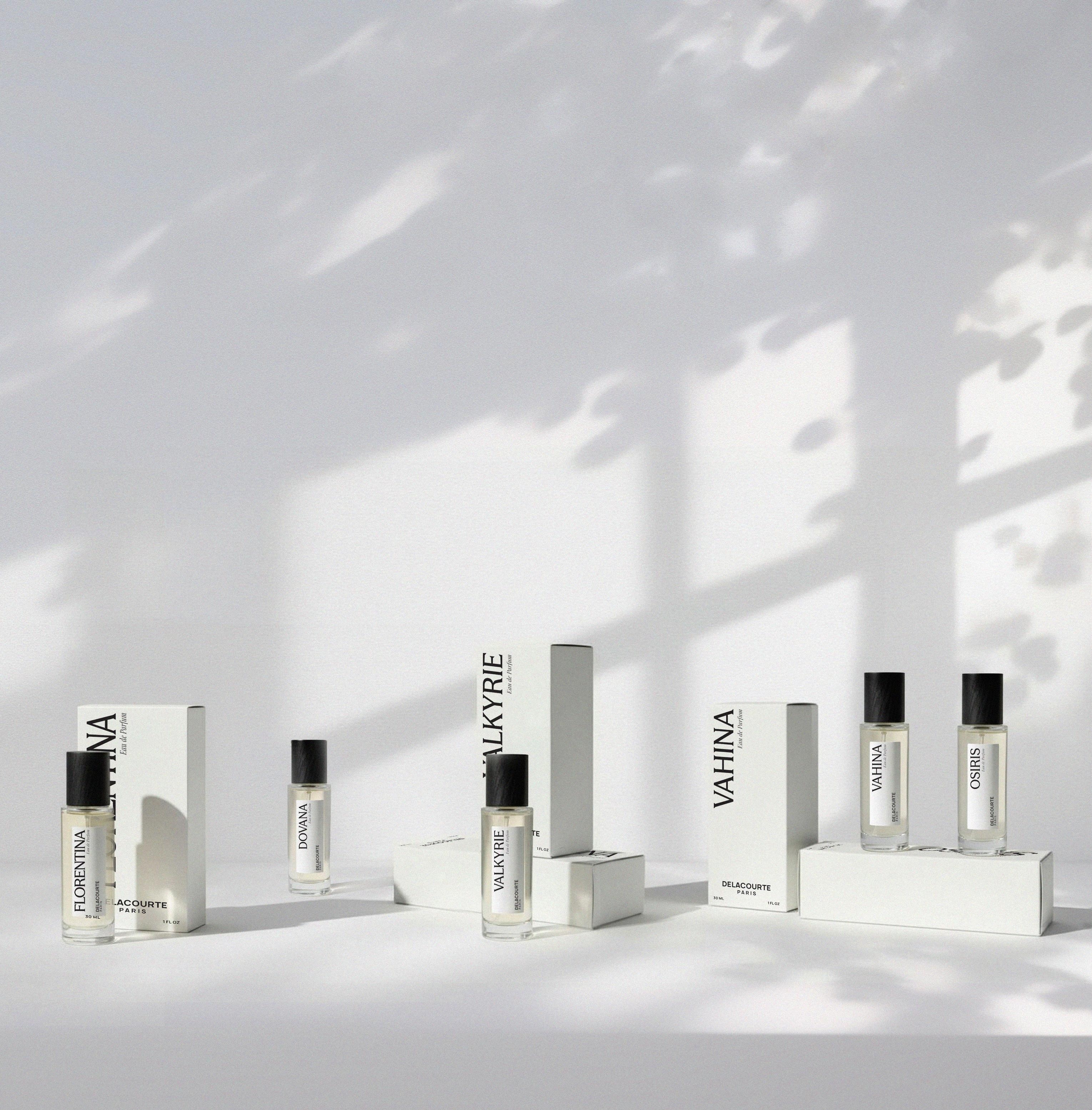
- Florentina by Delacourte Paris
Perfumes Containing Cassie
- Farnésiana by Caron
- Après L’Ondée by Guerlain
- L’Heure Bleue by Guerlain
- Une Fleur de Cassie by Frédéric Malle