The Musky Facet: Guide to White, Clean, and Powdery Musks
In perfumery, the main accord gives the perfume its soul. This accord can be dressed with different facets to make the composition more complex. The musky facet, also called “musky notes” or “white musks,” can blend with all olfactory families (citrus, floral, amber, chypre, woody, fougère).
These notes group together soft, cottony, very tenacious, and comfortable scents, offering a sensation of cashmere or baby skin.
History of Musks: From Animal to Synthetic
Musk has been used since the 4th century for its stimulating and aphrodisiac properties. Originally, it was an animal material, secreted by the musk deer of Tibet (Tonkin musk). Today, animal-origin musk is banned for animal protection.
Since the end of the 19th century, perfumery has used an infinite variety of synthetic white musks. These materials have become indispensable for their power as a sensual, addictive, and enveloping fixative. However, some people may be anosmic (insensitive) to certain white musks.
The 4 Categories of Synthetic Musks in Perfumery
The chemistry of musks has evolved to meet environmental and health standards (IFRA).
1. Nitromusks (The Old Ones)
Developed as early as 1888, these are the oldest. Olfactorily, they are very powdery.
- Musk Ambrette: Self-banned since 1981 (phototoxic).
- Musk Xylene and Ketone: Formerly widely used.
- Musk Moskene and Tibeten: Banned by IFRA.
2. Polycyclic Musks (The Round Ones)
Created between 1955 and 1970, they are generous, round, and act as base notes. They are now limited due to biodegradability concerns.
- Tonalide (Fixolide): Quite woody and earthy.
- Galaxolide: Round, soapy, and fruity (blackberry). Very widely used in functional perfumery (laundry detergents).
- These polycyclic musks are generous, round, and act as base notes. These musks are recognized as poorly biodegradable. Moreover, they have been identified in small quantities in human breast milk. However, they are not in the process of being banned. Detergent manufacturers limit them nonetheless, for environmental protection reasons.
3. Macrocyclic Musks (The Modern Ones)
These are the most recent, prized, and sometimes expensive. They are used by major groups.
- Muscone: A slightly animalic note.
- Muscenone: A powdery note.
- Exaltolide: Floral and angelic note (close to ambrette).
- Habanolide: Woody and powdery note.
- Ambrettolide: Ambery and fruity scent.
- Globalide: Vaporous and clean scent.
- Musk T (Ethylene Brassylate): Round and soft.
- Others: Dihydro ambrettolide, Cosmone, Nirvanolide, Astrotone.
4. Linear or Alicyclic Musks (New Generation)
These very soft, powdery, and clean musks (linen, cotton effect) are not subject to any environmental attacks.
- Helvetolide: Clean, white, milky, fruity.
- Romandolide: Linen, cotton effect.
- Sylkolide, Applelide, Serenolide.
Vegetal Musk: Ambrette Seed
There is a natural alternative: ambrette seed, coming from a variety of hibiscus. This vegetal musky note possesses pear fruity accents, very elegant.
Iconic Musky Perfumes
All perfumes contain musks, but some make it a signature (overdose):
- L’Instant Magic – Guerlain
- Pour Homme – Bulgari
- Mûre et Musc – L’Artisan Parfumeur
- Flower – Kenzo (Overdose of Muscenone)
- La Cologne – Mugler
- White Musk – The Body Shop
- Original Jovan Musk – Kiehl’s (Quite animalic)
- Muscs Koublaï Khan – Serge Lutens (Fur note)
- Musc Tonkin – Parfum d’Empire (Animalic)
- Musc Ravageur – Frédéric Malle (The most animalic)
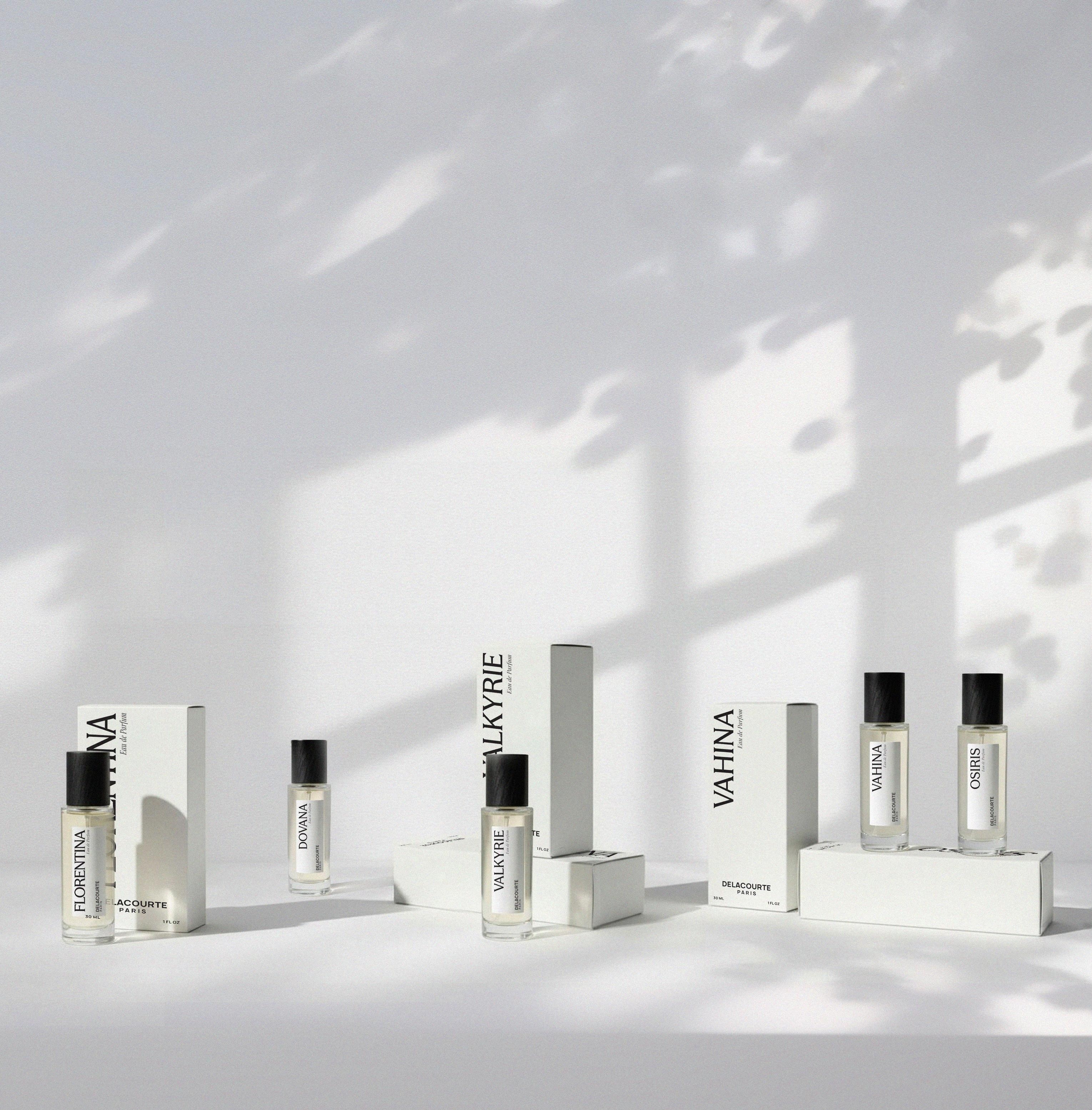
- Florentina – Delacourte Paris (Powdery musk)
- Dovana – Delacourte Paris (Clean musk)