Vanilla in Perfumery: From the Mexican Pod to Synthetic Molecules
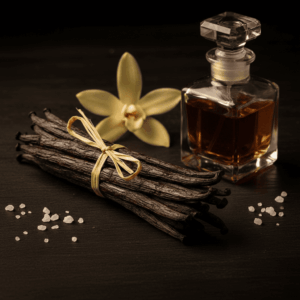
The Aztecs used vanilla to flavor a chocolate-based nectar. It is said to contain benefits to fight fears and anxieties. It provides health and strength.
Vanilla in Perfumery
Vanilla, a very pretty member of the Guerlinade, belongs to the orchid family. In the wild, it consists of a climbing vine that can reach about thirty meters in height.
Native to Mexico, it is today cultivated on the islands of Reunion, Madagascar, Mayotte, and in Java. Its three different botanical forms, Vanilla Pompona, Vanilla Tahitensis (more floral), and Vanilla Planifolia are different in their scents.
Pollination and Cultivation
Vanilla Planifolia is a vanilla that was born in Mexico thanks to the work of a small bee, the Melipona. But since a slave, Edmond Albius, found the secret of vanilla fertilization, the orchid flower is now pollinated by hand using a small stick, and this in all countries.
It takes about 18 months to obtain its fruit, the black pod we know. It now comes essentially from Madagascar but also from Mayotte, India, etc.
Vanilla Tahitensis
In L’Instant Magic by Guerlain, I asked to use Vanilla Tahitensis in the development of this perfume. It is much more floral powdery, more “heliotrope”. I discovered it thanks to tastings of different origins of vanilla (Uganda, Mexico, Tahiti, Reunion, Madagascar) at Pierre Hermé. This Tahitensis vanilla has many facets. It is a vanilla that is not sweet but floral and powdery and of course vanilla-scented.
Vanilla is one of the essential raw materials of the amber or oriental facet.
Transformation of Vanilla: A Long Process
The green and thin vanilla pods only consent to deliver their perfume after following a long artisanal process. Fifteen to eighteen months elapse between pollination and marketing.
Once harvested, the vanilla pod is scalded for three minutes, then covered for twenty-four hours. It is only after being exposed to the sun from morning until early afternoon, on each side, for a few hours a day, that they take on the appearance we know, after fifteen days.
They become black, dry, and rid of their bacteria. Vanillas are then sorted by hand, one by one, to ensure they are dry. After drying in the sun, then in the shade for three months, calibration, and finally, refining for two to four months, the vanilla will be ready.
The Multiple Forms Used of Vanilla
- Vanilla Tincture: to obtain a vanilla tincture, pods cut into small pieces are macerated in alcohol for at least one month. This technique is almost no longer used today.
- Vanilla Absolute: vanilla absolute is obtained after extraction by volatile solvents of the pods.
- Synthetic Products: vanillin and ethylvanillin are synthetic raw materials. These two vanilla notes are much sweeter.
It is by mixing vanilla tincture with vanillin or ethylvanillin that this nectar of gourmandise will bring extreme sensuality to the perfume upon contact with the skin. It will reveal its aphrodisiac power with sensual and gourmand notes.
The Gourmand Note in Perfumery (Synthesis)
It is the molecules of vanillin and ethylvanillin which, on the other hand, give this gourmand note. From the beginning of the 19th century, the synthesis of vanillin was the subject of eager research. Indeed, the extraction of natural vanilla is a long and meticulous process. In addition to being a rare product, this complicated process makes the use of natural vanilla very expensive in perfumery. Vanillin will therefore allow the composition of essential perfumes and revolutionize the taste of ice creams and chocolates.
Reunion Island remains today the best producer of vanilla, from which the aroma, vanillin, is extracted. It is a quite powerful aroma that fully characterizes vanilla.
25,000 tons of vanillin are produced per year. It is the most manufactured aroma in the world, far ahead of coffee and chocolate.
Vanillin is a molecule naturally present in the vanilla pod; it represents 0.75% to 2% of the mass of a pod. To extract one kilogram of vanillin, 500 kg of natural vanilla are needed. The price per kilogram of natural vanillin is between 1200 and 1400 dollars, while the price of this weight for a synthetic molecule is 15 dollars.
Who Will Allow the Synthesis of the Molecule?
It was in 1874 that vanillin was synthesized for the first time. German chemists Ferdinand Tiemann and Wilhelm Haarmann finally found the exact formula of vanillin: C8H8O3. They also discovered two reactions allowing the synthesis of this precious molecule: hydrolysis and oxidation of coniferin.
This substance comes from the resin of conifers. This extraction process, although expensive, allowed founding a company in Holzminden, in the German coniferous forests: Haarman’s Vanillinfabrik. This company is known today as Symrise.
Other Synthesis Processes
Karl Reimer and Ferdinand Tiemann discovered in 1876 another way to synthesize vanillin, starting from guaiacol. This process was immediately adopted on an industrial scale thanks to its profitability at the Haarman’s Vanillinfabrik factory which therefore became Haarman & Reimer Vanillinfabrik.
From 1876, numerous syntheses of vanillin were discovered. Vanillin is formed from oats, acetyleugenol (clove molecule), and acetylisoeugenol.
A derivative of vanillin, ethylvanillin, was synthesized in 1894. This molecule releases a powerful smell of gourmand and food-like vanilla. It is this ethylvanillin that will sublimate the perfume Shalimar by Guerlain in 1921/1925.
Presence of Vanilla in Mythical Perfumes
The surprising vanilla pod is endowed with exceptional aromatic richness. The majestic fleshy pod of Madagascar vanilla is in fact not so “sweet”. Its cajoling and carnal warmth declines in honeyed, milky, spicy, animalic, rum-like, amber, and woody notes.
Vanilla is a sorceress endowed with undeniable, sensual, and generous charm. Its hypnotic sillage invites sin but also happiness. It is a raw material considered luxurious because it is now becoming rarer. Its price can be multiplied by 10 in a year.
Cult Perfumes with Vanilla
Vanilla is present in:
- Jicky by Guerlain
- Tocade by Rochas
- Baiser Volé by Cartier
- L’Heure Perdue by Cartier
- Bulgari Man Black Cologne
- Pink Sugar by Aquolina
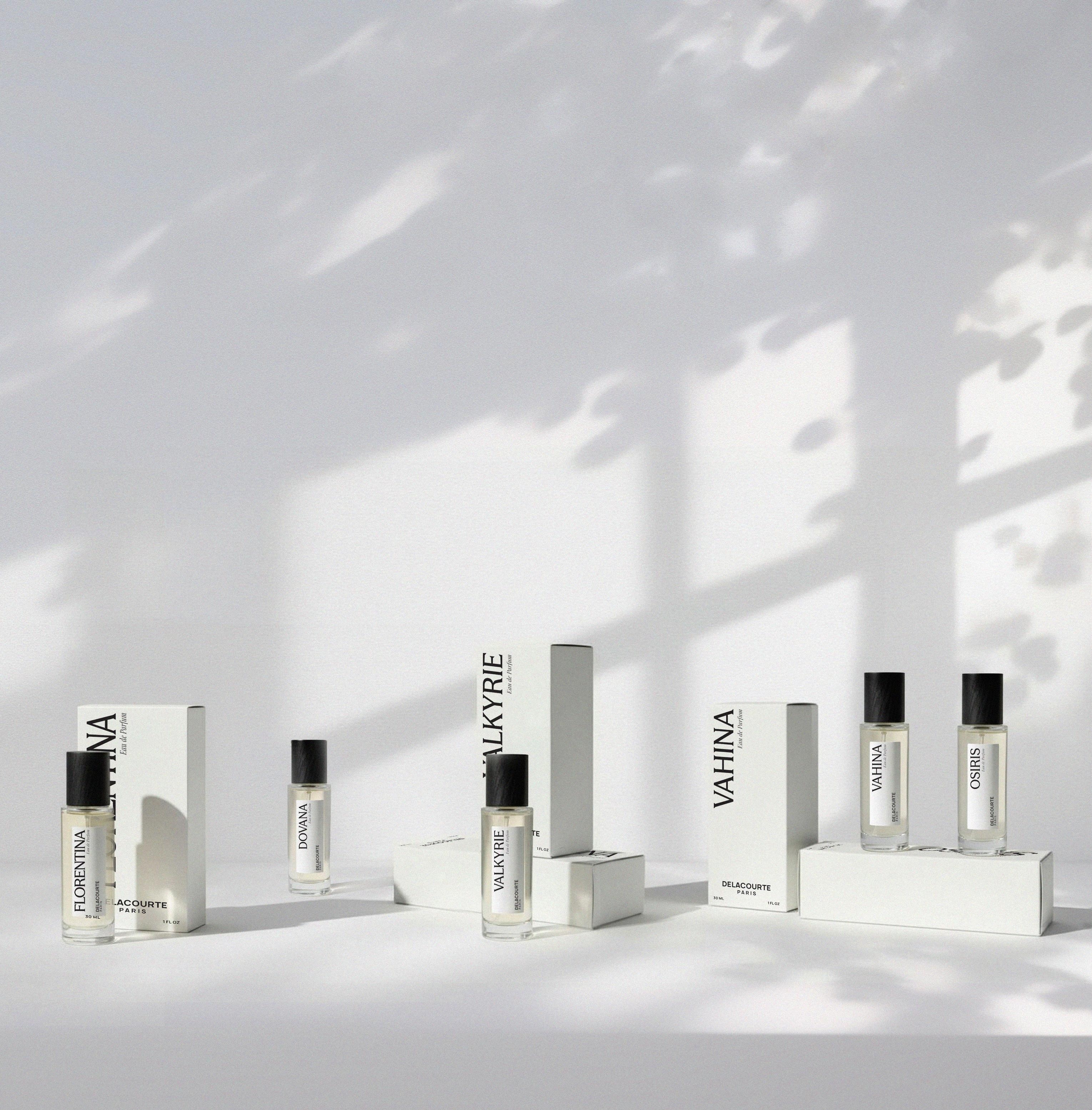
The Vanilla Collection by Delacourte Paris
To discover all the subtleties of vanilla and its fragrant power, dive into the Vanilla Collection by Delacourte Paris and travel by bringing to your nose:
A collection that will please vanilla aficionados but also those who declare “oh no I don’t like vanilla”.