Tonkin Musk and Animal Notes in Perfumery
I told you about synthetic musks in a previous article. As promised, I am addressing the subject of animal notes that are no longer used in perfumery with a focus on Tonkin musk.
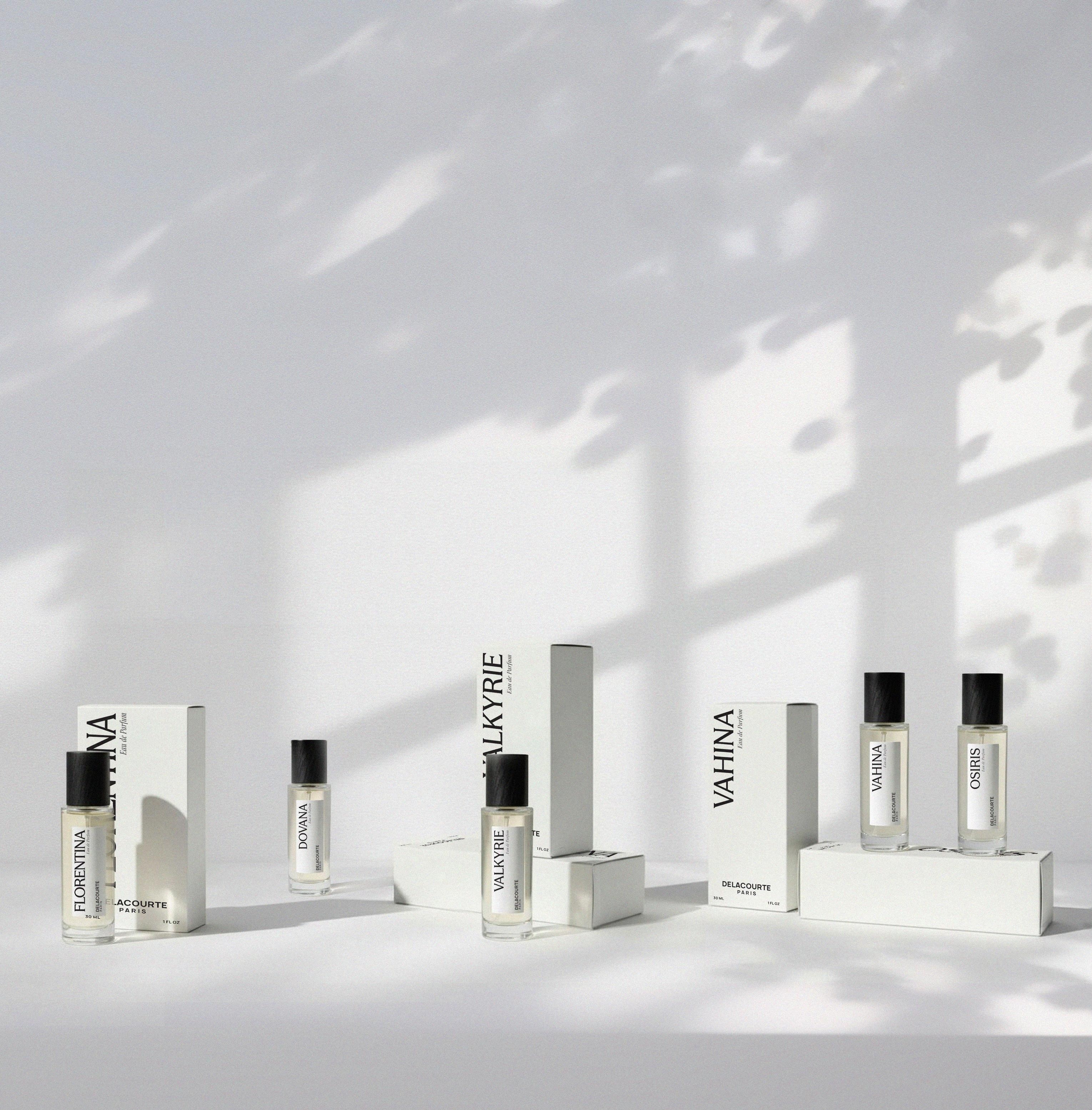
I created a Perfume Collection around white musks which are dressed in different facets: citrus, green, solar, spicy, woody, or even powdery.
The Musk Deer
Quick as lightning, the musk deer leaps and disappears behind the bamboo. Imagine it at the end of the rains in northern India, at an altitude of over 2000 meters, in the heart of the Himalayas. It is of Asian origin, a fairly sedentary animal that feeds on leaves, flowers, mushrooms, mosses, and lichens.
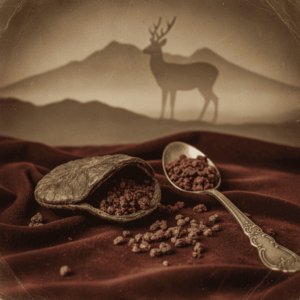
This animal resembles a roe deer about 80 to 100 cm long, 50 to 70 cm high at the withers, and weighs between 10 and 17 kg; only the male is hunted. Animal musk is secreted by an organ located between the navel and the penis. The abdomen contains the famous pod which holds 25 grams of musk grains.
The leather of this musk deer was used by Tibetans to make small bags. Its hair was reserved for stuffing the best mattresses and pillows used by Chinese emperors.
Hunting, Poaching and Protection (CITES)
Hunting the musk deer was practiced intensively in the 1960s-1970s. It was a sport that was very lucrative. At the time, I had in mind the price of 300 to 400,000 francs per kg (i.e., €50,000 per kg) and it can go up to €200,000 per kg.
Even though it is protected, this musk deer is unfortunately still poached. To protect this species, measures have been taken; the musk trade is controlled by the Convention on International Trade in Endangered Species of Wild Fauna and Flora (CITES) signed in Washington on 03/03/1973.
The goal is to establish global controls on the trade of wild animals and plants and their products; this convention was applied in France in 1978.
In 1988, captive breeding was set up in China to obtain musk without killing the animal. The animal can provide musk 10 to 12 times in its life. Musk extraction was recommended once a year on musk deer aged 2 and a half to 8 years.
The Reputation of Musk
In Asia, there is still a great demand for musk; it is an aphrodisiac that is drunk with a straw in small vials at the counter of certain bars. It is claimed that musk cures impotence or improves heart problems as well. This is why the association of musk with the notion of sensuality, tenacity, and sillage remains in people’s minds.
But do not confuse animal musk which smells like a billy goat and an aroma of black coffee with the synthetic musky notes I talked about in a previous post. This is why synthetic musks are called white musks so that there is no confusion. Animal musk notes and musky notes or white musks are both base notes.
In the Middle East, as laws regarding raw materials are different from Europe, one can still find musk as well as other natural animal materials in certain compositions. Natural musk blends very well with leather or woody notes including Oud which itself is an animal note, highly appreciated.
Extraction and Qualities
The pod is lubricated and then a sort of silver spoon is inserted with which the grains are gently extracted. This method was not very satisfactory and was practiced without anesthesia.
From the musk grains, cold tinctures and more rarely, hot infusions were prepared with 96° alcohol. These products were kept for a long time because time made them better. They were stored in huge bottles called Demijohns for a minimum of 18 months.
Despite all these efforts to preserve the existence of the musk deer, it appears that breeding was not a good solution. The musk deer is a solitary species that reproduces poorly in captivity. Overpopulation leads to fights between males. It has also been proven that the musk deer raised alone produced better musk.
The Different Qualities of Musk
- Tonkin Musk: coming from hunting in China, Tibet, Mongolia, and Kashmir.
- Kabardin Musk: the lowest quality, it is 4 times less powerful than Tonkin musk.
- Assam Musk
- Tawpee Musk
- Yunnan Musk
- Bouchara Musk
Falsification of Musk
Musk being very interesting from a lucrative point of view, many falsifications have been seen. The agents of falsification were multiple: earth, dried blood, liver, dried hair, manure, pieces of lead, infused tea leaves. Skilled hands opened the pod and emptied the precious product, filling it with these falsification agents. At the very beginning, musk was bought in pods. It was then bought in grains.
Musk has a honey-like consistency, a brownish-red color that hardens quickly once out of the pod and then takes on a blackish-brown color. Good qualities are soft to the touch and blackish-brown in color. Good quality pods yield 70% musk grains against 40 to 60% for bad ones.
In this animal musk, numerous molecules were found which allowed obtaining numerous musky notes identical to those found in this animal musk. Muscone is the characteristic constituent of natural animal musk, present from 0.5% to 2%. Animal musks are now banned by WWF in perfumery, but there are other solutions.
Vegetable Substitutes (Natural)
Ambrette (Vegetable Musk)
Ambrette or vegetable musk grows in Indonesia, India, Seychelles, West Indies. Its seeds, found in a variety of hibiscus, give, by distillation, a musky smell due mainly to ambrettolide. A very expensive product, ambrette is also cultivated in Holland, France, Hungary, and Germany.
It is a slightly musky, peppery, green scent, quite iridescent with a pear smell in top notes. The roots and fruits are used to extract essential oil; the stems are used in confectionery.
It brings a lot of elegance to the fragrance; I used it in Dovana, one of the perfumes of my Musk Collection. Ambrette possesses a scent that blends with all other raw materials: citrus (lemon, bergamot, tangerine), woody notes (sandalwood, vetiver, patchouli, cedar), oriental notes (tonka bean, incense) or floral notes (rose, jasmine, tuberose, neroli, orange blossom, peony).
Other Natural Substitutes
- Truffle Tincture: Tinctures and alcoholic resinoids were and are still used in perfumery and liquor making. This aromatic scent has the advantage of giving an animal, sensual, and above all natural note.
- Costus Essence: It is a very leafy plant that can reach 2 to 3 meters in height which grows in Kashmir and northern India. The root is dried, split, shelled, and slightly roasted. I advise you, for example, to smell the men’s perfume Kouros by YSL, which integrates this smell of costus well.
- Goldenstone or Hyraceum: The animal is the Hyrax (Daman) which urinates on rocks and it is a very singular story. The stones impregnated with this liquid are recovered, the whole is distilled in order to obtain a very interesting note in the same tonality as civet. As a result, an authorized natural animal scent is obtained.
- Cumin: It is a hot spice with spicy notes produced in India, Morocco, and China. Cumin possesses a powerful and animal smell that can be reminiscent of perspiration.
- Blackcurrant Bud: Honeyed notes can have animal inflections, like beeswax absolute (cf. Honeyed Notes). Broom Absolute Calabria, note of Wax and Blackcurrant, it possesses a Butyric note that smells of rancid butter.
- Cistus Labdanum: Comes from a Mediterranean shrub. This tree secretes a sort of viscous gum, which sheep are fond of. It exists in the form of concrete; from this concrete, cistus absolute is obtained (cf. Volatile Solvent Extraction). It also exists as an essence (cf. Distillation); its scent is leathery, balsamic, animal, warm, and intense.
Synthetic Substitutes (Molecules)
- Costus Oliffac: olfactory reconstitution of costus by IFF, but more animalic than the natural one.
- Animalis Base by Synarôme: its main constituent is Paracresyl Phenyl Acetate. It is the base of the perfume Kouros by YSL with added costus.
- Chevral: it is the same genre as the Animalis base, but it comes from IFF. Chevral is more powerful than the Animalis base.
- Synthetic Castoreum: like Castoreum Artéssence by Biolandes. True castoreum gave a very interesting leather note, used in many feminine or masculine perfumes.
- Skatole: as its name suggests, it is a very scatological note.
- Indole: very powerful smell and synthetic note, but present naturally in the jasmine flower, giving an animal note, very useful to boost florals. Indole can also be superb in an oriental perfume, a chypre perfume, or woody.
- The Paracresol Family: Paracresol (stable smell), Methyl Paracresol, Paracresyl Acetate, Paracresyl Phenyl Acetate, Methyl Paracresyl Ether.
The Case of Ambergris and Civet
As a reminder, ambergris is a pathological concretion of the sperm whale, still used in certain very high-end perfumes. It is one of the most expensive raw materials in perfumery whose scent, slightly iodized (marine facet), powdery, tobacco-like, leathery is refined. It is the only natural animal note that is authorized, because the animal is not killed.
Nevertheless, because of its exorbitant cost, ambergris can be replaced by: Grisalva, Grisambrol, Cetalox (very chic), Ambrofix, Paracresyl Isobutyrate, Ambrinol, Ambrarome.
Civet (Banned)
As a reminder, civet has a very powerful and wild scent; it is now banned. It was used pure by Ethiopians on their wedding night. The scent of civet was found in the perfume extracts or eaux de parfums of the fragrances Jicky by Guerlain or Mouchoir de Monsieur (cf. Masculine Perfume). It is a rather violent scent, as if one were smelling the skin of the animal.
Synthetic Substitutes: Civettone, Tonkitone, Muscarome.