Le Labo Review: Santal 33, Thé Noir 29 and Lys 41
1. My encounter with Le Labo
This is one of those successful niche brands. Having been in the profession for a good number of years, I could hardly miss it: I naturally know a few of their fragrances, and I even have friends who wear them, but I did not know the whole catalogue. This article gave me the chance to dive deeper into their creations and into their singular history.
Because I worked with Maurice Roucel on the development of several fragrances, I went to the Le Labo boutique in Paris for the first time, curious about what he had been able to create. And there I thought: he really loves Guerlain! Because Labdanum 18 has some guerlinade in it. The second time this brand caught my attention was when I smelled Thé Noir 29 on a friend: I was truly won over by the fragrance (only the fragrance!).
2. The story of Le Labo: from Grasse to New York
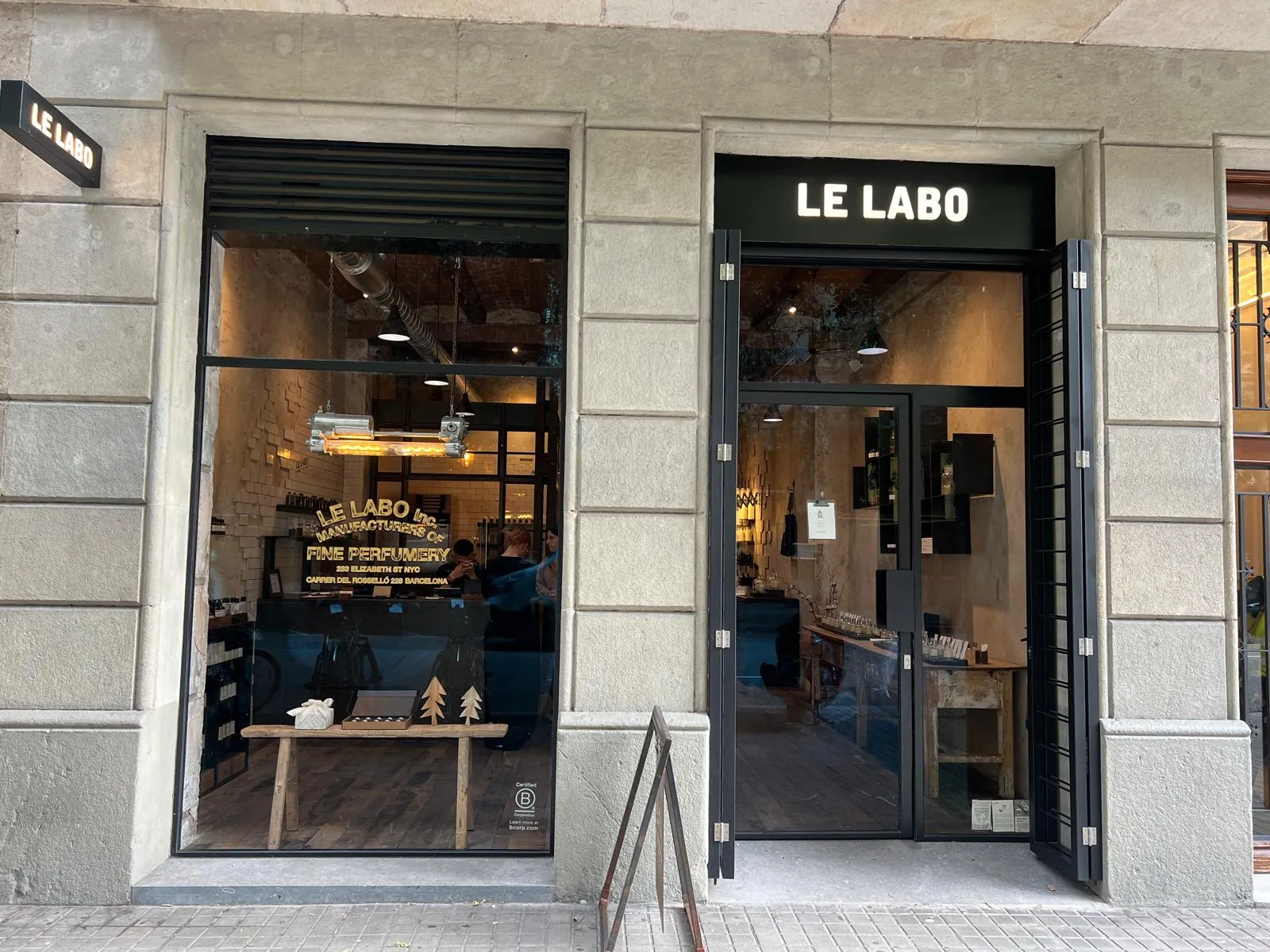
Le Labo was created by two founders: Fabrice Penot, who built his career in major cosmetics groups, notably at L’Oréal, is the creative visionary of the duo; and Édouard Roschi, who cut his teeth at Firmenich, is the scientist and the developer. They met through work, at Giorgio Armani Parfums, in the early 2000s, and became friends. They then both decided to move to New York, with the wish to create a “slow perfumery” brand with an “artisan” spirit and personalised bottling, and above all the wish to create a beautiful creative perfumery brand.
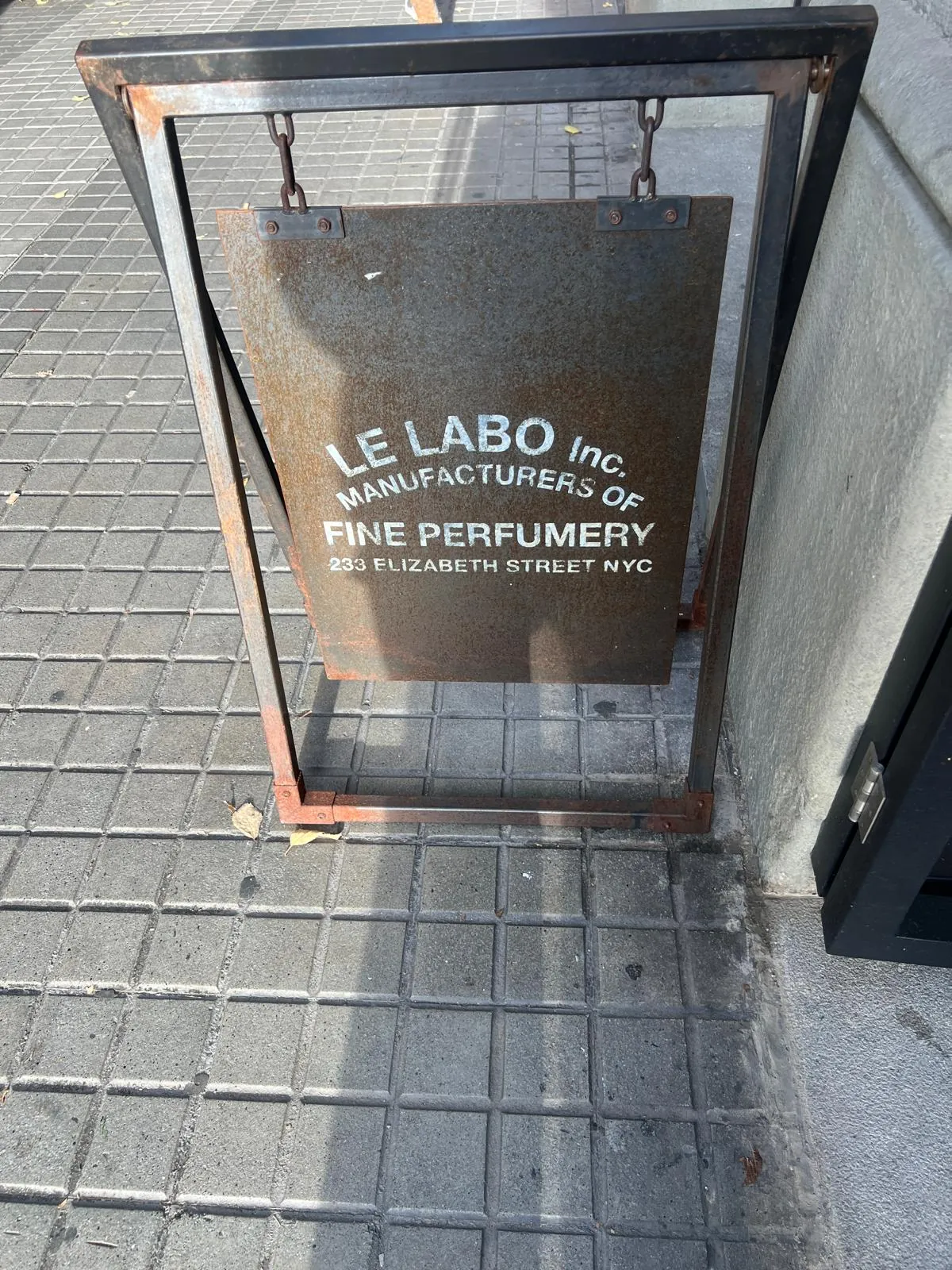
In 2006, they opened the very first Le Labo laboratory-boutique in the Nolita neighbourhood of New York (on Elizabeth Street), working with renowned noses such as Daphné Bugey, Frank Voelkl or Nathalie Lorson, most of them from Firmenich, with exceptions such as Françoise Caron, whose last post was at Takasago, or Maurice Roucel.
In 2014, Le Labo joined the Estée Lauder group; the house is now run by Deborah Royer.
Its philosophy: “We were born in Grasse and raised in New York.”
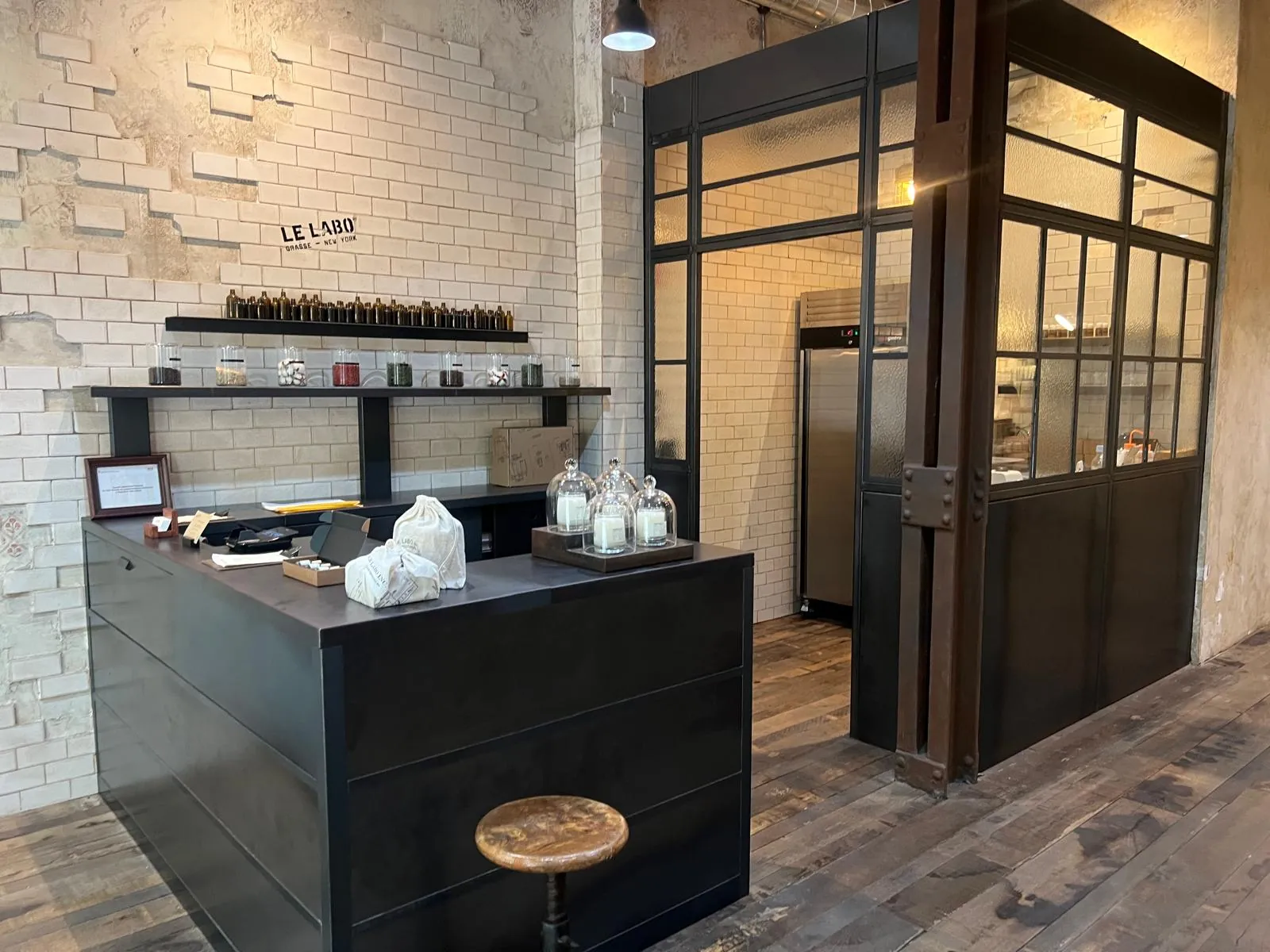
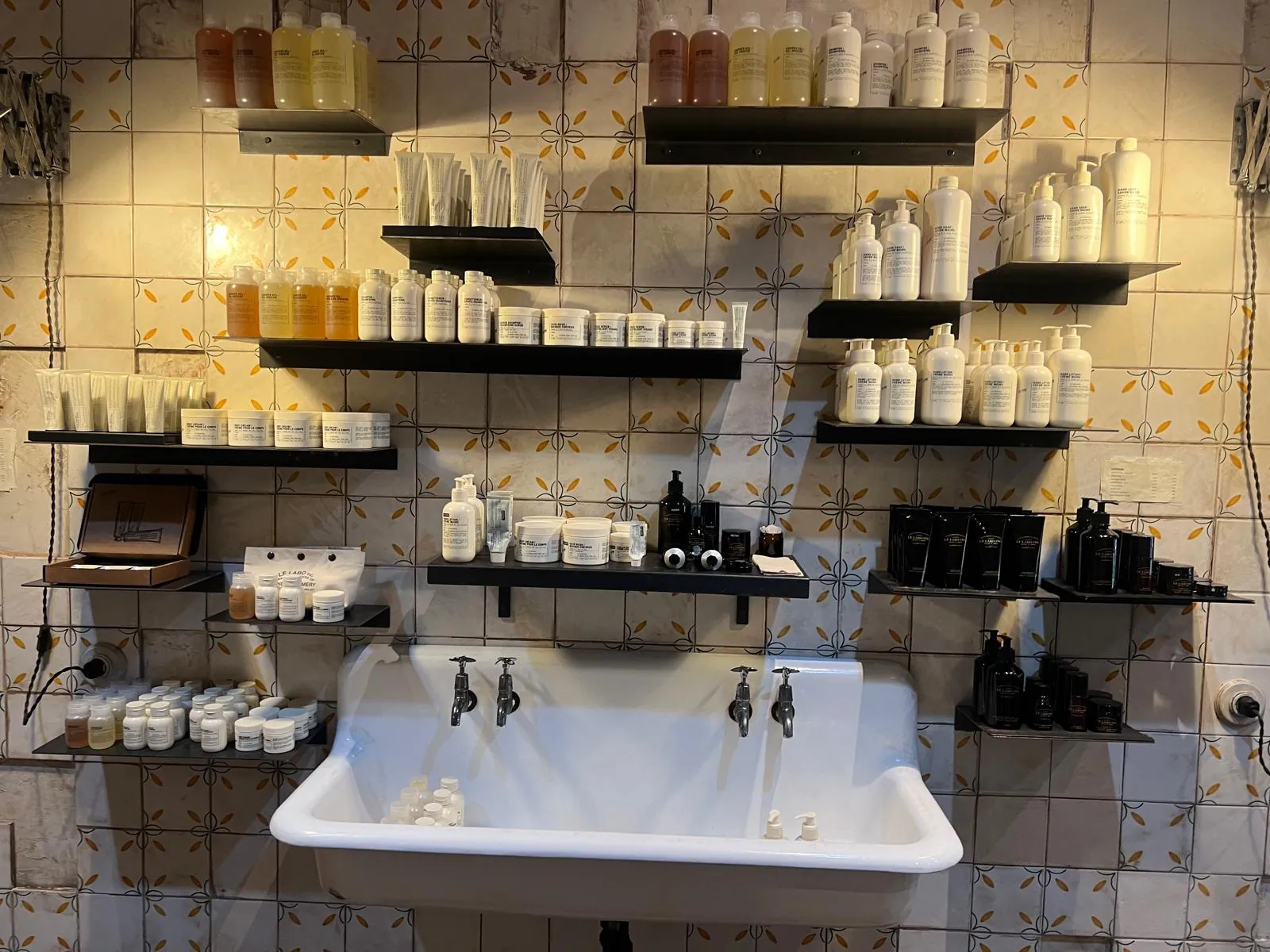
It is a minimalist, pared-back brand, in the look of its boutiques and of its counters in department stores. The style is deliberately that of a laboratory, a little “raw”, “retro”, “underground”, with a “barber shop spirit”: white tiles, black, grey, red bricks, metal shelves, raw wooden boxes, labels with an artisanal feel.
A very minimalist, simple bottle, with a customisable label (often in the client’s name), which also states the date and place of preparation.
There is a vast offering of eaux de parfum, derivatives, candles, fragrance diffusers, candle-care tools, and hair, beard, face and body products. Santal 33, the house’s enormous success, also comes as a candle, a shower gel, a shampoo or a body lotion, and can be refilled in the boutique.
3. My view as a creator: the number of components, and a house that is still niche
There is also the number of components written on the label, next to the name of the fragrance, “which is a very marketing-driven argument” that can impress clients. But to me it means nothing, because one can make masterpieces with few ingredients just as with a long list (even if it is said in the profession, as in cooking, that you are more likely to create a precise, signature fragrance with few raw materials): it all depends on the perfumer’s talent and orchestration. The number is indeed that of the ingredients, with one amusing exception: Another 13 owes its name to AnOther magazine, for which it was created.
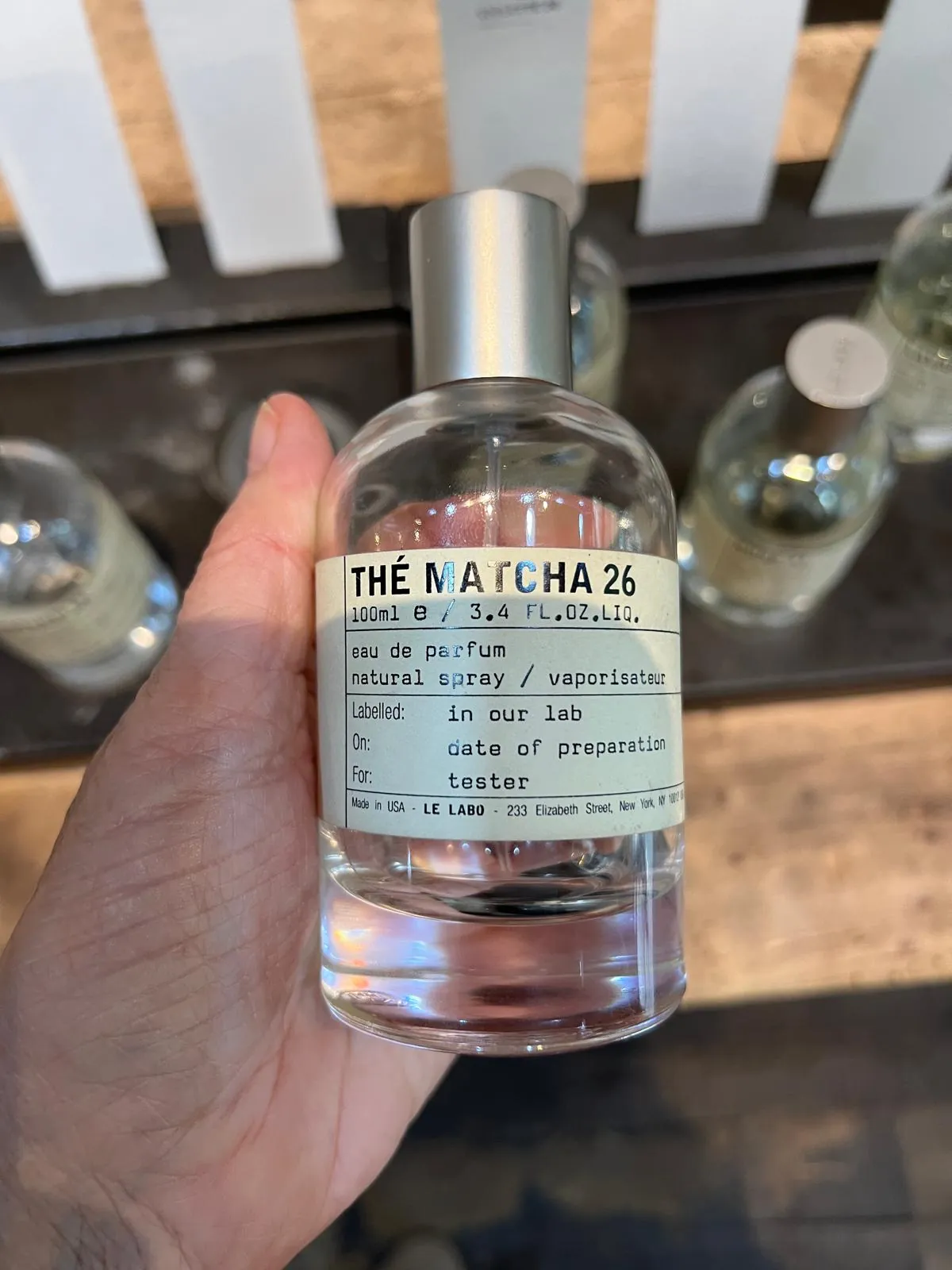
The aim of this “semi-bespoke” service, or rather “customisable at the counter”, is to create a “more personal relationship with the client” and with the fragrance, and to showcase artisanal know-how.
I find that it is still a very beautiful niche brand: Violette 30, which came out recently, convinced me of this.
4. A tour of the collection
Great perfumers are behind the Le Labo fragrances. Daphné Bugey, of Firmenich, signed a large share of the house’s first fragrances:
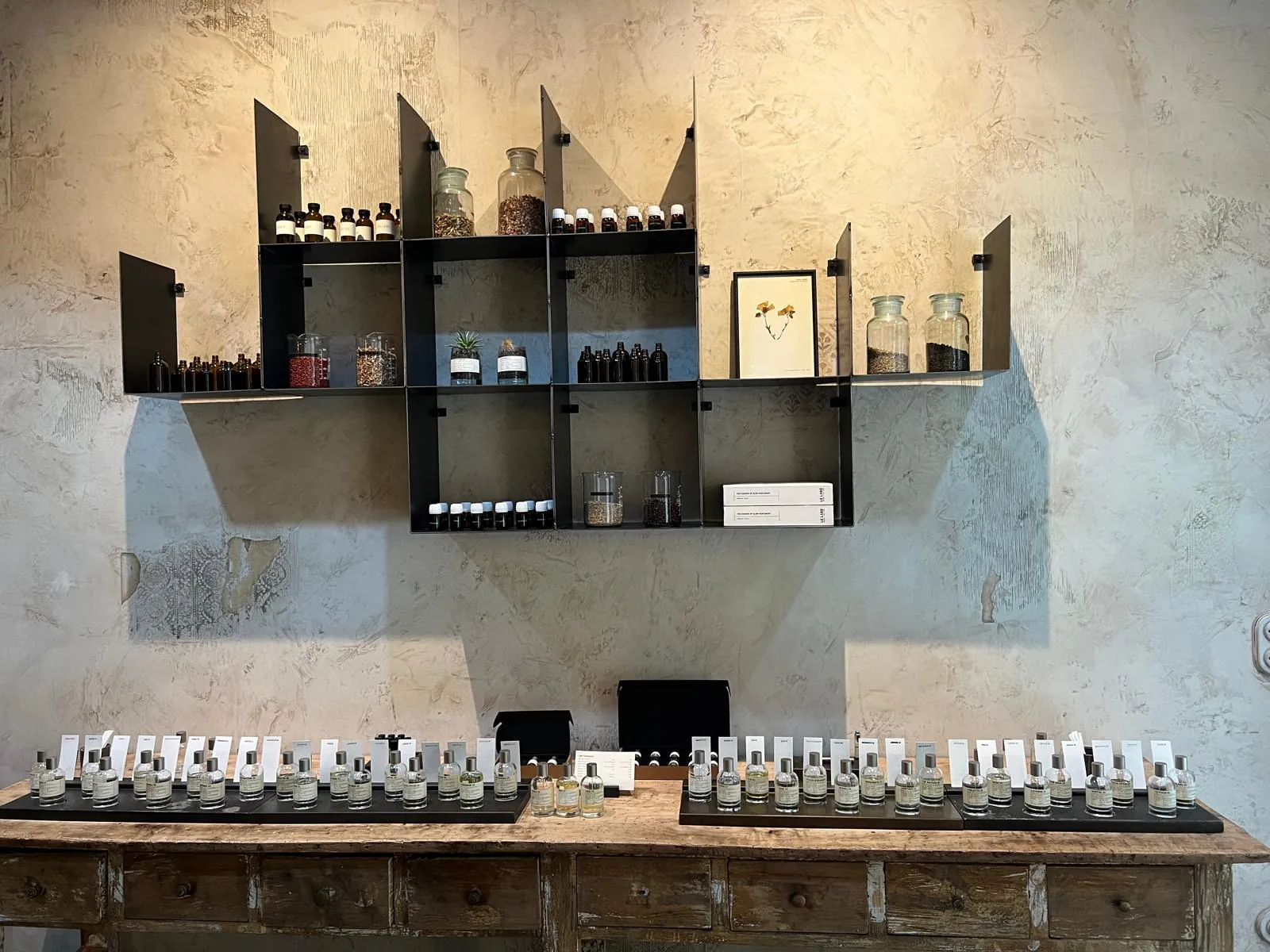
Le Labo Rose 31 (2006): one of her greatest creations and one of the brand’s first fragrances. In it, she managed to reinterpret the rose of Grasse, making it more androgynous and darker thanks to woody and spicy notes (cumin, cedar, musk). A pretty rose that smells very natural and fresh in the top, and that gains body in the base notes.
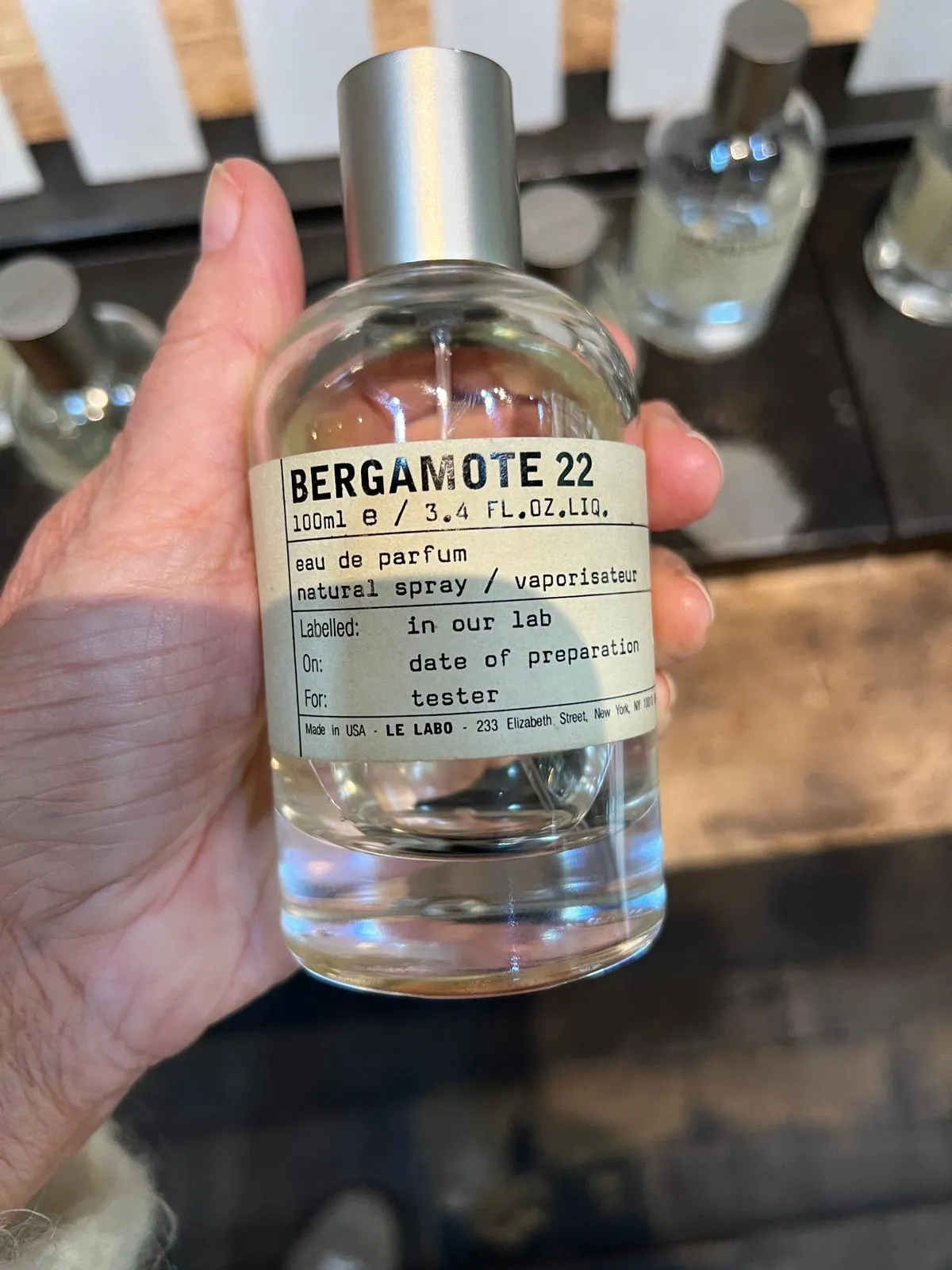
Le Labo Bergamote 22 (2006): one of the house’s essential best-sellers, combining a luminous citrus freshness with a woody, ambery depth. A fragrance full of contrast that nonetheless stays very fresh. I was not surprised by its lack of tenacity: it is very difficult to give citrus notes staying power.
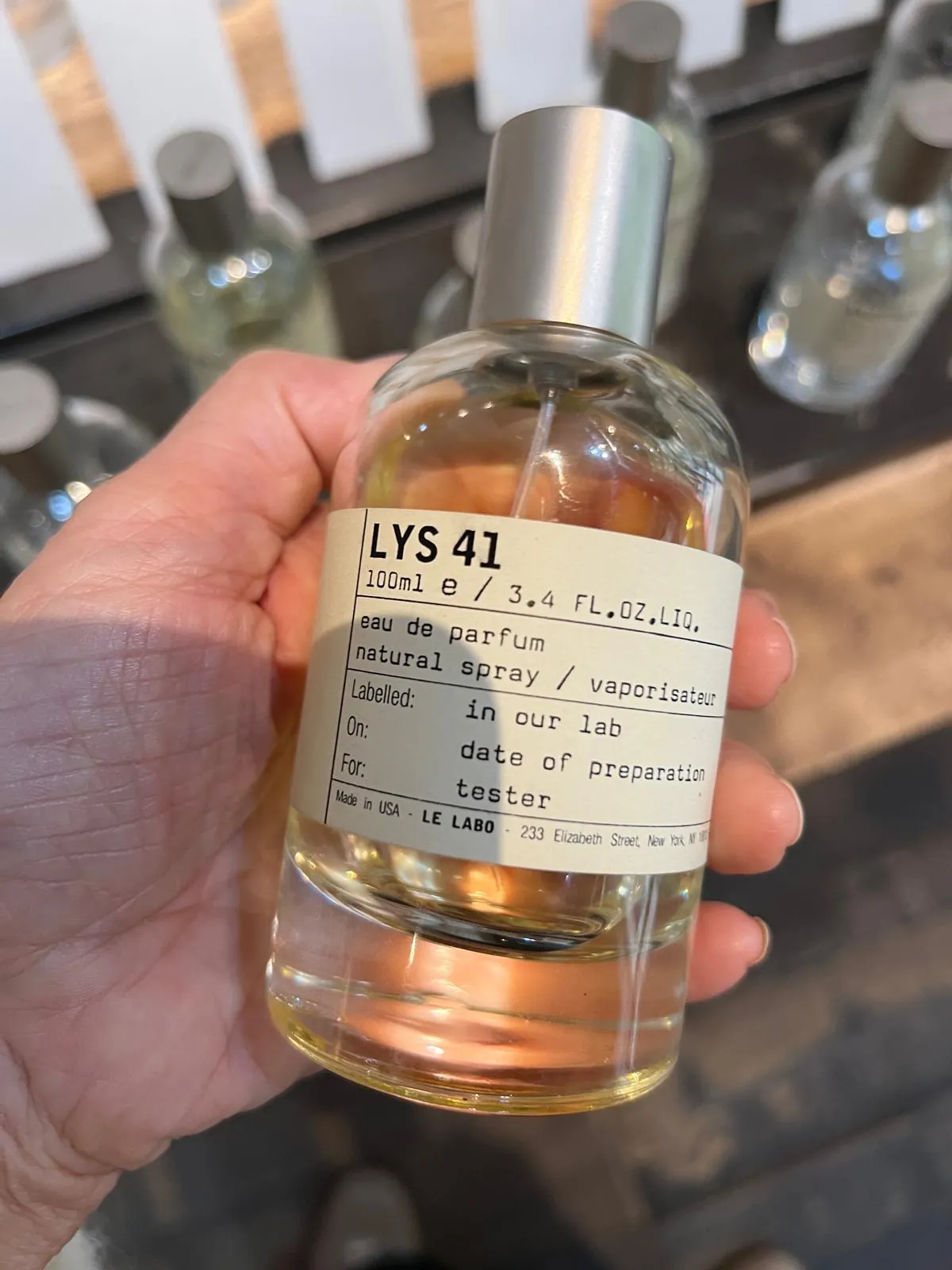
Le Labo Lys 41 (2013): an intense, sunny, exotic white floral composition (lily, tuberose, jasmine). A fragrance with an exotic connotation, which takes you off to paradise islands.
Le Labo Neroli 36 (2006): a fresh marine and floral fragrance built around orange blossom. A good fragrance, but nothing truly original.
Then, Le Labo Fleur d’Oranger 27 (2006), by Françoise Caron: a pretty orange blossom, accompanied by petitgrain, very fresh in the top with its citrus. In the same spirit, Diptyque Eau des Sens (which performs better).
Le Labo Labdanum 18 (2006), by Maurice Roucel: an oriental, or ambery, animalic, musky fragrance, in the spirit of Guerlain’s Shalimar, with notes of labdanum and musks. A very sensual fragrance. I loved how it developed on the skin. He also created Le Labo Jasmin 17 (2006), a simple, figurative interpretation of this flower.
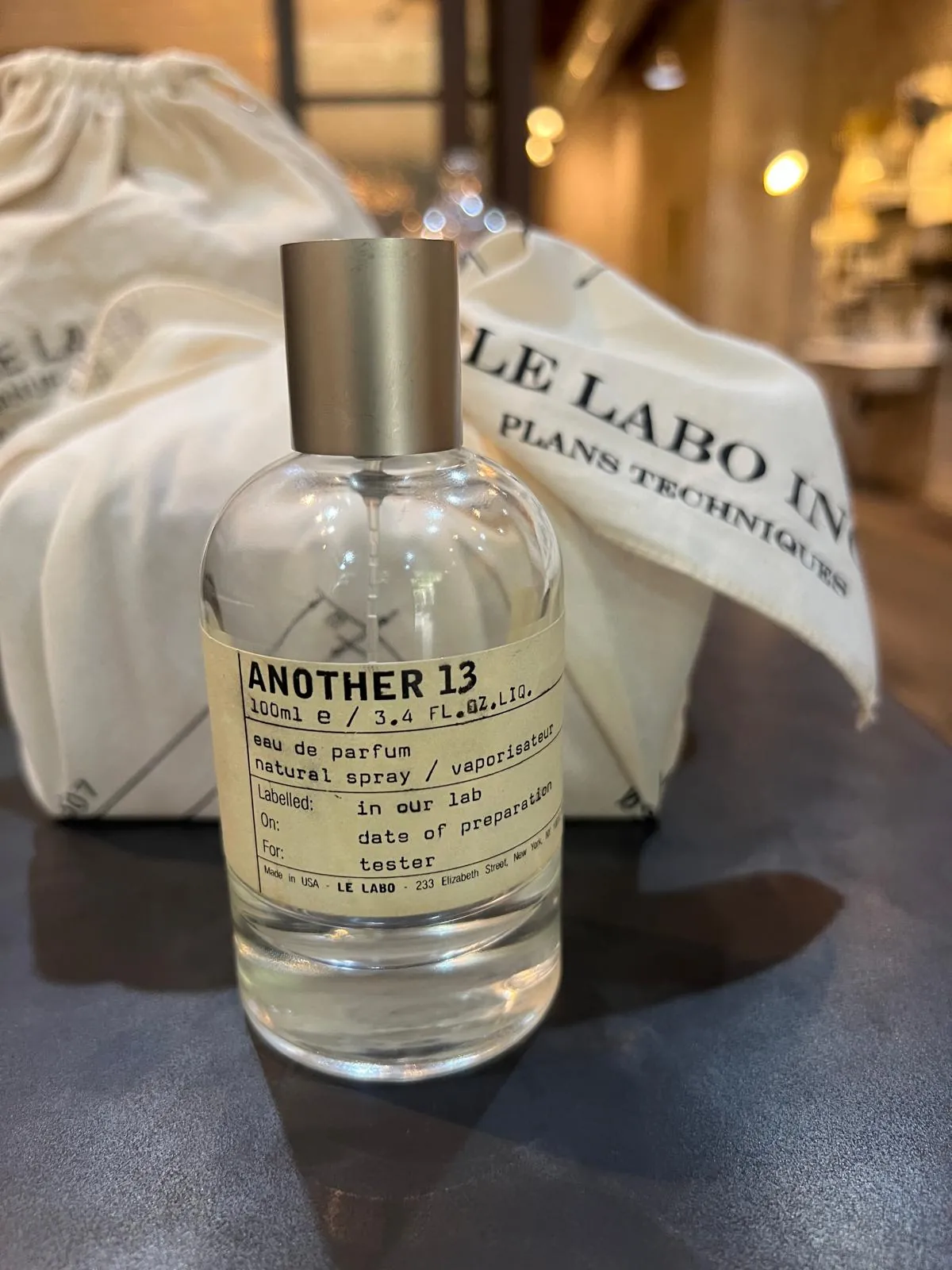
Le Labo Another 13 (2010), by Nathalie Lorson: a musky, modern and mysterious fragrance with a second-skin effect. It is appreciated for its discreet elegance. You know that I like musky, clean fragrances: on a blotter, I loved it. Unfortunately, on skin I was disappointed, because there are “aggressive” ambery woods, to my nose, which are there to give power to the very muted musky notes. There are not really any top, heart and base notes: I perceive it rather as a ball, a cocooning fragrance that envelops. Helvetolide (white musks), ambroxan, ambrette (natural white musk), pear, Iso E Super (soft woody note).
5. The City Exclusives
On top of that, Le Labo has an exclusive collection of 19 fragrances, the City Exclusives, echoing the cities named, and available exclusively in the points of sale of each city:
| Fragrance | City | Fragrance | City |
|---|---|---|---|
| Vanille 44 | Paris | Tabac 28 | Miami |
| Gaiac 10 | Tokyo | Musc 25 | Los Angeles |
| Myrrhe 55 | Shanghai | Coriandre 39 | Mexico City |
| Cuir 28 | Dubai | Baie Rose 26 | Chicago |
| Poivre 23 | London | Aldéhyde 44 | Dallas |
| Tubéreuse 40 | New York | Benjoin 19 | Moscow |
| Cedrat 37 | Berlin | Limette 37 | San Francisco |
| Osmanthus 19 | Kyoto | Citron 28 | Seoul |
| Mousse de Chêne 30 | Amsterdam | Shiu 25 | Beijing |
| Bigarade 18 | Hong Kong |
These fragrances are rare pieces and can only be found in the cities named, which encourages clients to collect them: I think it is an excellent marketing idea. Once a year, in September, Le Labo holds the City Exclusives event, during which the fragrances travel around the world. Some fragrances can be refilled in the participating boutiques.
6. My favourites
First: Le Labo Thé Noir 29
This is a creation by Frank Voelkl. This fragrance, less well known than Santal 33, is for me a fragrance of great class, very sexy. It is a combination of black tea, bergamot and fig: present, refined and soft at the same time, for me the most sophisticated of the brand’s fragrances. It is a fragrance I love to smell on a friend I am very fond of, but I could not wear it myself. I truly find that it stands out from the others; it is quite creative.
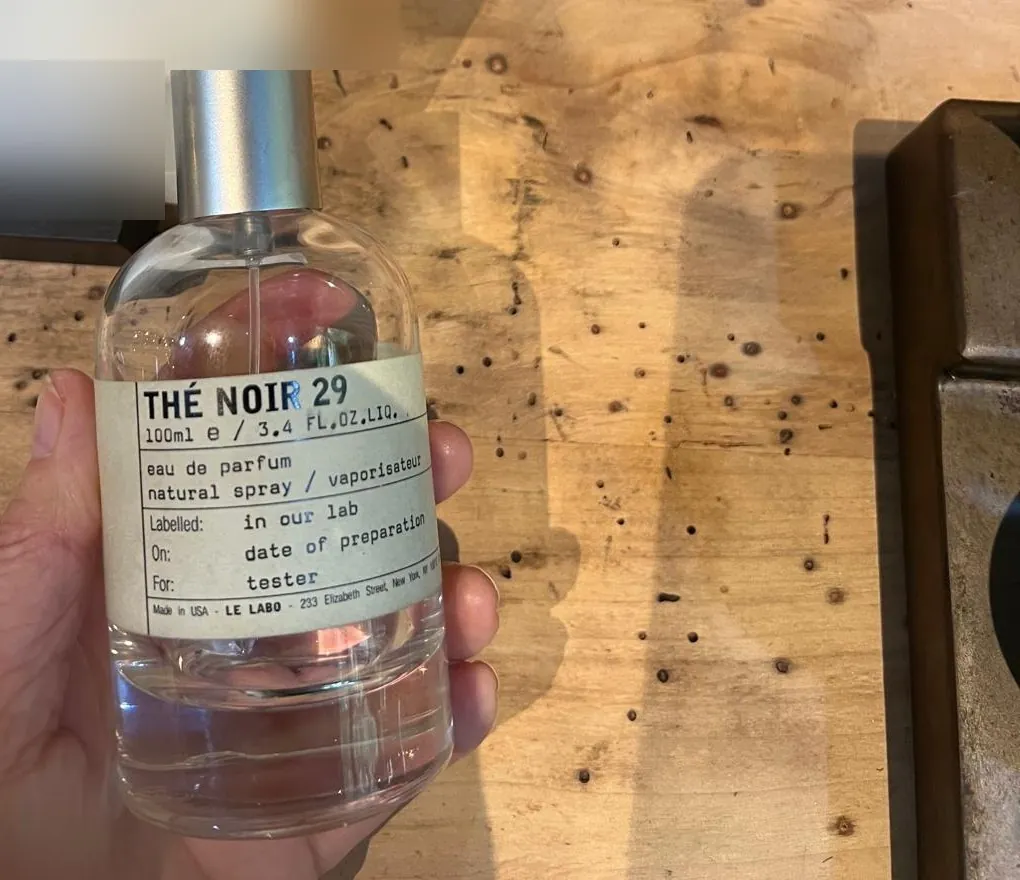
- Top: bergamot, bay leaf
- Heart: fig
- Base: black tea, vetiver, cedar, musk
Longevity: about 7 hours.
I struggle to find equivalents for it; very distantly, Cartier’s Les Heures de Parfum XIII La Treizième Heure.
Second: Le Labo Santal 33, the great success
It was created by Frank Voelkl, a Firmenich perfumer in New York, who has a close relationship with Le Labo and with its founder Fabrice Penot. Frank also created Iris 39, Benjoin 19, Musc 25 and Ylang 49.
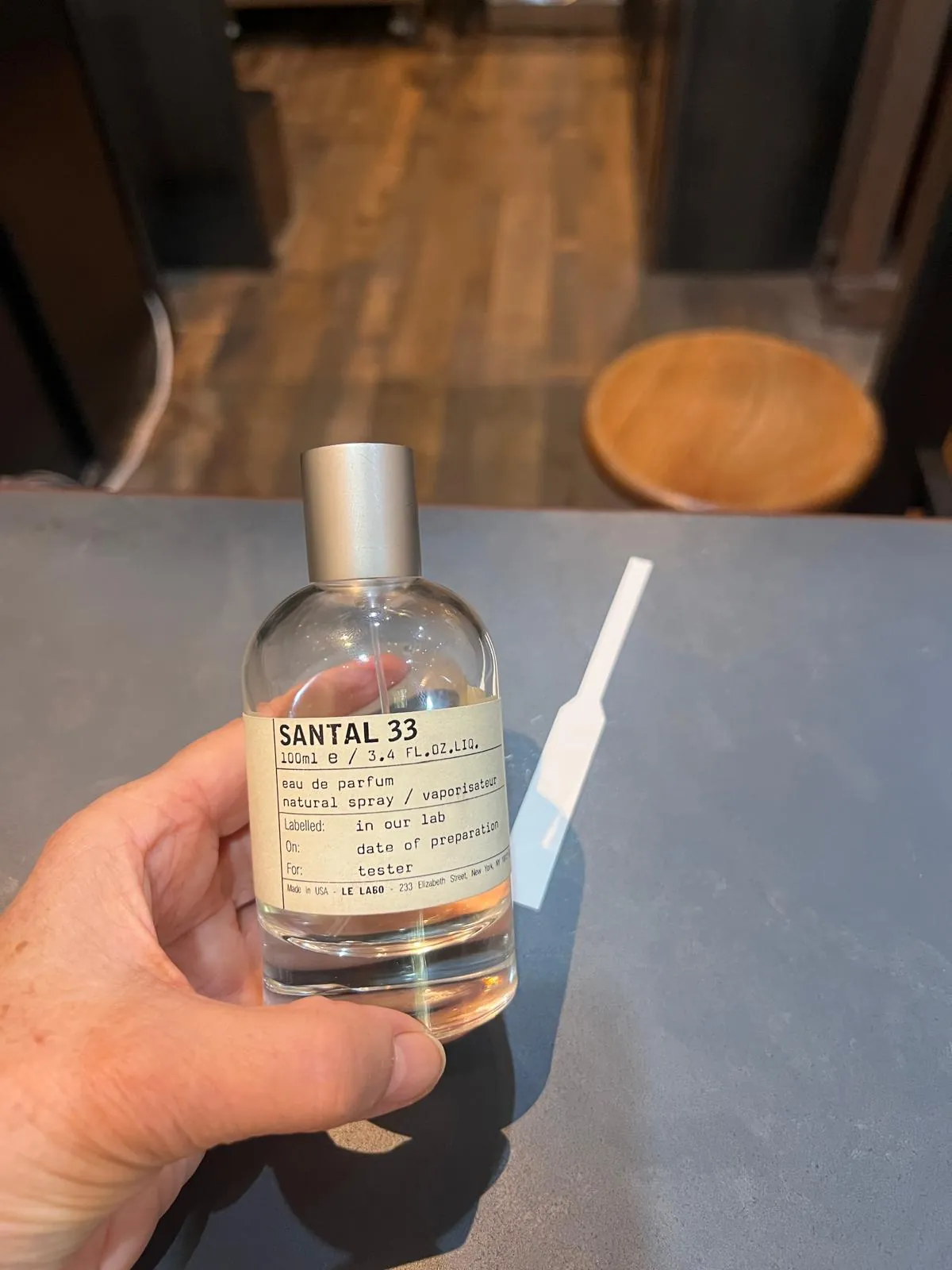
It is a woody fragrance that has won over men and women alike, and even more so in New York. It is even worn by stars, which contributed to its worldwide success.
Santal 33 is a creamy woody, thanks to the sandalwood for sure, but one that gives more of a sandalwood effect than an identifiable sandalwood note. You should know that sandalwood is not at all easy to work with: it is a milky woody note, but very muted, introverted, which barely diffuses, though with excellent tenacity. It is often accompanied by other woods in order to enhance it. Here, Australian sandalwood was chosen, which is not as creamy and milky as Indian sandalwood.
In Santal 33 I smell the sandalwood, but in fact I smell the cedar more; the soft, powdery effect must come from violet, iris and white musks. I smell a note of fig, which is not mentioned anywhere! In the base notes, I perceive a soft, slightly smoky leather effect.
Its success is also due to its tenacity, its projection and its signature, recognisable from a mile away. As it is the star fragrance of this brand, it has been much copied by the competition, and many “dupes” exist. In conclusion, I would say that it is at once distinctive, recognisable and easy to wear. The base notes are even more delicious than those that precede them.
- Top: cardamom, violet (I also perceive pepper)
- Heart: Australian sandalwood, cedar, papyrus
- Base: leather notes, iris, musky notes, ambrox (I also perceive vanilla)
Longevity: 7 to 9 hours.
If you like Santal 33, you may also like Caron Santal Précieux, BDK Parfums Gris Charnel, Hermès Santal Massoïa, Van Cleef & Arpels Santal Blanc, Tom Ford Bois Pacifique, Valentino Rockstud Noir (Anatomy of Dreams collection) or Dries Van Noten Santal Greenery.
In third place: Le Labo Lys 41
On the skin, I loved this exotic floral bouquet, which makes one think of holidays on faraway islands. It belongs to the family of sunny florals. On skin, it is quite powerful and has good longevity, about 7 to 8 hours. It is very present for 4 to 5 hours, then it softens a great deal. It is luminous, sensual; I could wear it, because I like these sunny notes.
You might also like a fragrance that I adore: Estée Lauder Bronze Goddess eau de parfum, with good longevity of about 7 to 9 hours, or Guerlain Terracotta Le Parfum, which I developed.
7. Discovering the house
The three fragrances I would recommend for getting to know the brand, if you are looking for freshness and easy-to-wear fragrances: Le Labo Bergamote 22, Le Labo Thé Matcha 26 and Le Labo Lavande 31 (an original lavender).
8. What convinced me less
Very few fragrances failed to win me over: Le Labo Ambrette 9 did not really win me over, nor did Le Labo Patchouli 24, which does not smell much of patchouli, but rather of a “cade”, tar note.
9. Summary
| Fragrance | Perfumer | Year | Family | For whom |
|---|---|---|---|---|
| Le Labo Thé Noir 29 | Frank Voelkl | 2015 | tea, fig, woody | for boldness |
| Le Labo Santal 33 | Frank Voelkl | 2011 | creamy woody | to feel comforted and leave a big sillage |
| Le Labo Lys 41 | Daphné Bugey | 2013 | sunny floral | lovers of sunny notes |
| Le Labo Bergamote 22 | Daphné Bugey | 2006 | citrus, woody | to start with |
| Le Labo Thé Matcha 26 | not specified | 2021 | fresh | to start with |
| Le Labo Lavande 31 | Daphné Bugey | 2023 | original lavender | to start with |
10. My verdict: who is Le Labo for?
I have great respect for this brand, as I had for the house of Frédéric Malle; the latter offers an abstract, sophisticated perfumery.
I find that, on the whole, all the fragrances are extremely successful: there is an enormous choice, and the quality is there. As the idea is to work on one particular raw material, it is a rather figurative perfumery, simpler for a good number of fragrances.
Le Labo has managed to build a strong identity by offering another vision of luxury: less ostentatious, more authentic, sensory and personal. The aim is to create a more personal relationship with the fragrance and to showcase artisanal know-how.
To start with, Bergamote 22 and Thé Matcha 26 or Lavande 31; for boldness, Thé Noir 29; and to feel comforted and leave a big sillage, Santal 33.
Also read: