1. Introduction: Guerlain reopens the L’Heure Bleue chapter
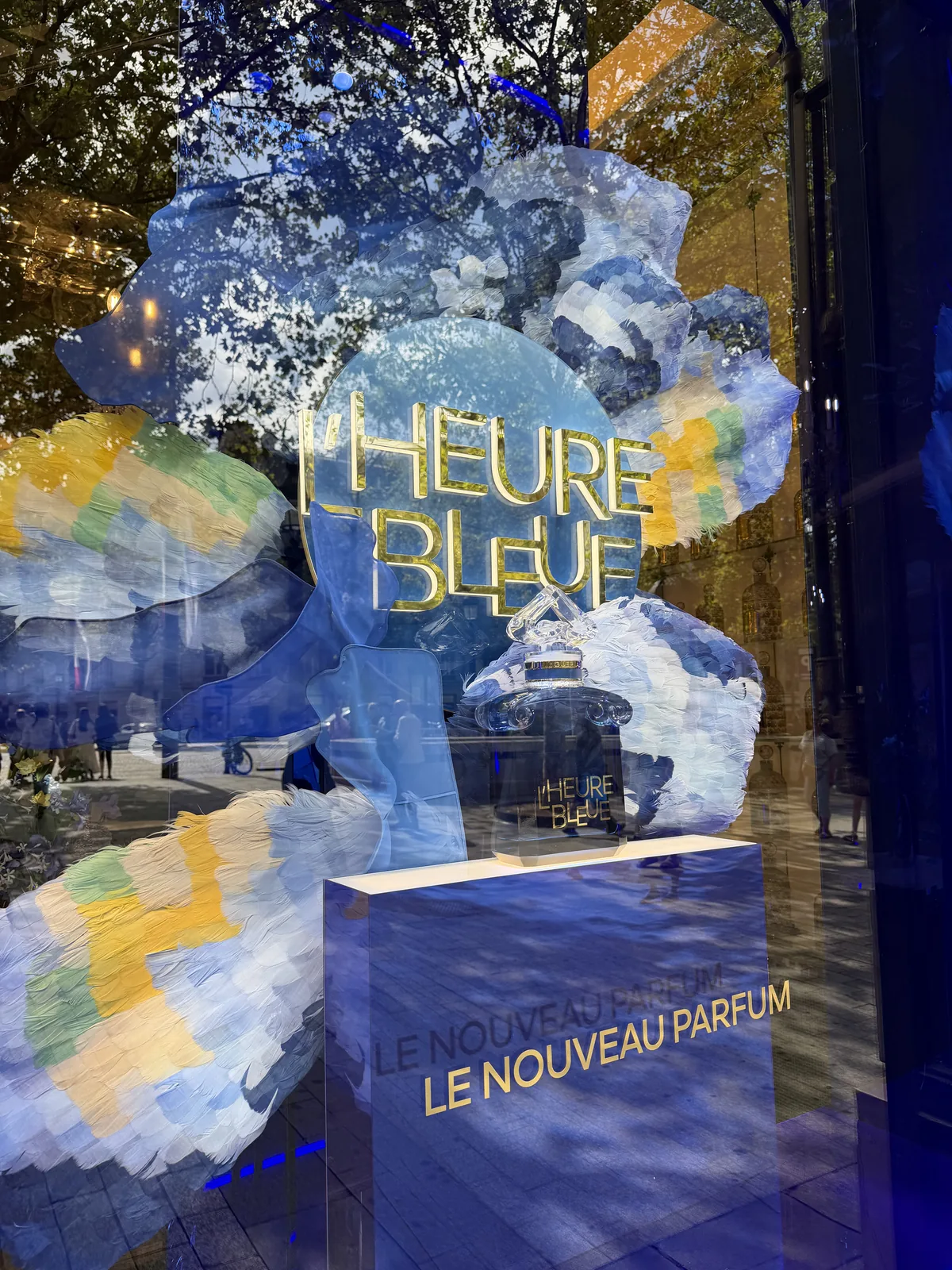
Big news at Guerlain: the House is launching a brand-new fragrance carrying the legendary name of L’Heure Bleue, created by Jacques Guerlain in 1912. Very recently, Delphine Jelk, Guerlain’s Perfumer, decided to reinterpret this monument. Inevitably, when you touch such a myth, you can only feel afraid. L’Heure Bleue represents more than a century of history.
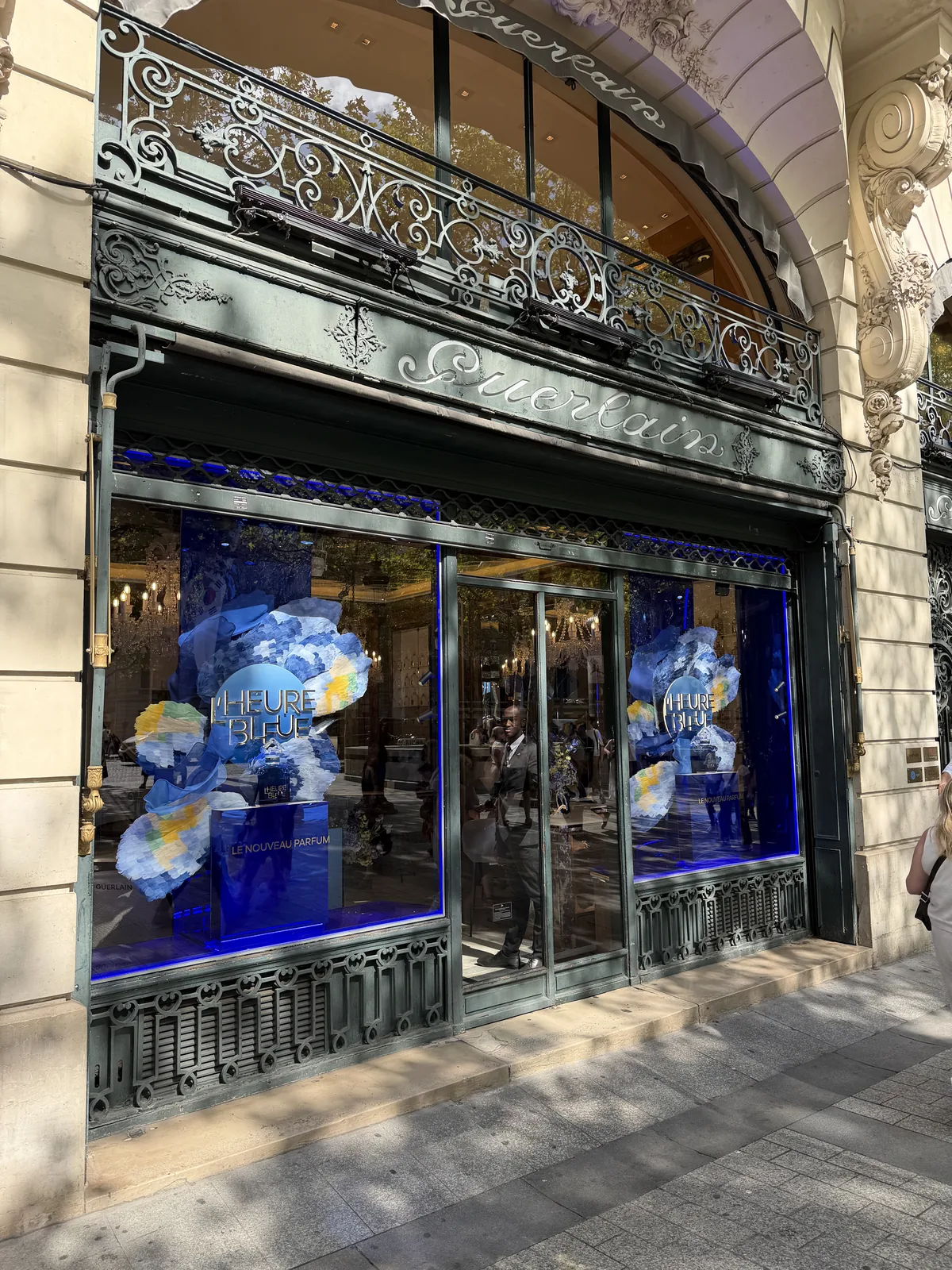
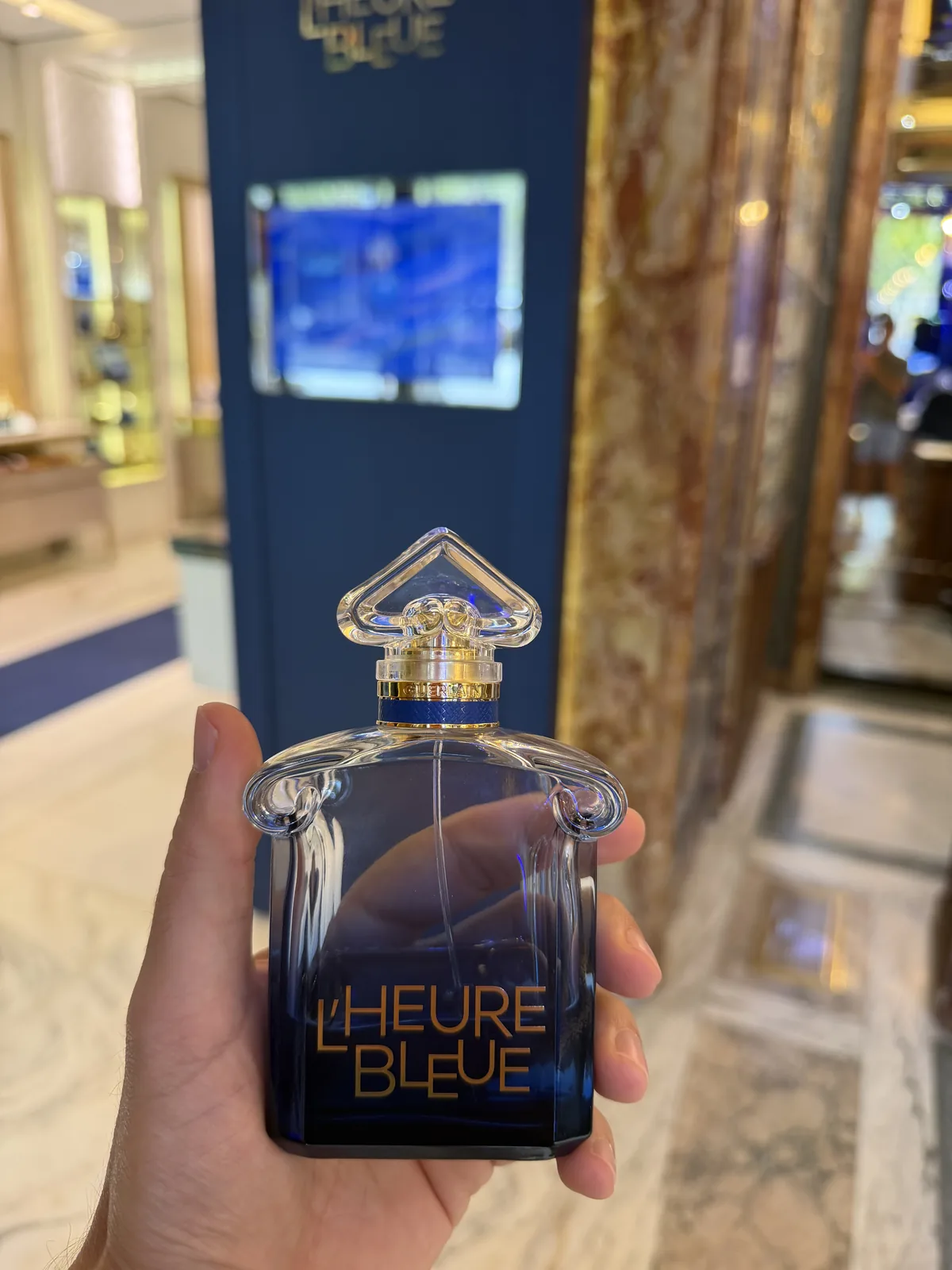
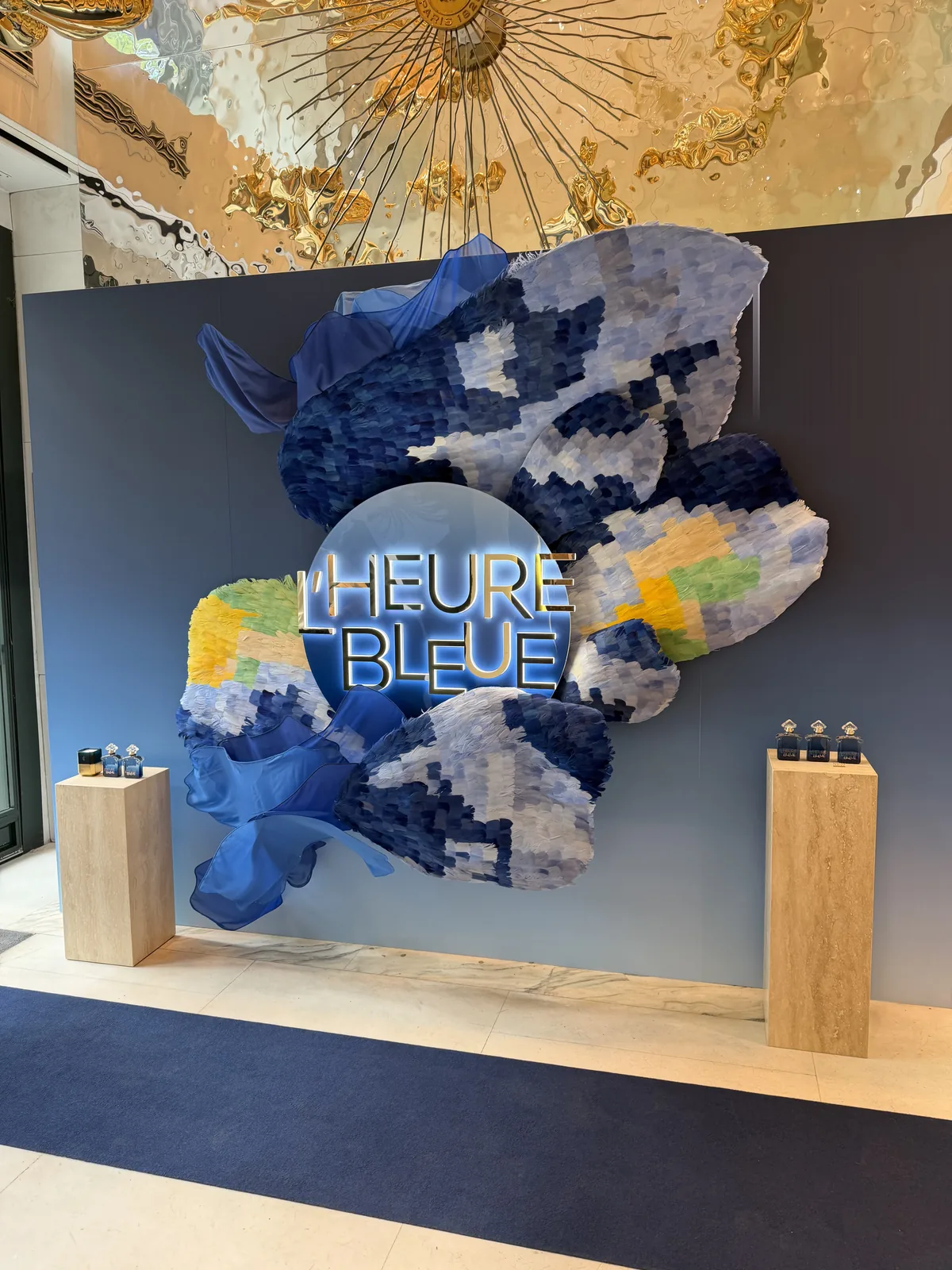
Customers who are not yet familiar with the Guerlain universe are curious. They are drawn in by this pretty, poetic name and by this magnificent bottle with its blue gradient. Add to that a contemporary television advertisement featuring a blonde goddess, along with an omnipresence on social media: it intrigues, and it works!
On the other hand, the House’s loyal devotees and those addicted to the oriental note are thrown off balance. This classic clientele, mostly French (since the 1912 L’Heure Bleue never really crossed borders, unlike Shalimar), can’t find their footing. I often hear: “It doesn’t look anything like the original,” or “Why keep the same name if the perfume is so different?” In short, they are quite shaken.
2. The verdict: who is this new version for?
I want to reassure you right away: the original L’Heure Bleue is not disappearing from the catalogue. L’Heure Bleue 2026 is aimed primarily at a younger clientele who doesn’t yet know Guerlain, let alone the original fragrance.
- For loyal fans of the original: If the 1912 L’Heure Bleue is your signature scent and you get compliments on it, keep it. It’s a magnificent and unique fragrance, with an incredible presence.
- For those discovering the fragrance: If you find the classic version too retro, too intense, or too powdery, try this new contemporary 2026 version! It’s an elegant, fresh, airy perfume that’s easy to wear in any circumstance. Its subtle sillage is sublime.
3. The olfactory match-up: L’Heure Bleue 1912 versus the 2026 version
The essentials at a glance
| L’Heure Bleue 1912 | L’Heure Bleue 2026 | |
|---|---|---|
| Creation | 1912, by Jacques Guerlain | 2026, by Delphine Jelk |
| Olfactory signature | Aromatic opening, floral heart with a marshmallow accord, balsamic, powdery and vanilla base | Ozonic “blue sky” accord with pear, airy floral heart, iris tincture base |
| Character | Powerful, enveloping, nostalgic, a touch retro | Elegant, fresh and airy, subtle sillage |
| Longevity | A full day or more on the skin, and months on clothing | About 8 hours minimum, depending on your skin |
| Who it’s for | A signature scent, for special evenings | An everyday fragrance, easy to wear in any circumstance |
L’Heure Bleue 1912, the monument
The classic L’Heure Bleue is not an easy perfume to wear. In fact, I wore it for more than 20 years, it was my “signature.” But today, I long for lighter notes. Spending a lot of time in Spain, I can no longer wear it in warm weather, and I now save it only for special evenings.
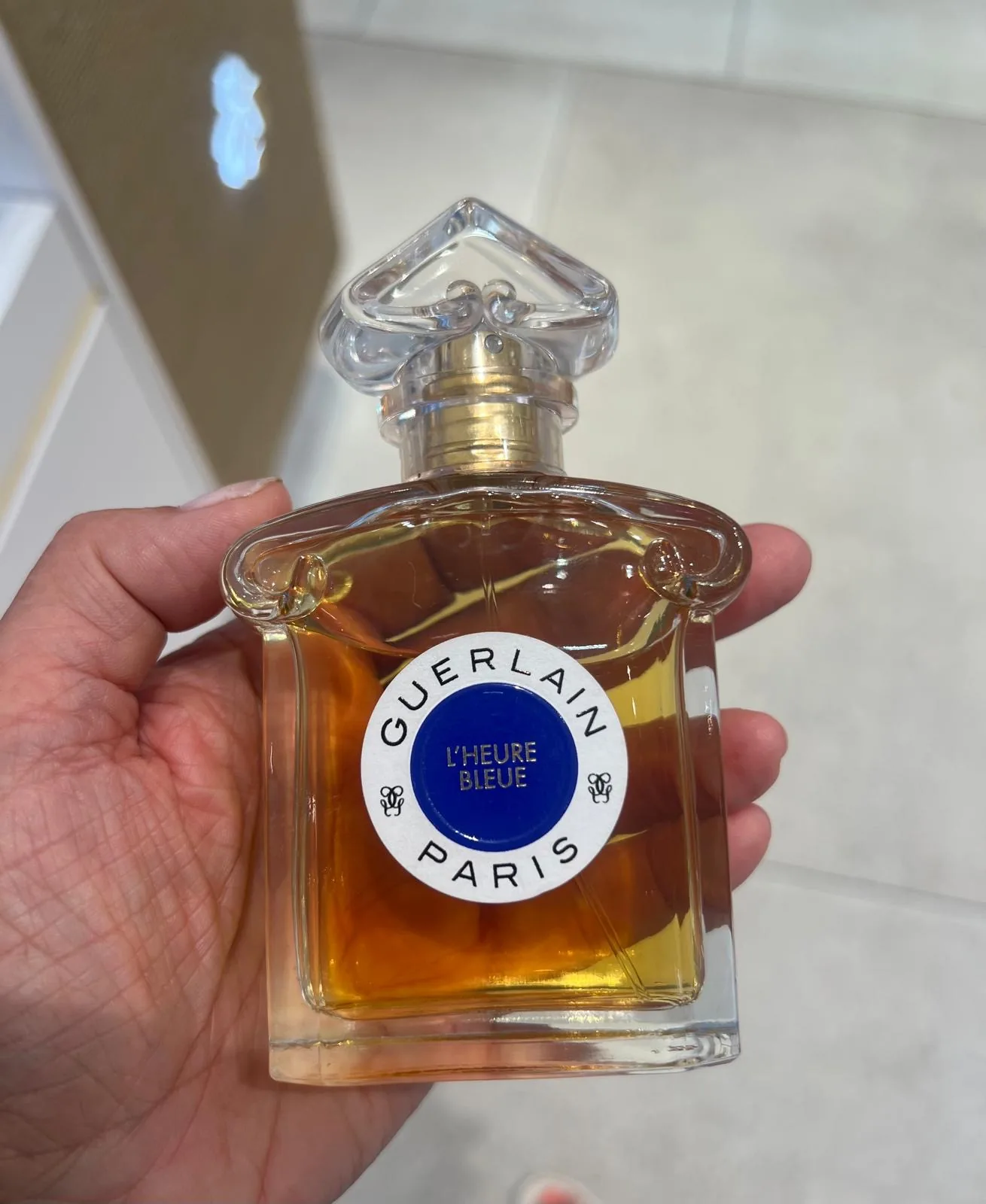
The 1912 L’Heure Bleue is a multi-faceted fragrance. Its opening is aromatic, oscillating between thyme and anise. Its floral heart reveals a marshmallow accord (orange blossom and vanilla), while its balsamic, powdery base (a buttery iris) becomes soft, deeply enveloping and carnal. It’s a fragrance of nostalgia, a touch retro. Having become a true legend, it possesses phenomenal power and longevity. On the skin, it lasts a full day, or even more. On clothing, its trace can linger for months.
L’Heure Bleue 1912 pyramid:
- Top: thyme, anise, tarragon, clary sage, citrus, neroli
- Heart: orange blossom, jasmine, heliotrope, violet, carnation, rosy notes
- Base: balsamic notes, iris, mosses, vanilla, tonka bean, incense, leather note, animalic notes, spicy notes
The 2026 version, Delphine Jelk’s creative stance
Delphine Jelk deeply respects Guerlain’s heritage and legacy. With this 2026 version, she wanted to pay tribute to Jacques Guerlain’s creation while reinterpreting it. She took far more risks than with her recent reinterpretation of Shalimar (Shalimar Essence). She wanted to express L’Heure Bleue in a contemporary, easier-to-wear way, while preserving its original olfactory seal.
In the top notes, she replaced the classic citrus and aromatic notes with a brand-new accord she named “blue sky.” It’s pure, fresh and clean, echoing the scent of airy linen, which makes it very well suited to everyday wear.
To interpret this accord, she used ozonic notes. You know, the ones you smell in the mountains in winter, amid the snow and the high altitude, close to the sky, giving the impression of taking a deep breath of pure air. This accord was then dressed with juicy pear and neroli. In the heart, orange blossom is still present but worked in a more airy way, subtly echoing the marshmallow accord paired with a touch of jasmine.
In the base, Delphine developed an exclusive, ultra-sensual raw material: iris tincture. It’s worth knowing that iris only reveals its full power after three years. It’s the true blue gold of perfumery. Once grown, the rhizomes are harvested, hand-cleaned, then slowly dried.
Ground into a fine powder, they are then left to infuse in alcohol. Countless trials were needed to find the perfect balance. The result? A beautiful, rising iris, sun-drenched, powdery and enhanced by musky notes, all supported by Ambroxan, which gives it excellent tenacity.
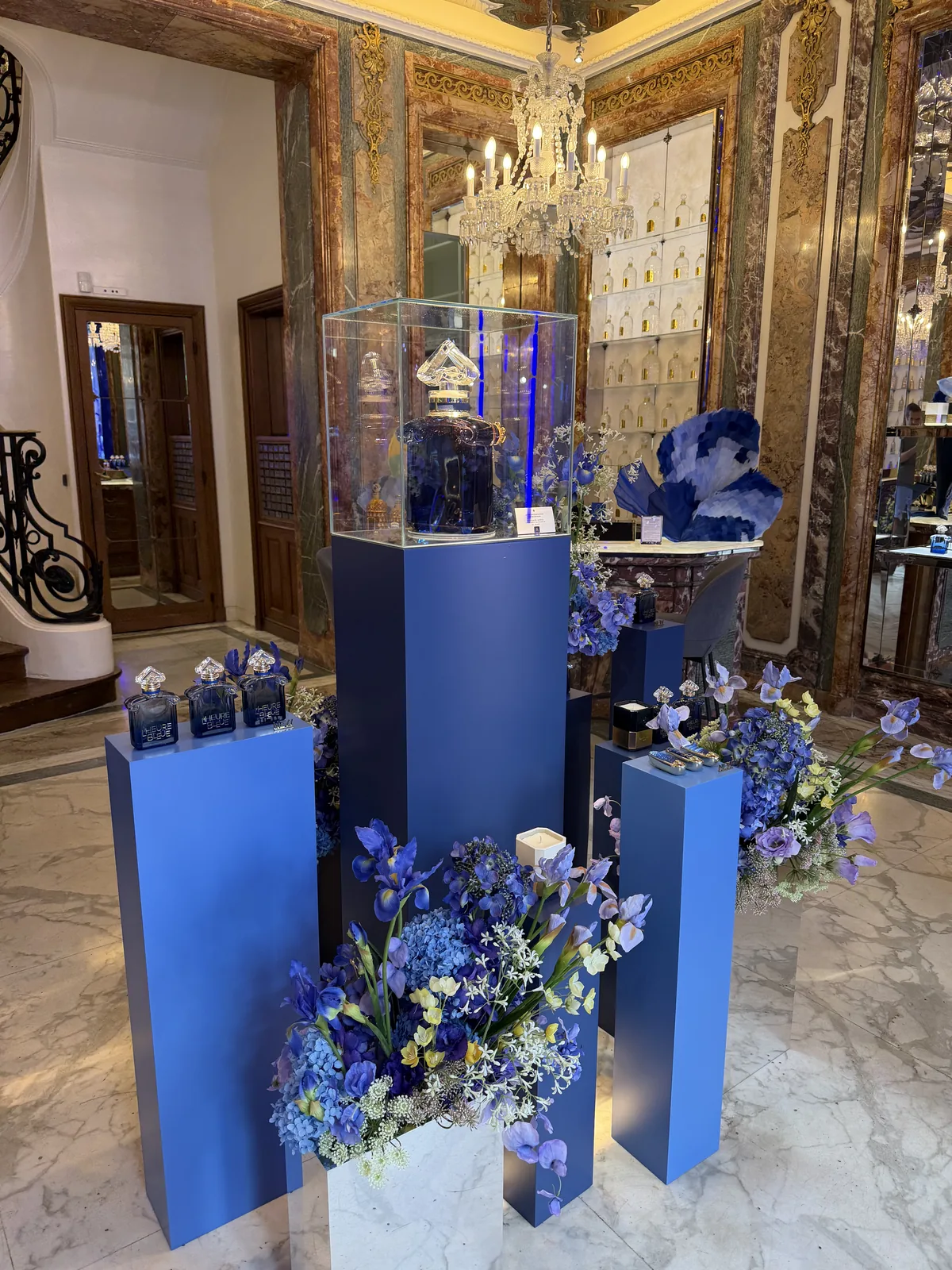
L’Heure Bleue 2026 pyramid:
- Top: ozonic notes, pear note, anise notes, bergamot, orange, neroli
- Heart: orange blossom, jasmine, rose, ylang-ylang
- Base: vanilla, iris tincture, coumarin, patchouli, spices, ambroxan
The base of this new opus is sensual, as a true Guerlain should be. It’s enveloping, soft and cocooning. Pleasant both by day and by night, it stays present without ever becoming overwhelming. Its longevity is about 8 hours minimum, depending on the chemistry with your skin.
Sylvaine’s tip: dare to layer
I have friends around me who passionately love the classic L’Heure Bleue and who have dared to combine it on the skin with the new L’Heure Bleue. The goal? To capture both the historic depth of one and the sparkling freshness of the other. It’s daring, but I must say it’s rather successful!
If you’re a fan of the iris note or the vanilla note, you can also combine it with Guerlain’s signature Haute Parfumerie extracts, to reinforce both the note you love and the sillage and tenacity, creating in a way your own “bespoke creation.”
4. Behind the scenes: my history with Delphine Jelk
Before concluding, you need to get to know the creator of this new fragrance. Delphine Jelk is Director of Perfume Creation at Guerlain. When I first met her, she was working at the fragrance house Drom, and I had a genuine professional coup de cœur.
In addition to her perfumery studies, she also trained in fashion: she radiated aesthetic sense. I immediately sensed in her a great open-mindedness, a rare sensitivity and elegance.
I had briefed her at the time on the La Petite Robe Noire project. We developed it together, starting from an accord she had imagined: a rose and cherry macaron. First launched in the exclusive collections in 2009, almost no one internally believed in it! Yet its success in boutiques was immediate, even though Guerlain’s aficionados came down on me quite harshly on my blog at the time. People wrote to me: “This isn’t a Guerlain!”, “Chanel should have launched this!” or “This perfume looks like candy!”
The pleasant surprise was that we had imagined it to attract a younger clientele, but it ended up winning over every generation. Thierry Wasser then tweaked it slightly for its international launch in 2012, and the groundbreaking animated advertisement by Kuntzel and Deygas turned it into the absolute best-seller we know today.
I so loved working with Delphine that I pushed for her to join Guerlain. We then developed many fragrances together with immense joy (Tonka Impériale, several Aqua Allegoria…). Since I left, she has taken on more and more responsibility within the House and has launched superb creations: Tobacco Honey, Patchouli Paris, Vétiver Fauve, Oud Nude, Cherry Oud, Santal Pao Rosa, Musc Outreblanc, Néroli Outrenoir, Joyeuse Tubéreuse, and the huge success Aqua Bloom. I greatly admire her journey, crowned in December 2024 by her appointment as Chevalier of the Ordre des Arts et des Lettres.
5. Guerlain’s boldness and conclusion
The general public, especially younger people, doesn’t know the classic L’Heure Bleue. This new opus is remarkably bold: I have never smelled anything equivalent from the competition.
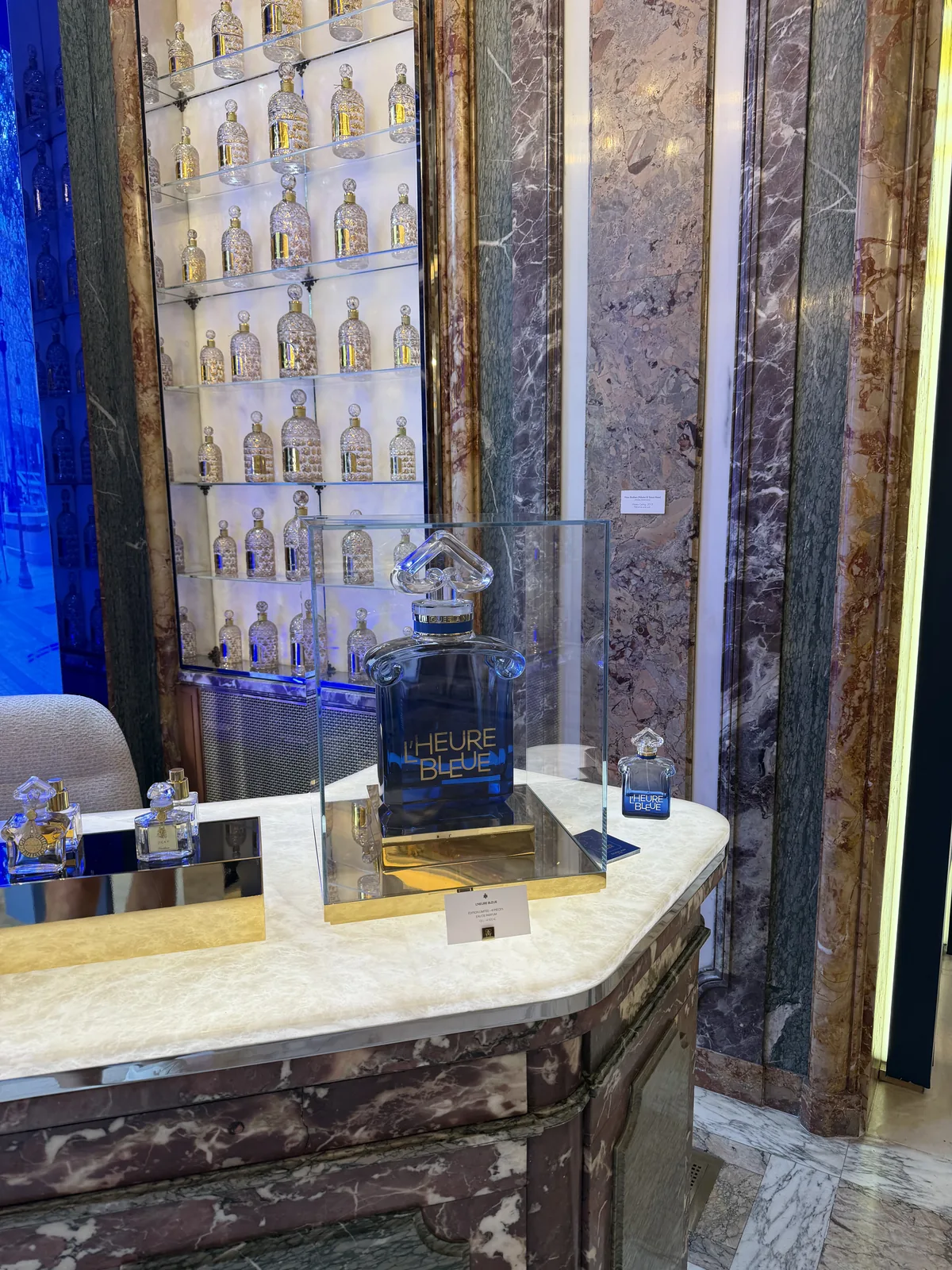
This is not simply a reinterpretation of the 1912 perfume, but truly an interpretation of the very concept of L’Heure Bleue: the celebration of a suspended moment, where everything falls silent. These are the last moments before dusk, as if the midnight-blue sky were settling onto the skin. A blue hour so singular to Paris, to which Delphine wanted to pay tribute.
The new L’Heure Bleue breathes a fresh, slightly cool, very airy and sweeping wind, sweeping along soft, sun-kissed flowers, before finally settling onto a powdery, subtly vanilla iris base. It’s tenacious, but never heavy or sugary. It’s a true, innovative Guerlain.
Sylvaine’s advice: As with all Guerlain perfumes, try it on your skin. On a paper scent strip, the ozonic notes are indeed more pronounced and can skew your perception.
It’s worth remembering that Guerlain has always been synonymous with boldness and innovation:
- First use of fruity notes (peach) in Mitsouko
- First unisex perfume with Jicky
- First pure oriental for women with Shalimar (and for men with Habit Rouge)
- First perfume with blackcurrant with Chamade
- First perfume with an overdose of sandalwood with Samsara
- First perfume with an overdose of violet and iris with Insolence
- First perfume with a cherry accord with La Petite Robe Noire
- First perfume with a men’s interpretation of almond with L’Homme Idéal
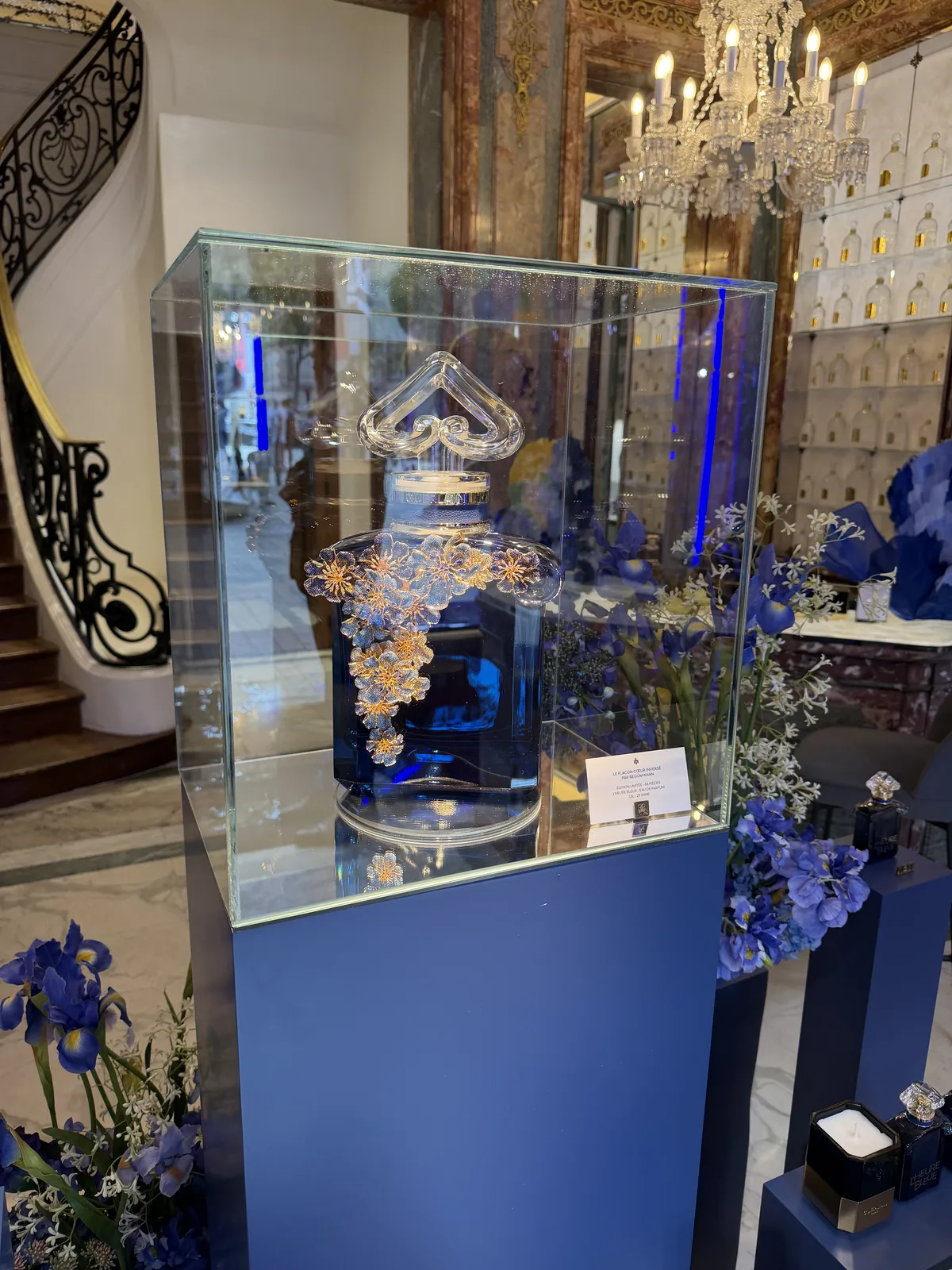
An innovative perfume is inevitably a divisive perfume: either you love it, or it doesn’t appeal to you. But that’s the nature of creations with a strong personality.
So let’s stop comparing it to the 1912 version. The emotion is there, and that’s what matters most for continuing to tell this beautiful story. It would have been such a shame not to bring such a poetic name back into fashion by translating it into today’s olfactory codes. This initiative will also allow many people to discover the original fragrance at the same time.
Taking such a legendary perfume today and deciding to bring it back into the spotlight in a new light is, in my opinion, an excellent idea.